



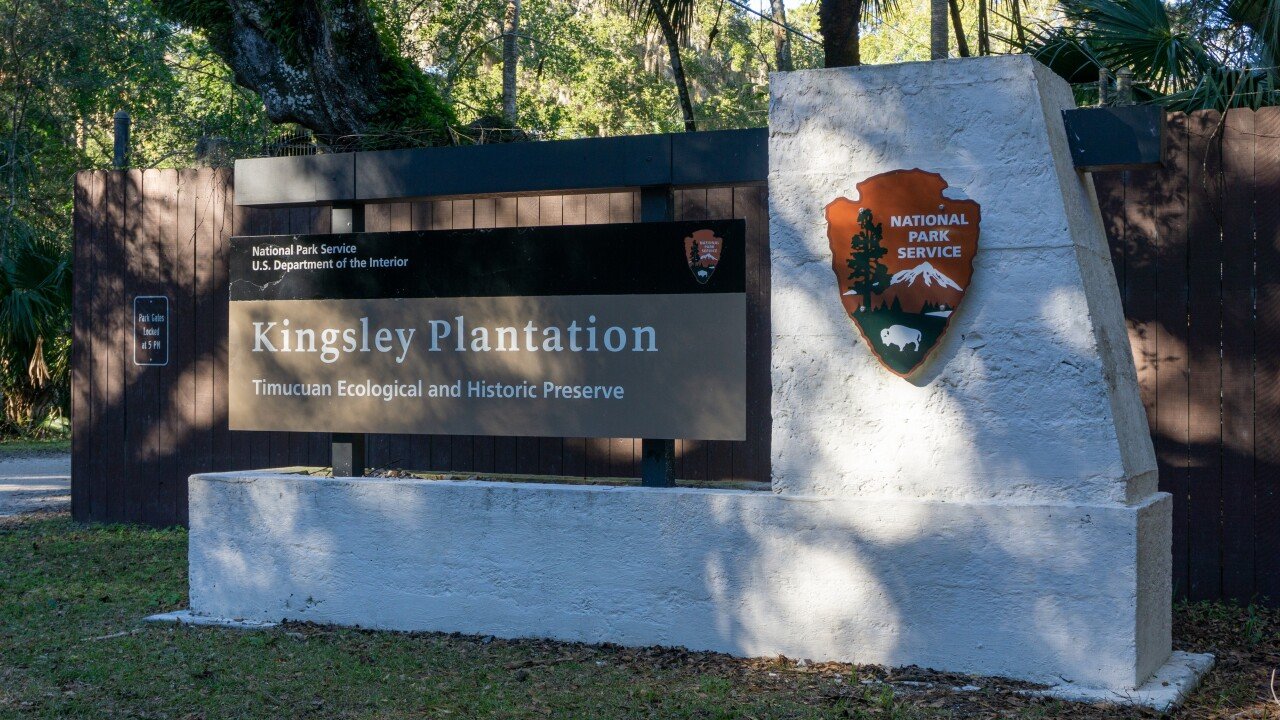

A federal judge has ordered the Trump administration to restore signs and exhibits removed or altered at national parks under a directive aimed at reshaping how American history is presented.
Get today's headlines by email 
In a 63-page ruling issued on Friday, Judge Angel Kelley said the administration had sought to promote a selective version of history by removing displays that did not fit its preferred narrative.
“Under the guise of promoting American dignity, this Administration seeks to share a limited history,” Kelley wrote, arguing that the changes resulted in incomplete accounts of historical events.
Restoration Deadline Set
Kelley ordered the government to reinstate all affected signs and exhibits by July 3, ahead of celebrations marking the United States' 250th anniversary. She also barred the administration from making further changes to national park exhibits while the case proceeds.
The ruling stems from a lawsuit filed in February by conservation and advocacy groups against the Interior Department and the National Park Service. The groups alleged the administration was attempting to erase aspects of American history and weaken science-based interpretation at park sites.
Executive Order Challenged
The dispute centres on a March 2025 executive order signed by President Donald Trump titled Restoring Truth and Sanity to American History. The order directed federal agencies to address public content that it said “inappropriately disparage Americans past or living.”
According to advocacy group Save Our Signs, at least 45 displays covering subjects such as climate change and Native American history were modified or removed following the directive.
Among the examples highlighted in court was the removal of a marker at Grand Teton National Park that referenced explorer Gustavus Cheyney Doane’s role in the 1870 massacre of at least 173 Piegan Blackfeet people.
At Fort Sumter National Monument, an exhibit discussing the potential impact of rising sea levels on the historic site was removed entirely.
Administration Weighs Appeal
An Interior Department spokesperson criticised Kelley’s decision, describing her as a “liberal activist judge” and indicating that the department was considering an appeal.
The spokesperson said officials were reviewing their legal options while participating in anniversary celebrations at the White House.
Advocates Welcome Decision
Alan Spears of the National Parks Conservation Association, one of the groups behind the lawsuit, welcomed the ruling.
He said the decision temporarily halted what he described as the “sanitization” and censorship of historical interpretation within the national park system.
Spears argued that visitors should have access to the full scope of American history and said national parks play a crucial role in preserving and explaining the country's past.
In her ruling, Kelley echoed that view, describing national parks as “a cornerstone of public learning” and “America’s largest classroom.”
She said the government has a responsibility to present history in its entirety rather than through selective accounts, adding that federal officials had failed to uphold that principle.
Join the discussion? 
Already a member? 
 Adapted by ASEAN Now. Source 14 June 2026
Recommended Comments
Create an account or sign in to comment