



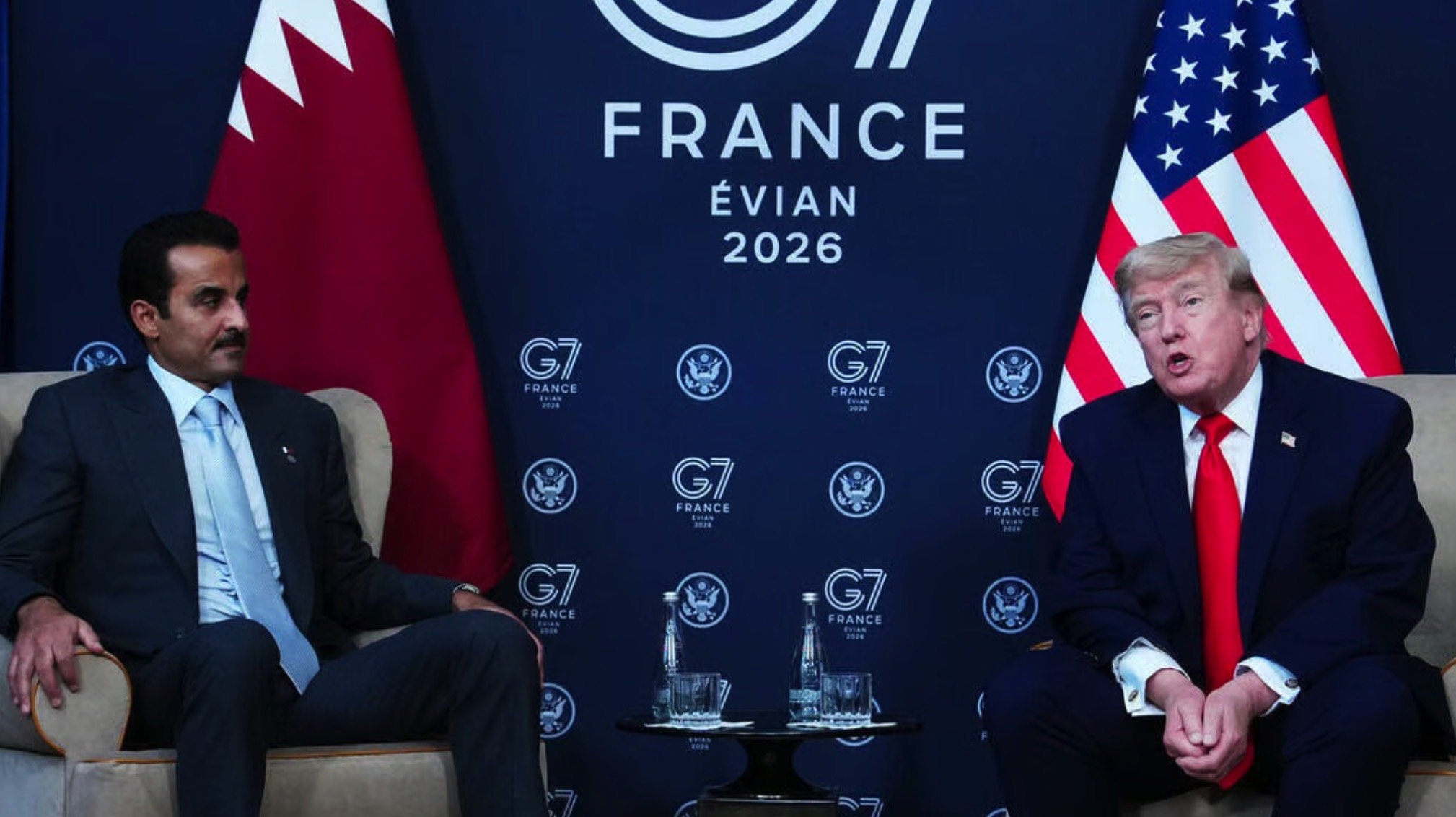

Negotiations over a proposed agreement between the United States and Iran remain clouded by uncertainty, despite US President Donald Trump saying the framework has already been signed electronically and describing it as a fair arrangement.
Get today's headlines by email 
Speaking three days before the expected signing of a memorandum of understanding in Switzerland, Trump said the central aim of the deal was to ensure Iran could never obtain a nuclear weapon. He warned Tehran would face severe consequences if it attempted to develop, buy or otherwise acquire one.
Nuclear Restrictions at Centre of Agreement
Trump said he personally pushed for changes to the wording of the agreement, arguing that it should prohibit Iran not only from developing nuclear weapons but also from obtaining them by any means.
According to Trump, the revised language required additional negotiations before the framework could be finalised. He said Iran would be barred from developing, purchasing or acquiring a nuclear weapon and insisted Tehran would not violate those terms.
The US president also dismissed reports that Washington would commit funds to rebuilding Iran under the agreement. Iranian media have reported that a reconstruction package worth $300 billion forms part of the framework, but Trump rejected that claim, saying the United States had no obligation to invest in Iran.
On Iran’s stockpile of highly enriched uranium, Trump said Washington intended to recover the material. He argued that doing so carried symbolic importance, even if the uranium itself was not especially valuable.
Trump also defended his decision to withdraw from the 2015 nuclear agreement negotiated during the administration of former president Barack Obama, describing that accord as deeply flawed.
Trump Criticises Israel Over Lebanon
While discussing the broader regional situation, Trump said he did not support regime change in Iran, arguing that such efforts had historically failed. However, he noted that the deaths of several Iranian leaders had already altered the country's leadership landscape.
The US president also delivered unusually direct criticism of Israel’s military actions in Lebanon. He said the conflict with Hezbollah had dragged on for too long and warned that excessive civilian casualties were being caused.
Trump suggested that Syria could play a greater role in dealing with Hezbollah and questioned the need for strikes that destroy residential buildings while targeting militants.
He also criticised Israeli military action shortly before the expected signing of the US-Iran agreement and said Israeli Prime Minister Benjamin Netanyahu needed to act more responsibly regarding Lebanon.
Despite reports of tensions between the two leaders, Trump said his relationship with Netanyahu remained strong and described cooperation between the United States and Israel as highly effective.
Iran Links Deal to Lebanon Ceasefire
Iranian officials have continued to argue that the framework extends beyond Iran itself and includes provisions affecting Lebanon.
Foreign Minister Abbas Araghchi said implementation of the memorandum would begin on Friday and described the end of hostilities across multiple fronts as a key achievement of the first stage of negotiations.
Araghchi said discussions had been divided into two phases. The first focused on ending the war, reopening the Strait of Hormuz, releasing frozen Iranian assets and reconstruction efforts. A second 60-day negotiating period is expected to address sanctions relief and the nuclear issue in greater detail.
He also warned that any future Israeli military action against Lebanon would violate the understanding reached with the United States.
Missiles and Drones Remain Unresolved
Although Trump has presented the agreement as a major diplomatic success, significant questions remain unanswered.
Israeli and European officials have expressed concern that Iran’s ballistic missile programme does not appear to be covered by the current framework. European leaders, including French President Emmanuel Macron and European Commission President Ursula von der Leyen, have urged that missile capabilities be included in any final settlement.
Iran has long refused to negotiate over its missile programme, describing it as a matter of national defence. Israeli officials fear that large-scale missile attacks could inflict damage comparable to that caused by a small nuclear weapon.
Questions also remain over Iran’s drone capabilities and the future of its regional proxy groups. Analysts in Israel believe there is no guarantee that negotiations will produce a final agreement, leaving key security concerns unresolved.
For now, Trump continues to frame the emerging accord around a single objective: preventing Iran from ever obtaining a nuclear weapon. Yet disputes over missiles, Lebanon, Hezbollah and broader regional security issues are already testing the framework before it is formally signed.
Join the discussion? 
Already a member? 
 Adapted by ASEAN Now. Source 16 June 2026
Recommended Comments
Create an account or sign in to comment