



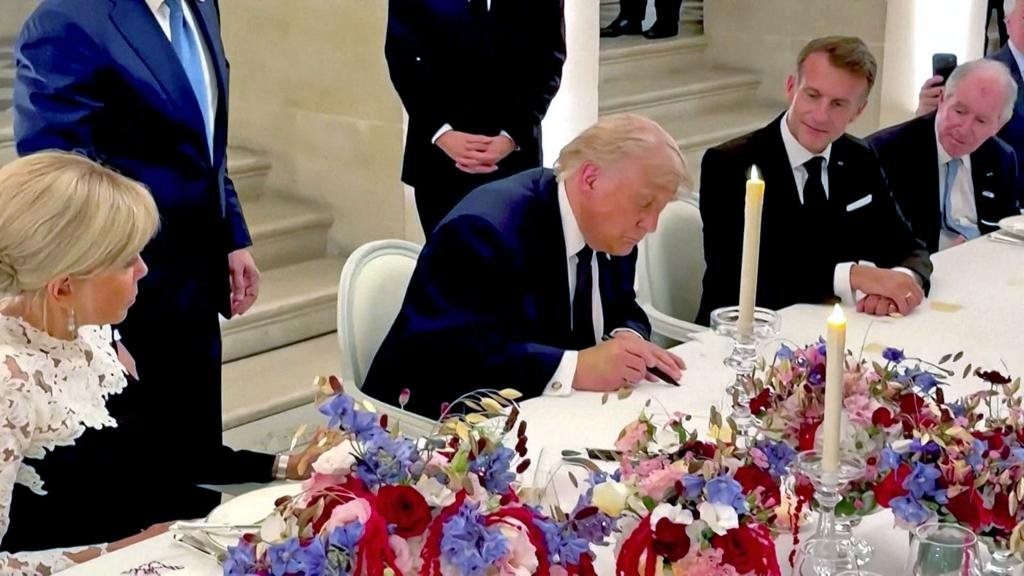

US President Donald Trump and Iranian President Masoud Pezeshkian have signed an initial agreement aimed at ending the conflict between the United States and Iran, marking a significant step toward a broader peace settlement.
Get today's headlines by email 
The accord, contained in a 14-point memorandum of understanding, establishes a framework for further negotiations over the next 60 days. During that period, the strategically vital Strait of Hormuz is set to reopen, restoring access to one of the world's most important maritime oil transit routes.
Trump was shown signing the document as part of the announcement, while representatives from both countries are expected to continue discussions aimed at reaching a final and more comprehensive agreement.
Further Talks Planned
Under the memorandum, Washington and Tehran will engage in additional negotiations over the coming two months in an effort to convert the initial deal into a lasting settlement.
An official signing ceremony involving US and Iranian representatives had been scheduled to take place in Switzerland on Friday. However, it remains unclear whether that event will proceed following the signing of the initial agreement.
Oil Prices Fall
Financial markets reacted positively to news of the deal.
The price of Brent crude oil fell by around 1.5% on the day, with a barrel trading at approximately $78 (£59). The decline reflected investor expectations that the reopening of the Strait of Hormuz could ease concerns over disruptions to global energy supplies.
Reconstruction Fund and Nuclear Questions
The agreement also includes plans for a $300 billion reconstruction programme for Iran, intended to support the country's recovery following the conflict.
However, major questions remain unresolved, particularly regarding Iran's nuclear activities. While the memorandum outlines broad commitments and future discussions, it does not provide detailed answers on how Tehran's nuclear programme will be addressed in a final settlement.
Concerns Over Strategic Leverage
The deal has prompted debate over the long-term implications of reopening the Strait of Hormuz.
BBC international editor Jeremy Bowen noted that the agreement may reinforce the perception within Iran's leadership that the waterway can be used as a powerful strategic tool, given its importance to global shipping and energy markets.
Negotiators now face the challenge of turning the initial framework into a durable agreement while addressing unresolved issues that could determine the success of any lasting peace deal.
Join the discussion? 
Already a member? 
 Adapted by ASEAN Now. Source 18 June 2026
Recommended Comments
Create an account or sign in to comment