



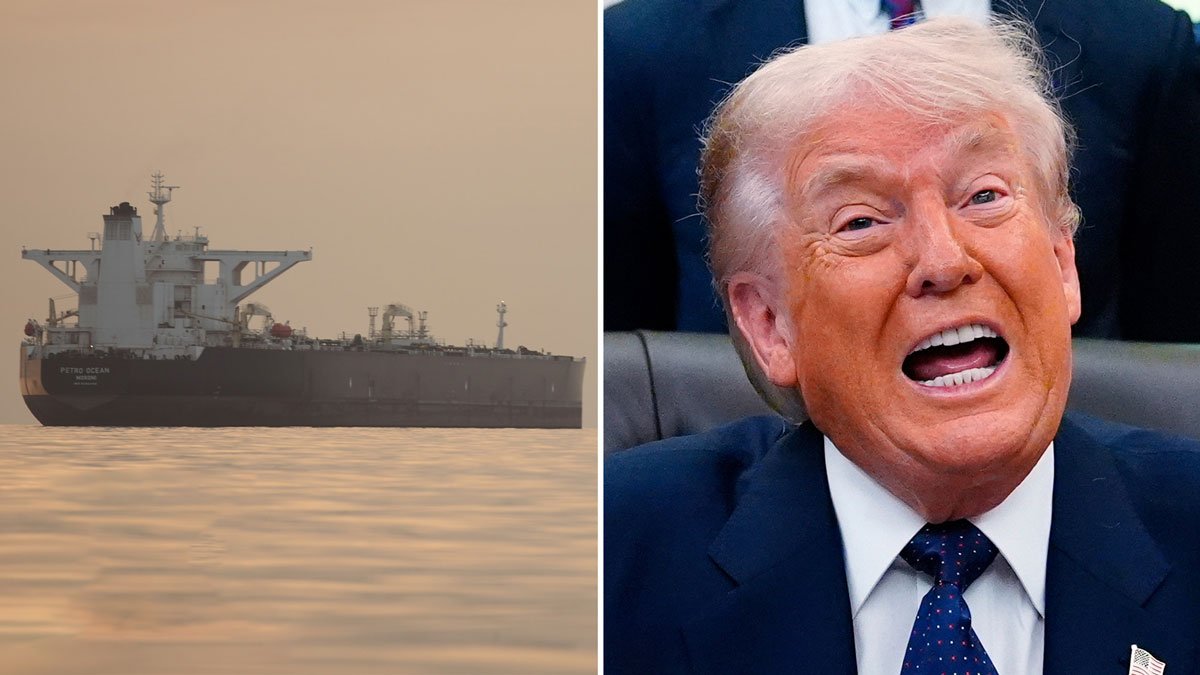

US President Donald Trump has indicated a possible end to military operations against Iran after announcing a halt to a campaign aimed at breaking Tehran’s control over the Strait of Hormuz. The decision came as reports suggested the two sides are nearing a preliminary framework for talks to end the conflict.
Get today's headlines by email 
The move points to a potential diplomatic opening following weeks of tension over the strategic waterway, a key route for global oil shipments. While signalling willingness to pursue negotiations, Trump warned that military strikes could resume if talks fail.
Framework for negotiations
According to officials familiar with discussions, the United States and Iran are considering a one-page memorandum of understanding that would establish a 30-day window to negotiate a broader agreement.
During that period, both sides would ease restrictions on shipping through the Strait of Hormuz while diplomats work toward reopening the route fully. The talks would also address limits on Iran’s nuclear activities and the possible lifting of US sanctions.
In a social media message, Trump said the campaign known as “Epic Fury” could end if Iran agrees to the proposed terms.
“Assuming Iran agrees to give what has been agreed to… the already legendary Epic Fury will be at an end,” he wrote, adding that the blockade would then allow the strait to reopen to all vessels, including those from Iran.
He also warned that if negotiations collapse, the United States would resume bombing operations at “a much higher level and intensity”.
Doubts over lasting agreement
Some analysts remain sceptical about whether the two sides can reach a durable settlement. Hein Goemans, a political scientist at the University of Rochester who studies how wars end, questioned whether either side is willing to make the concessions required for a long-term deal.
He argued that even if Tehran agrees to reopen the Strait of Hormuz, the confrontation has demonstrated its ability to disrupt shipping in the future, which could continue to threaten global energy markets.
Goemans also noted deep mistrust between the two governments. Iranian leaders, he said, may doubt the reliability of any deal with Washington, given the possibility that US policy could shift quickly.
Nuclear issues and political pressure
Officials say the proposed nuclear provisions resemble the framework negotiated during the administration of Barack Obama, which included a 10 to 15-year limit on uranium enrichment. Trump withdrew the United States from that agreement during his first term.
If Trump agrees to reduce sanctions or unfreeze Iranian assets as part of a new deal, he may face opposition from Israel as well as critics within his own party who favour a tougher stance on Tehran’s nuclear programme.
Talks between Washington and Tehran have repeatedly stalled in recent months. Negotiators met for more than 20 hours in Islamabad, Pakistan last month but failed to reach an agreement.
The US delegation was led by Vice President J. D. Vance, who said significant differences remained, particularly over Washington’s demand that Iran abandon its nuclear programme entirely. A follow-up meeting was later postponed after Tehran declined to participate.
Economic pressure and international role
Both countries face growing economic pressure to find a resolution. In the United States, rising fuel costs have pushed the national average gasoline price to $4.53 per gallon, according to the American Automobile Association.
Iran, meanwhile, is grappling with high inflation and worsening poverty, conditions worsened by restrictions on its energy exports.
China has also urged a diplomatic solution. During talks in Beijing, Chinese Foreign Minister Wang Yi told his Iranian counterpart Abbas Araghchi that a full cessation of hostilities should not be delayed.
Trump is expected to meet Chinese leader Xi Jinping later this month, adding further pressure to show progress toward ending the confrontation.
Join the discussion? 
Already a member? 
 Adapted by ASEAN Now. Source 7 May 2026
Recommended Comments
Create an account or sign in to comment