



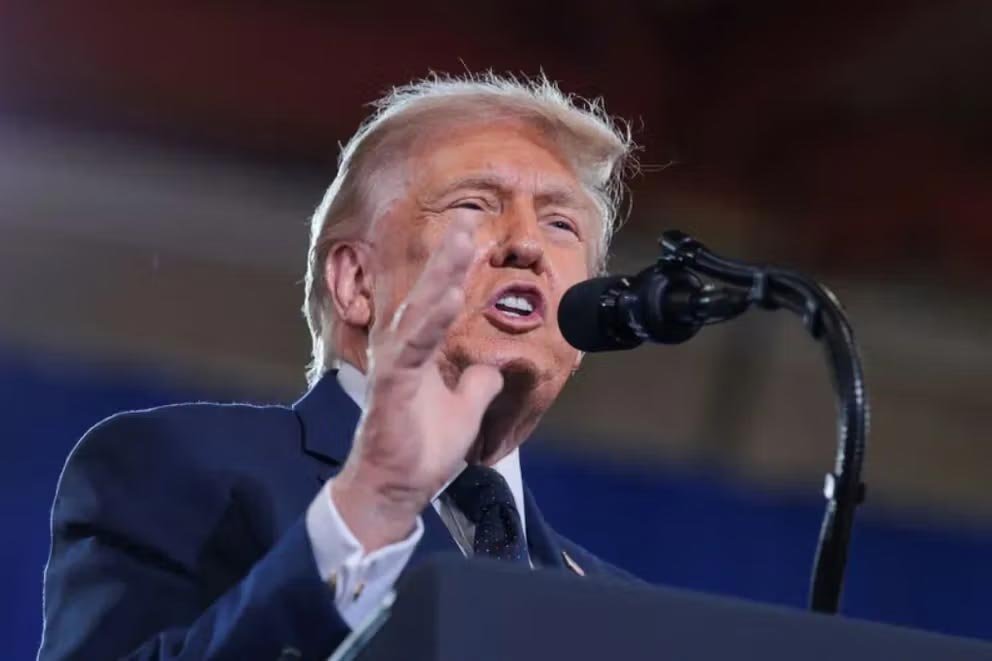

US President Donald Trump has told American negotiators not to rush efforts to secure a deal with Iran, despite reports suggesting an agreement may be close.
Get today's headlines by email 
Media reports in the United States said discussions have focused on a possible 60-day extension of the current ceasefire, the reopening of the Strait of Hormuz, and continued negotiations over Iran’s nuclear programme.
In a post on Truth Social on Sunday, Trump described the talks as “constructive” but stressed that both sides should proceed carefully.
“Negotiations are proceeding in an orderly and constructive manner, and I have informed my representatives not to rush into a deal in that time is on our side,” Trump wrote.
He added: “Both sides must take their time and get it right. There can be no mistakes!”
Talks Continue Despite Remaining Disputes
Trump had said on Saturday that an agreement had been “largely negotiated”, fuelling speculation that a breakthrough announcement could be imminent.
However, Iranian media later reported that disagreements remain over “one or two” unresolved issues.
Iranian officials have also indicated that progress has been made, though foreign ministry spokesperson Esmail Baghaei cautioned that key matters had not yet been settled.
Baghaei said negotiations were moving forward but warned that this did not guarantee final agreements on the most sensitive issues.
Conflict and Ceasefire
The latest diplomatic efforts follow months of conflict between Iran, Israel and the United States.
On 28 February, Israel and the US launched major air strikes on Iran. Tehran responded with drones and missile attacks targeting Israel and US-linked sites across Gulf countries.
A ceasefire reached in April was intended to create space for negotiations and has mostly held, although occasional exchanges of fire have continued.
Nuclear Programme and Hormuz
Trump repeated Washington’s long-standing position that Iran must not develop a nuclear weapon.
The United States and its allies accuse Tehran of seeking nuclear weapons capability through uranium enrichment. Iran has consistently denied the allegation, insisting its nuclear activities are for peaceful civilian purposes.
Trump also said the US blockade on Iranian ports, introduced in early April, would remain in place until any agreement is fully finalised and signed.
At the same time, Iran has maintained control over the Strait of Hormuz, a strategically important shipping route through which roughly one-fifth of global oil and liquefied natural gas supplies pass. Restrictions around the strait have contributed to rising global energy prices.
US Secretary of State Marco Rubio said earlier that negotiations had produced “significant” but “not final” progress.
Rubio suggested there could soon be positive developments regarding the strait, saying recent discussions could potentially lead to a “completely open strait... without tolls”.
Mediation Efforts
Baghaei told Iranian state television on Saturday that Tehran was preparing a “memorandum of understanding” aimed at extending discussions and eventually securing a final agreement.
Trump also referred to a possible memorandum in a separate Truth Social post.
Meanwhile, Ishaq Dar, whose government has been helping mediate the talks, said recent negotiations offered “grounds for optimism” and suggested a positive outcome could be “within reach”.
Despite the upbeat signals, several US media outlets reported that officials did not expect a formal agreement to be signed on Sunday.
Join the discussion? 
Already a member? 
 Adapted by ASEAN Now. Source 25 May 2026
Recommended Comments
Create an account or sign in to comment