



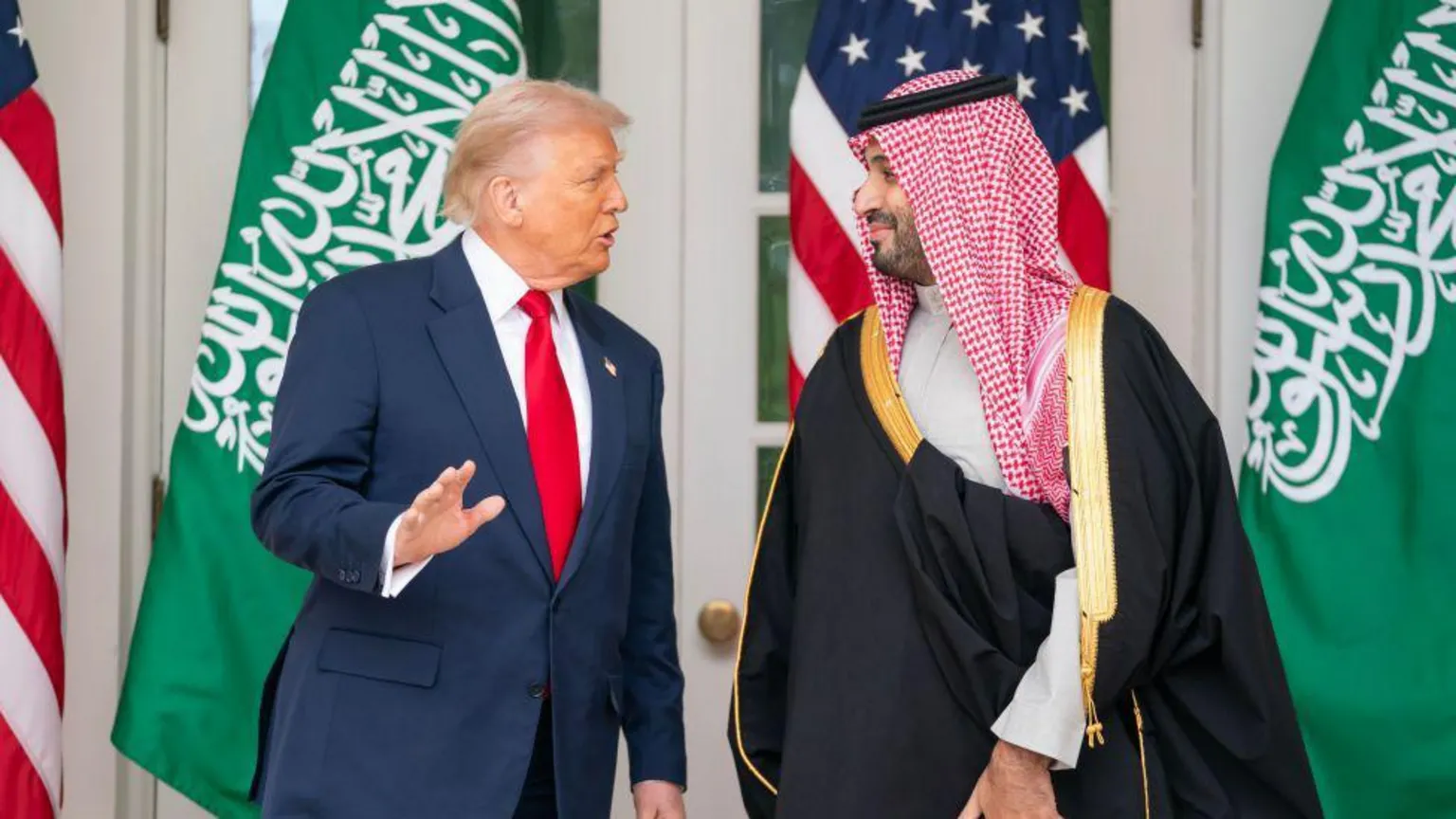

The United States will only move forward with a civil nuclear agreement with Saudi Arabia if the kingdom formally recognises Israel by joining the Abraham Accords, President Donald Trump has said.
In a post on Truth Social, Trump said the proposed agreement, which he stressed would involve no uranium enrichment and be limited to civilian purposes, remained conditional on Saudi Arabia establishing diplomatic ties with Israel.
“The Civil Nuclear Deal (There will be no enrichment of material!)... which pertains only to non-military use... will be approved, but is totally subject to Saudi Arabia joining the very respected and successful Abraham Accords,” Trump wrote.
It remains unclear whether the condition is included in the text of the agreement, which has not yet been released, or whether Saudi Arabia has formally accepted it. Riyadh has not publicly responded to Trump's comments.
White House Reaffirms Position
White House press secretary Karoline Leavitt said Trump has repeatedly made the condition clear during discussions with Saudi leaders.
“He has said if they don't join the Abraham Accords, the deal is off,” she said, adding that discussions with Saudi officials would continue.
The comments followed criticism from nuclear experts and some lawmakers, who warned the agreement could increase long-term nuclear proliferation risks in an already volatile Middle East. Although members of both major US political parties have voiced concerns, opponents are not expected to have enough votes in Congress to block the deal.
According to the US Department of Energy, the package includes a peaceful nuclear cooperation agreement and a bilateral safeguards agreement intended to support civilian nuclear development while strengthening non-proliferation measures.
The department said the agreements establish the legal framework for a long-term partnership and will be submitted to Congress for review.
International Oversight and Regional Reaction
The International Atomic Energy Agency (IAEA) said it was aware of plans for a bilateral civil nuclear cooperation agreement and expected to receive a request to implement verification measures.
The agency said it looked forward to working with both Washington and Riyadh to ensure those safeguards were carried out.
During Trump's first term, the United Arab Emirates and Bahrain signed the Abraham Accords, normalising relations with Israel. Sudan, Morocco and Kazakhstan later joined the agreements.
Saudi Arabia has consistently maintained that it will not recognise Israel without the establishment of a Palestinian state. The White House has nevertheless said the nuclear agreement depends on Riyadh joining the accords.
Israel welcomed Trump's statement. Prime Minister Benjamin Netanyahu's office described potential Saudi participation in the Abraham Accords as “an historic leap forward for peace in the Middle East,” although it did not refer directly to the nuclear agreement.
Israeli Economy Minister Nir Barkat previously said Israel could accept Saudi Arabia developing nuclear power for peaceful purposes. However, former Defence Minister Avigdor Lieberman warned that civilian nuclear programmes can eventually become military ones.
Enrichment Concerns
The agreement has drawn additional scrutiny after earlier media reports suggested Saudi Arabia might eventually be allowed to enrich uranium, a process that can produce fuel for nuclear power plants but also material suitable for nuclear weapons. Trump's latest remarks appeared to rule out that possibility.
Rosemary Kelanic, director of the Middle East programme at the US-based Defense Priorities think tank, said allowing Saudi Arabia to enrich uranium would represent a significant departure from previous US policy.
She said the United States had never before assisted another country in developing domestic uranium enrichment capabilities because such technology increases the risk of future nuclear weapons development.
The issue comes amid ongoing tensions over Iran's nuclear programme. While Tehran continues to deny seeking nuclear weapons, Saudi Crown Prince Mohammed bin Salman said in 2018 that although the kingdom was not pursuing a nuclear bomb, it would seek one if Iran successfully developed nuclear weapons.
Join the discussion? 

24 July 2026
-
 1
1
Recommended Comments
Create an account or sign in to comment