



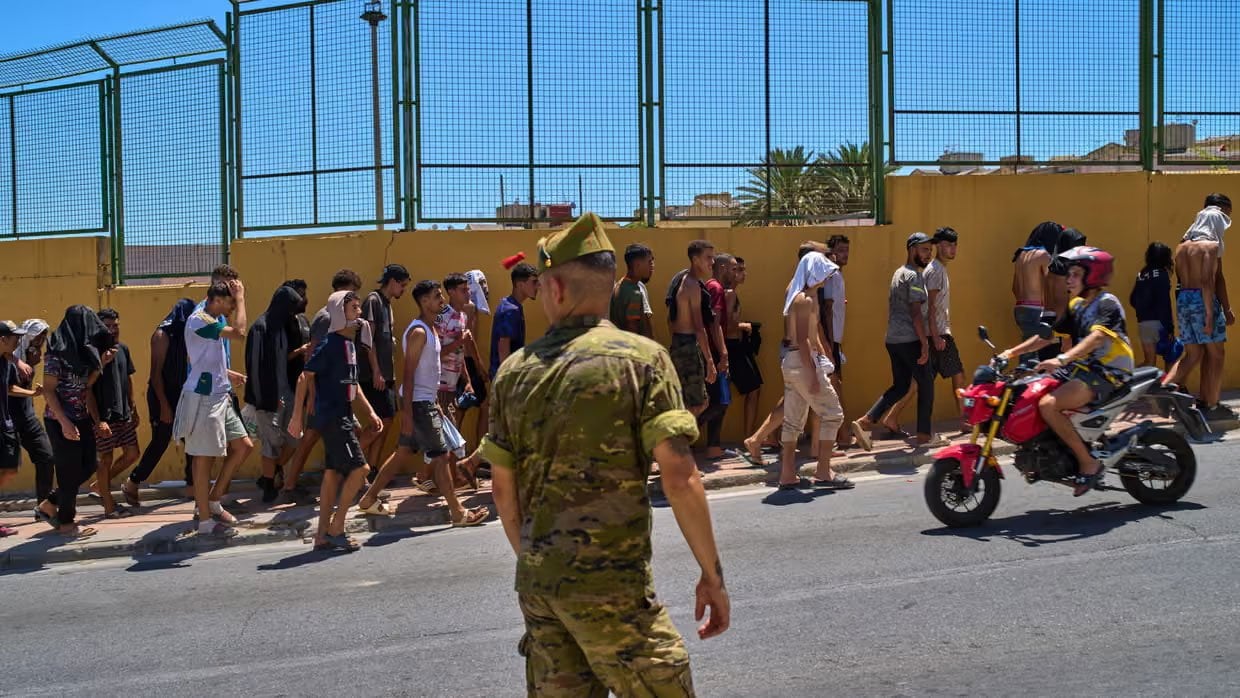

Spain has said more than 70,000 people entered Ceuta during a sudden surge across the Spanish enclave in north Africa, before many returned quickly. The incident, which prompted intense international headlines, has also reignited debate over what set off the crossing and whether outside influence was involved.
Riccardo Fabiani of the International Crisis Group said there is enough information to consider Morocco as a possible actor, but he added that investigators had not identified a clear, single trigger. He said the lack of an obvious starting point is what has puzzled analysts and officials as the situation continues to be scrutinised.
Ceuta Influx Spurs Fresh Questions
Some observers pointed to Spain’s recent moves to improve relations with Algeria, a long-standing rival of Morocco, as a potential catalyst. Fabiani said there is no way to prove any direct link, but he argued it is plausible that Rabat could have sought to improve its standing with allies in Washington, given the closeness of ties between Morocco and the Trump administration.
Trump Comments Add Political Pressure
As images of thousands swimming and wading across one of the EU’s two land borders with Africa spread, responses in Europe and the United States hardened along partisan lines.
In the US, Vice-President JD Vance and the state department blamed Spain’s Socialist-led government for the influx. Trump also warned that electing Democrats would make what happened in Spain “look small-time”. During the US remarks cited in the article, Morocco was not mentioned, and no US official referred to any potential role by Rabat.
Fabiani said the episode also appeared to align with Morocco’s broader aim of keeping Western Sahara and related issues prominent in Washington. He suggested Morocco may have monitored online chatter about the border opening and, rather than acting as organisers of a planned assault, could have made a calculation about whether events would develop.
Morocco-Ties Rise Through Western Sahara Deal
The deepening focus on Washington-Rabat links comes as the relationship between the two countries has been highlighted through several recent developments, including Morocco’s announcement that it would be the first African state to join Donald Trump’s “Board of Peace”. The article also says Trump sent a congratulatory message to King Mohammed VI marking his 27 years in power.
It further reports that the king confirmed he had been named for a $1bn highway project that would run along Western Sahara, a territory whose status remains disputed. The article links this announcement to Trump’s influence over the timing and messaging surrounding Western Sahara.
Fabiani argued that Morocco has spent effort cultivating senior decision-makers in the administration, including the president, to secure continued support for an autonomy plan for Western Sahara. The background, he said, reflects a wider bargain dating to Trump’s first term, when Morocco normalised relations with Israel after receiving US recognition of its sovereignty claim over Western Sahara, described in the article as part of an autonomy approach.
The text also points to a US congressional report that referred to Ceuta as “Spanish-administered” rather than part of Spain, despite Spain’s control of the territory since 1580.
Morocco Rejects Accusations as EU Fallout Continues
Alongside questions over what happened in Ceuta, the article says EU responses have largely turned into disputes rather than coordinated efforts to deter further movement. Amirah-Fernández of the Centre for Contemporary Arab Studies said the pattern echoed the May 2021 episode, when Morocco loosened border controls and more than 8,000 people crossed into Ceuta amid anger over Spain allowing a Western Sahara pro-independence figure to travel for Covid-19 treatment.
At the Moroccan Institute for Policy Analysis, senior officials reject any suggestion of complicity. Said Saddiki said relations with Washington are in a “golden era”, while adding that Morocco works pragmatically to preserve strategic autonomy and maintain ties with other partners including the European Union, China and Gulf states. He said support from the Trump administration has strengthened Morocco’s international position without coming at the expense of relations with Spain or the EU.
Fabiani said the Ceuta episode underscores how dependence on North African states to manage migration flows can leave Europe vulnerable. He warned that if Morocco believes Ceuta remains unsettled and sees Washington as willing to back its position, the situation could become more complicated over time.
Join the discussion? 

6 August 2026
Recommended Comments
Create an account or sign in to comment