



Skip to content
View in the app

A better way to browse. Learn more.

Thailand News and Discussion Forum | ASEANNOW

A full-screen app on your home screen with push notifications, badges and more.

To install this app on iOS and iPadOS
  1. Tap the Share icon in Safari
  2. Scroll the menu and tap Add to Home Screen.
  3. Tap Add in the top-right corner.
To install this app on Android
  1. Tap the 3-dot menu (⋮) in the top-right corner of the browser.
  2. Tap Add to Home screen or Install app.
  3. Confirm by tapping Install.

Become a member

Become a member

UK Confirms Biological Sex Rules for Toilets

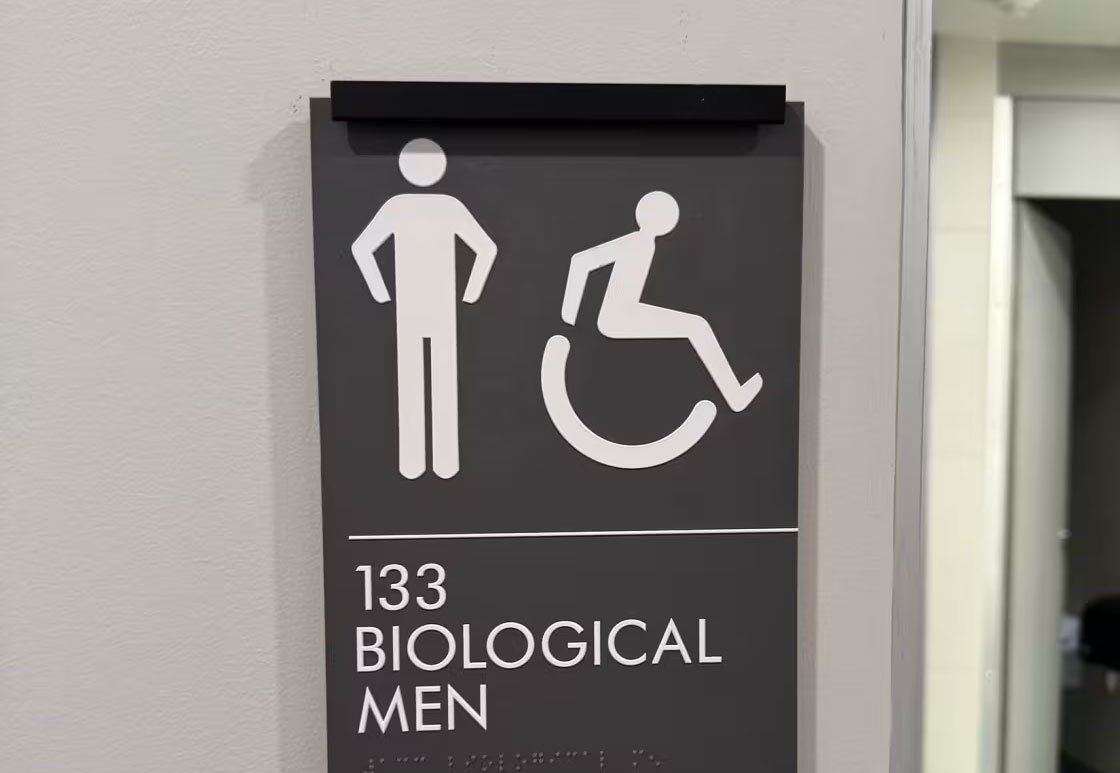
Single-sex spaces such as toilets and changing rooms should be used according to biological sex, new guidance from Britain’s equality watchdog has confirmed.

Get today's headlines by email image.png

The updated code of practice, produced by the Equality and Human Rights Commission and approved by ministers, states that a transgender woman should not use female toilets or changing facilities because she is biologically male.

Instead, the guidance says transgender people should be offered alternative facilities, including gender-neutral or third spaces where possible.

The guidance follows last year’s landmark ruling by the Supreme Court of the United Kingdom, which found that the definition of a woman under the Equality Act is based on biological sex.

New rules for public services

The code of practice outlines how businesses, associations and public services should organise facilities ranging from gyms and shopping centres to hospitals and restaurants.

It also states that denying transgender people access to all facilities would likely be disproportionate and could amount to discrimination.

The guidance recommends that gender-neutral toilets and changing rooms should include self-contained lockable cubicles with floor-to-ceiling walls and wash basins. The EHRC said organisations could also choose to allow transgender people to use disabled toilets.

Where premises only have separate male and female toilets, the guidance says they could instead be redesignated as unisex facilities.

The code, which runs to more than 300 pages, has now been placed before parliament. MPs and peers have 40 days to object before it becomes statutory guidance.

The EHRC first submitted the draft guidance to the government in September 2025. Ministers initially said the issue would be handled “thoroughly and carefully” before releasing the document eight months later.

Women and Equalities Minister Bridget Phillipson said the government’s aim was to ensure people could live free from discrimination and harassment.

“Our focus has always been making sure organisations have clear, accessible guidance on how to implement the law,” she said.

Debate over impact on trans people

EHRC chair Mary-Ann Stephenson said she hoped the public would approach the code “with an open mind”.

“I think we do need to broaden out the debates, and we need to start from a point of saying, how do we make sure that everyone has access to the services they need,” she said.

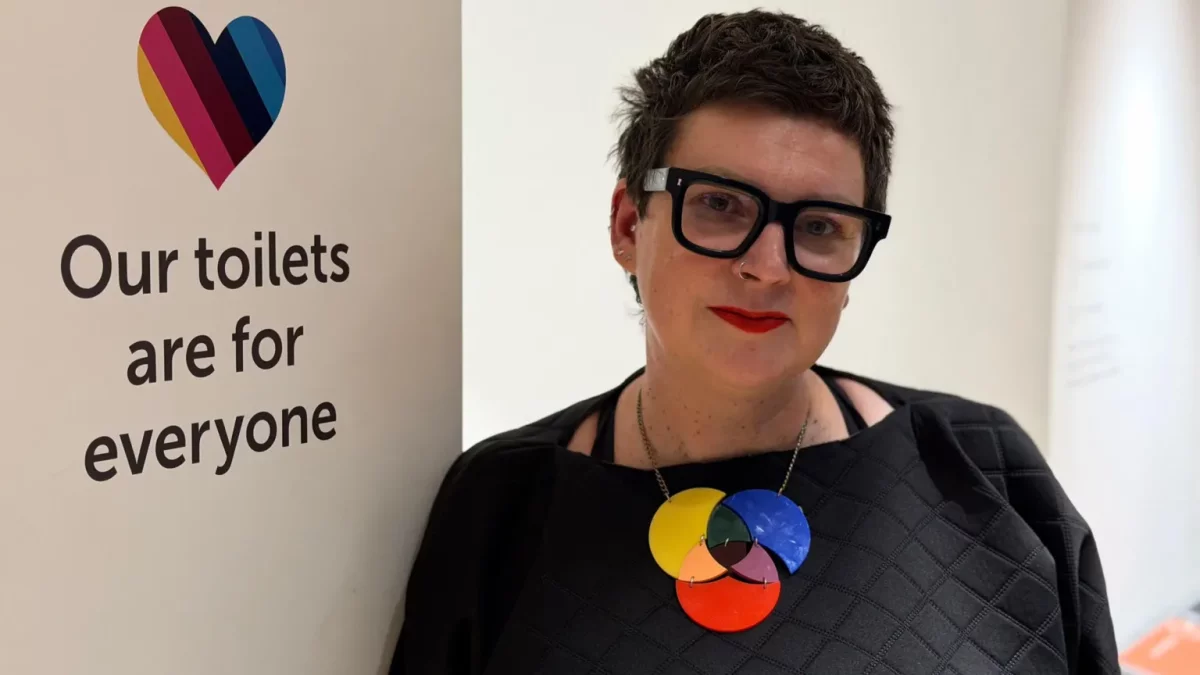
At the Watershed arts cinema in Bristol, chief executive Clare Reddington said delays to the guidance had caused confusion and misinformation.

The venue, which has gender-neutral toilets alongside separate male and female facilities, won a Loo of the Year award in 2024.

Reddington described the impact on transgender people as “toxic” and said many had been waiting for clarity on what the guidance would mean for “their ability to live a full public life”.

“I would say that designing toilets for everyone is great for business,” she added.
a1b106b0-553f-11f1-9182-e71b657bd088.jpg.webp

Clare Reddington

Campaign groups divided

Gender-critical campaign group Sex Matters welcomed the guidance.

Its co-founder Maya Forstater said organisations could no longer claim they were waiting for official clarification before changing policies.

“The new guidance is long and detailed, but at its heart is a simple principle: ‘sex’ means what it says – male and female,” she said.

However, transgender rights group TransActual said the guidance reduced protections for transgender people and the wider LGBT community.

The group said it would continue campaigning for equal access to public life and would publish a fuller response after reviewing the code in detail.

Employment lawyer Joanne Moseley of Irwin Mitchell said businesses were increasingly seeking legal advice on how to respond to the changes.

She said clear signage and the availability of gender-neutral facilities would be important, but warned that organisations could still face discrimination claims even before the guidance formally comes into force.

Join the discussion? Create account. orange.png

Already a member? haveyr-say.png


image.png
Adapted by ASEAN Now. Source 22 May 2026

User Feedback

Recommended Comments

JonnyF Star Member

JonnyF

Advanced Member
21 hours ago, Chomper Higgot said:

Most rapes occur in domestic settings, the victims own home being the most prevalent location:

“For year ending (YE) March 2020 and YE March 2025 combined, the most common location for rape or assault by penetration to occur was in the victim’s home (38.2%), followed by the perpetrator’s home (28.5%).”

Given your broad perjorative views of who might be the perpetrators, the best way to protect young girls (or indeed anyone) from rape might actually be to isolate all men from their likely victims, mass chemical or physical castration might be a more practical alternative.

https://www.ons.gov.uk/peoplepopulationandcommunity/crimeandjustice/articles/natureofsexualassaultbyrapeorpenetrationenglandandwales/yearendingmarch2025#circumstances-of-the-assault

Typical <REMOVED> from you to try and justify more sexual assaults against women in their safe spaces.

"But but Men rape women outside women's toilets as well".

Pathetic even by your standards Higgot.

gamb00ler Platinum Member

gamb00ler

Advanced Member
On 5/22/2026 at 8:10 AM, Smokey and the Bandit said:

Surely common sense is prevailing here?

A men dressed as a woman is still a man biologically and must use the male bathroom /toilet?

Vice versa of course!

I can't see the problem?

You can't see what you don't understand. Birth gender is not always strictly binary. If you're willing you can find plenty of information on the internet. Start with 'intersex'. I bet you won't.

impulse Star Member

impulse

Advanced Member

The code, which runs to more than 300 pages, has now been placed before parliament. MPs and peers have 40 days to object before it becomes statutory guidance.

I almost spat in my corn flakes. 300 pages? When every kid learns it the first day in kindergarden.

And then they wonder why people can't afford to start businesses.

Smokey and the Bandit Gold Member

Smokey and the Bandit

Advanced Member
1 hour ago, gamb00ler said:

You can't see what you don't understand. Birth gender is not always strictly binary. If you're willing you can find plenty of information on the internet. Start with 'intersex'. I bet you won't.

I understand perfectly!

I researched thoroughly 'intersex' or DSD some time ago. I have detailed files on it.

Humans are a sexually dimorphic species (male and female). Intersex conditions are abnormalities within that binary, not a separate category, it affects very few people.

Intersex , DSD, conditions are real medical anomalies that affect a very small percentage of the population. They are not evidence of a “third sex” or that sex is a spectrum in the way it’s often portrayed in popular culture.coffee1

gamb00ler Platinum Member

gamb00ler

Advanced Member
39 minutes ago, Smokey and the Bandit said:

not a separate category, it affects very few people.

It is a separate category when judged from their physical attributes and their hormone expression. They have a range of genitalia and internal organs. Even their DNA sometimes does not match either normal male or female. I don't buy your statement that they are not a separate category. If you can't put them into either sex precisely... then they're separate.

I read that intersex people occur about the same frequency as full blown red hair.

Smokey and the Bandit Gold Member

Smokey and the Bandit

Advanced Member
3 minutes ago, gamb00ler said:

It is a separate category when judged from their physical attributes, and their hormone expression. They have a range of genitalia and internal organs. Even their DNA sometimes does not match either normal male or female. I don't buy you statement that they are not a separate category. If you can't put them into either sex precisely... then they're separate.

I read that intersex people occur about the same frequency as full blown red hair.

No, intersex conditions do not constitute a separate category or "third sex." They are developmental disorders (Differences/Disorders of Sex Development - DSD) where the normal process of becoming male or female goes wrong in utero.

These individuals still fall into the binary of sex — they are males or females with atypical development, not a third type. Even when genitalia are ambiguous or chromosomes are atypical (e.g., XXY, XO), their bodies are still organized around the male or female developmental pathway.

There is no third gamete type (sperm or egg), which is the biological definition of sex.

Calling them a separate category is a philosophical or ideological position, not a biological one.

The comparison to red hair is also misleading.

Natural red hair occurs in roughly 1–2% of the global population. Strict intersex conditions (those with significant ambiguity or mismatch between chromosomes, gonads, and anatomy) occur in approximately 0.018% to 0.05% of births — roughly 40 to 100 times rarer than red hair. The often-cited 1.7% figure is heavily inflated by including very mild or late-onset conditions that most people would never consider intersex. Biologically, humans remain a sexually dimorphic species.

Intersex conditions are rare anomalies within the male-female binary, not evidence of additional sexes.

Create an account or sign in to comment

Account

Navigation

Search

Search

Configure browser push notifications

Chrome (Android)
  1. Tap the lock icon next to the address bar.
  2. Tap Permissions → Notifications.
  3. Adjust your preference.
Chrome (Desktop)
  1. Click the padlock icon in the address bar.
  2. Select Site settings.
  3. Find Notifications and adjust your preference.

