



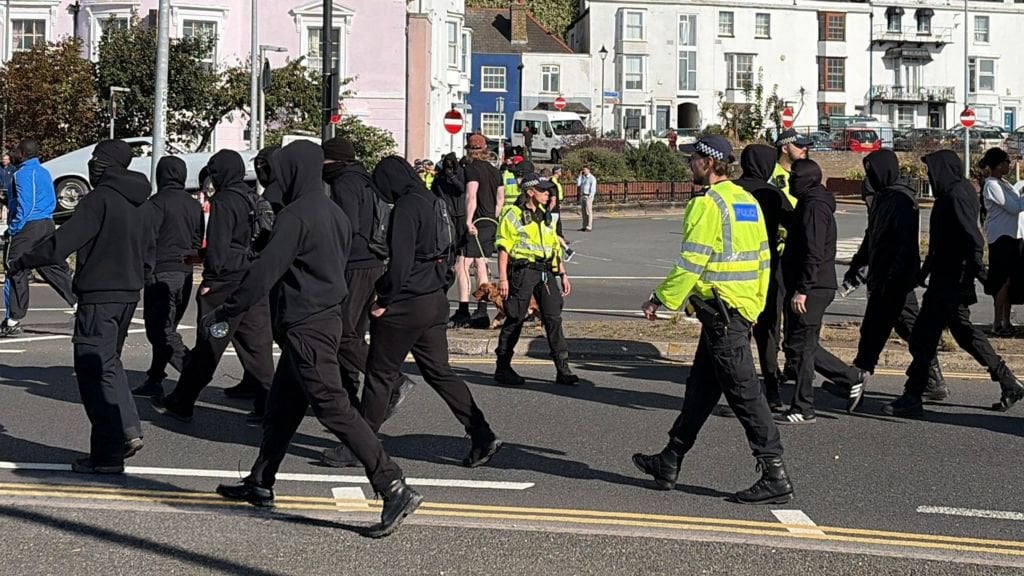

Home Secretary Shabana Mahmood has told police chiefs to learn lessons from last weekend’s anti-migrant protests in Dover and Portsmouth, and to use “all powers necessary” when dealing with future demonstrations.
In a meeting on Thursday, Mahmood asked for assurances that plans were in place for forces to respond quickly and effectively to far-right groups she said were seeking to intimidate communities.
Unacceptable Disorder in Dover and Portsmouth
On Saturday, masked protesters brought Dover to a standstill, blocking access to a nationally critical road serving the port. The following day in Portsmouth, around 200 people tried to stop migrants being driven away for processing.
The Home Office said the protests involved “unacceptable disorder”. It added that some protesters were dressed in black and wearing balaclavas, creating what Mahmood described as a “fear factor” and an intent to intimidate residents.
Mahmood said the incidents were different from other protests and needed a response shaped by those circumstances.
Face Coverings Ban Under Review
The BBC understands police leaders are now actively considering recently granted powers that would allow them to ban face coverings in specific areas during protests, in response to the behaviour seen in Dover and Portsmouth.
Mahmood also raised concerns about how quickly police could act when demonstrators tried to disrupt the movement of people and block routes used for processing migrants.
A further incident followed shortly after the Dover protest. Men blocked the only road out of Langstone Harbour near Portsmouth after the RNLI brought 120 migrants ashore.
It is not yet clear whether further demonstrations will be held. In some areas of England, local groups linked to the Patriot Platform umbrella have called for more rallies.
Intelligence, Planning and Public Order Powers
The meeting discussed the emergence of Patriot Platform, with ministers believing it aims to intimidate communities. Mahmood told police chiefs they should make better use of intelligence to improve preparedness ahead of this weekend.
Her comments came after Kent Police previously said it had been aware of a possible demonstration in Dover, but had not “fully assessed” the warning before the port road was brought to a standstill.
During the meeting, Mahmood said the government expected police to use their full powers and to take robust action against any criminal offences.
After the talks, Deputy Chief Constable Andy Mariner, the National Police Chiefs Council lead for public order, said forces were continually assessing and preparing for protests and any impact on public safety. He said this includes working with local forces, specialist teams, communities and partners to ensure support is available when needed.
Mariner added that the priority was to keep people safe, maintain public order and support the right to peaceful and lawful protest, while people committing criminal offences could “expect police action”.
New Rules for Blocking Critical Infrastructure
Major changes to protest law introduced over the last three years allow officers to intervene more quickly where demonstrations block critical national infrastructure, including roads used by ports. Officers can also designate an area as a face mask-free zone for the duration of a protest.
Police chiefs said they have launched an “enhanced and co-ordinated” approach to gathering intelligence in the days ahead.
Join the discussion? 

11 September 2026
-
 1
1
Recommended Comments
Create an account or sign in to comment