



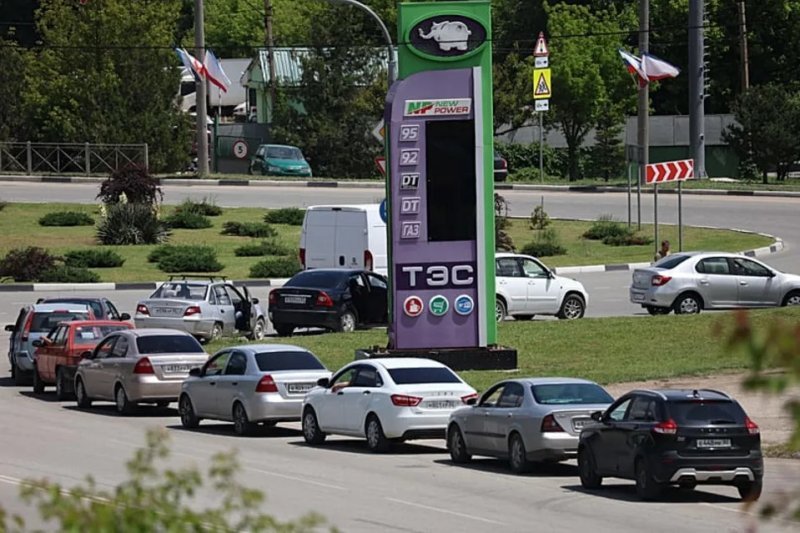

Ukraine has stepped up its military campaign against Russian-controlled Crimea, with repeated strikes disrupting electricity supplies, fuel distribution and daily life across the peninsula as Kyiv seeks to increase pressure on Moscow.
Get today's headlines by email 
Power outages have continued in Sevastopol, Crimea's largest city, after a series of Ukrainian attacks. Kremlin-installed governor Mikhail Razvozhayev said on Thursday that electricity restrictions had been introduced and urged residents to reduce pressure on the grid. Ukraine's drone forces commander, Robert Brovdi, said Kyiv struck Sevastopol's main power substation seven times early on Wednesday.
Russia annexed Crimea in 2014 after Ukraine's Maidan protests led to the removal of then-president Viktor Yanukovych, a move widely condemned by the international community. Sevastopol has long served as the headquarters of Russia's Black Sea Fleet.
Ukrainian President Volodymyr Zelensky has repeatedly pledged to restore Ukrainian control over Crimea, a goal that has become more prominent since Russia launched its full-scale invasion in 2022. In recent weeks, Ukraine has intensified strikes on the peninsula as part of a broader effort to increase military pressure on the Kremlin.
Disruptions Spread Across Crimea
The attacks have had growing consequences for civilians. Residents have reported more frequent air raid alerts, repeated drone activity and power disruptions, while authorities have restricted fuel sales to government agencies, leaving ordinary residents and businesses without access to petrol and diesel.
A Sevastopol resident, speaking anonymously for security reasons, told CNN that air raid warnings now occur several times a day and that drone interceptions increasingly take place over the city rather than above the Black Sea. She said fuel had disappeared from filling stations, although public transport was still operating. Before supplies ran out, she purchased fuel at significantly higher prices.
Crimea has long been a popular holiday destination for Russians and Ukrainians. Once a flagship Soviet resort region, the peninsula received billions of dollars in Russian investment after the 2014 annexation, transforming many tourist areas. However, the latest disruptions have cast uncertainty over the peak holiday season.
Tourism and Businesses Face Uncertainty
Crimea's Russian-installed leader, Sergey Aksyonov, announced that all children's summer camps would remain closed until September 1.
Videos posted online from Simferopol appeared to show unusually quiet streets and nearly empty public spaces. One resident described the city as resembling "some sort of apocalypse," while another said supermarket shelves were empty after cafes and canteens stopped operating.
Despite the disruption, a guesthouse owner in the resort town of Noviy Svet said visitors were still arriving. She described the atmosphere as cautious rather than panicked, adding that beaches, cafes and tourist facilities remained open, although guests were closely following developments.
Residents Voice Frustration
The fuel restrictions have prompted widespread complaints on social media. Responding to Aksyonov's announcement on Telegram, residents questioned how they would continue working or supporting their families.
One taxi driver said he would soon be unable to repay loans or buy food after banks refused payment holidays because no state of emergency had been declared. Another resident said her poultry distribution business required diesel fuel to deliver perishable goods across Crimea, while a third complained that overcrowded trolley buses left many commuters unable to reach work.
Ukraine has increasingly targeted military and logistical infrastructure inside Russian-controlled territory, including oil refineries and transport networks, alongside large-scale drone attacks on Moscow and St. Petersburg. In Crimea, Kyiv is focusing on transport links and supply routes supporting Russian forces in southern Ukraine.
Zelensky said on Wednesday that operations in Crimea were carefully planned to create conditions that would force Russia to choose peace.
Tatiana Stanovaya, founder of political analysis firm R.Politik, told CNN that although the situation in Crimea had become more difficult, she did not believe the growing domestic pressure would alter President Vladimir Putin's strategic objectives. Instead, she argued, the attacks were more likely to strengthen anti-Ukrainian sentiment within Russia than produce any significant political shift.
Join the discussion? 
Already a member? 
 Adapted by ASEAN Now. Source 26 June 2026
-
 1
1
Recommended Comments
Create an account or sign in to comment