




Ukraine's escalating drone campaign against Russian-occupied territories is disrupting Moscow's military supply network and worsening fuel shortages across occupied Crimea, according to officials, analysts and local reports.
Get today's headlines by email 
The shortages have been linked to repeated Ukrainian strikes on transport routes connecting southern Russia to Crimea through the occupied city of Mariupol. Analysts describe the route as a critical artery for Russian military logistics in southern Ukraine.
Supply Routes Under Pressure
Clément Molin of the French think tank Atum Mundi said Ukraine had conducted around 300 drone strikes on trucks since early May, including about 30 fuel tankers, with attacks intensifying in recent weeks. Ukraine's drone forces commander, Robert Brovdi, said military cargo traffic along the route fell by 71% between late May and early June.
Fuel Shortages Hit Residents and Tourists
The disruption has had visible effects across Crimea, which Russia annexed in 2014 and uses as a key military base for operations against Ukraine.
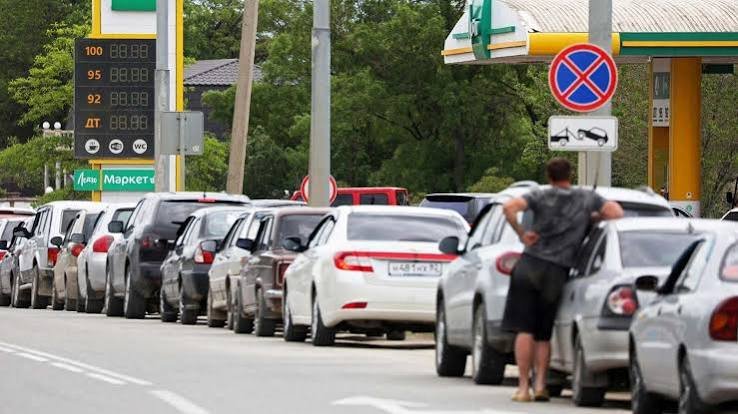
Residents and tourists have reported long queues at petrol stations, with some people waiting up to 10 hours to obtain fuel. Many stations have limited purchases to 20 litres per customer through prepaid vouchers, while some have run out of fuel entirely.
Tourists who travelled to Crimea before the shortages began have also struggled to secure enough fuel for return journeys. In response, Moscow-appointed authorities established a dedicated hotline to assist stranded visitors.
Fuel scarcity has driven up petrol and diesel prices across the peninsula. On 5 June, Crimea's Russian-installed leader, Sergei Aksyonov, acknowledged that authorities could not fully meet fuel demand and warned that hundreds of buses would remain idle because of shortages.
Russia Acknowledges Supply Problems
Russia's Energy Ministry publicly recognised fuel supply difficulties on 8 June, citing an increase in Ukrainian attacks on fuel and energy infrastructure in southern regions. The ministry said a permanent headquarters had been created to coordinate efforts to address the situation.
Alternative supply routes remain limited. Maritime transport has become increasingly risky after Ukrainian attacks damaged several ferries serving Crimea. Traffic on the Kerch Bridge linking Crimea to mainland Russia has also been affected by previous attacks and security concerns.
Craig Kennedy, an expert on Russia's oil industry and an associate at Harvard University's Davis Center, said transporting fuel by road through occupied territory now presents significant risks because vehicles remain vulnerable along the route.
Military Impact and Expanding Campaign
Some Russian military commentators argue the disruptions are affecting both civilian life and military operations. Pro-Kremlin military analysis channel Rybar said fuel shortages impacting civilians are also reducing supplies available to Russian forces in southern Ukraine.
Ukraine has additionally targeted infrastructure in northern Crimea. Strikes on 6-7 June and again on 8-9 June damaged a bridge at Chonhar, a key crossing used by both military and civilian traffic, forcing authorities to suspend movement across it.
The logistical strain has been compounded by Ukraine's long-range attacks on Russian oil refineries and storage facilities. President Volodymyr Zelensky said nearly 40% of Russia's primary oil-refining capacity was disabled in May as a result of such strikes.
According to Kennedy, Ukraine's campaign is increasingly shifting from large refineries to local fuel distribution networks, creating concentrated pressure on specific regions, particularly Crimea.
Wider Effects Across Occupied Territories
Drone operations have also targeted occupied parts of the Luhansk and Kherson regions. Ukrainian commander Yevhen Karas said disrupting Russian logistics remains a central objective, with fuel depots, storage facilities and military infrastructure among priority targets.
Russia has meanwhile accused Ukraine of causing civilian casualties in several attacks in occupied territories, including incidents involving public transport. Karas did not comment on specific cases but said civilian vehicles were not deliberately targeted, while acknowledging that mistakes can occur in an active combat zone.
Authorities in occupied Luhansk have restricted bus services on key routes leading toward Mariupol and Crimea, citing security concerns.
The combined impact of Ukraine's strikes on fuel infrastructure and transport routes has increased pressure on Russian military logistics while also bringing the effects of the war more directly to residents of occupied territories.
Join the discussion? 
Already a member? 
 Adapted by ASEAN Now. Source 9 June 2026
-
 1
1
Recommended Comments
Create an account or sign in to comment