



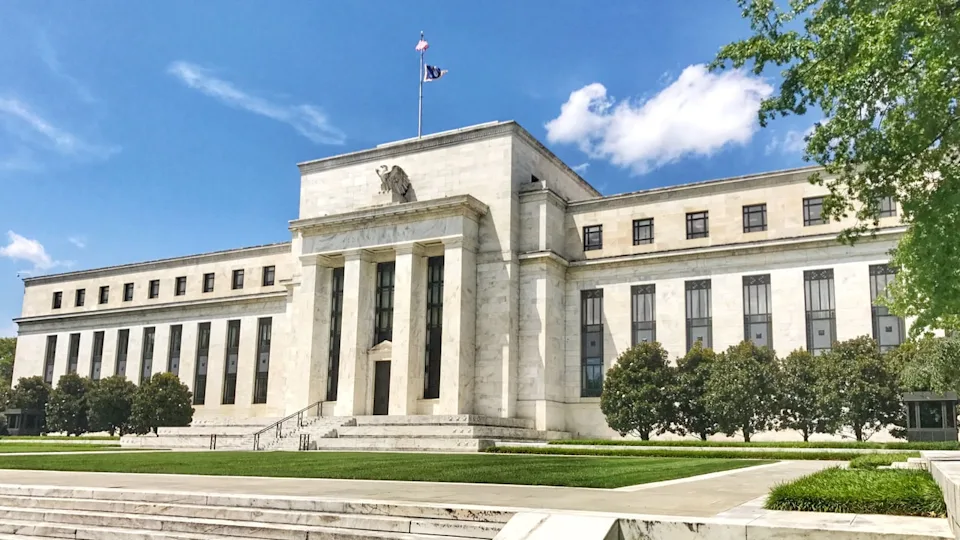

The US Federal Reserve raised interest rates on Wednesday for the first time since 2023, with the central bank continuing to try to bring inflation down.
The Fed’s policy-setting Federal Open Market Committee voted unanimously to lift its benchmark interest rate by a quarter of a percentage point to a target range of 3.75% to 4%. The increase was the first since July 2023.
Warsh Links Decision To Stubborn Inflation
Kevin Warsh, the current chair, said inflation remained too high and had persisted for too long. He also argued that recent readings had not shown clear improvement in underlying trends.
Warsh said: “The plain fact is that inflation is too high and has been for too long,” adding that “This summer’s inflation readings do not tell me that underlying trends have meaningfully improved.”
His remarks came after Donald Trump had said the US should have the “LOWEST RATE of any country in the World” and that he would “stop trading with countries with which we have a deficit” if the Fed did not cut rates. Warsh had been nominated expecting rate reductions, but he has said he maintains independence from the White House.
Warsh acknowledged geopolitical change, without naming the US-Israel conflict involving Iran. He said: “There’s no hiding from hot spots around the world, and our judgment about what is the most likely or least likely of the geopolitical situation has changed.”
On questions about how Trump would respond to the decision, Warsh said the Fed’s independence was “a two-way street”, and reiterated that the central bank would focus on monetary policy.
“We will let people that do trade policy and fiscal policy stay in their lane. That is the way we can stand up here and call them the way we see them,” he said.
The White House did not respond immediately to a request for comment.
Fed Projections Point To Further Hikes
New Fed projections showed that a majority of officials expected another rate increase before the end of the year. Four officials predicted the benchmark rate would rise to a range of 4.25% to 4.5% by the end of 2025.
Although estimates for economic growth and unemployment were more optimistic, Fed officials expected it would take until 2029 for inflation to reach the 2% goal.
At its previous meeting in late July, the Fed held rates steady, with committee members voting 9-3 to maintain the policy setting. That marked the first time in 10 years that so many members had voted against the decision.
Since then, renewed attacks between the US and Iran have pushed Brent crude, a global oil benchmark, to its highest level in a month, adding pressure through energy prices. The report said gas prices remained, on average, $1 a gallon higher than a year earlier, while diesel fuel reached an all-time high of $6.31.
Markets Weigh Policy And Inflation Risks
Concerns about inflation have contributed to selling in the US bond market. The yield on the 10-year Treasury note reached a 19-year high earlier this week, despite efforts by the US Treasury to calm markets. The report said problems in bond markets can lift borrowing costs for consumers and businesses.
The Fed uses interest rates to cool price rises by slowing economic activity. Higher rates can affect mortgages, car payments, student debt and other loan costs.
Inflation reached a generational high of 9.1% in June 2022, prompting 11 rate increases from 2022 and 2023. Rates were raised to a target range of 5.25% to 5.5% before the Fed began lowering rates in 2024 and 2025.
Earlier in the year, when annualised inflation was 1% lower than current levels, a rate hike looked less likely, with many officials previously expecting a cut later in the year. But inflation in August stayed elevated while unemployment remained steady, increasing the odds of a hike.
With voters heading to the polls in November, inflation concerns have weighed on economic confidence. In August, hourly earnings fell by 0.1% year-on-year after accounting for inflation and dropped by 0.3% from the previous month, according to figures cited in the report. A monthly survey from the University of Michigan also showed consumer sentiment declining quickly and expectations for more inflation increasing.
Political messaging has focused on cost of living, with Pew Research Center data showing voters are split on which party holds the advantage on the issue. Trump, meanwhile, told Republican voters to treat their midterm ballot as a referendum on him, and promised a $5,000 “Trump dividend” if Republicans retain control of Congress. Critics described the proposal as akin to bribery and warned about financial implications, particularly after US government debt reached a record high of $40tn last month.
Join the discussion? 

17 September 2026
Recommended Comments
Create an account or sign in to comment