



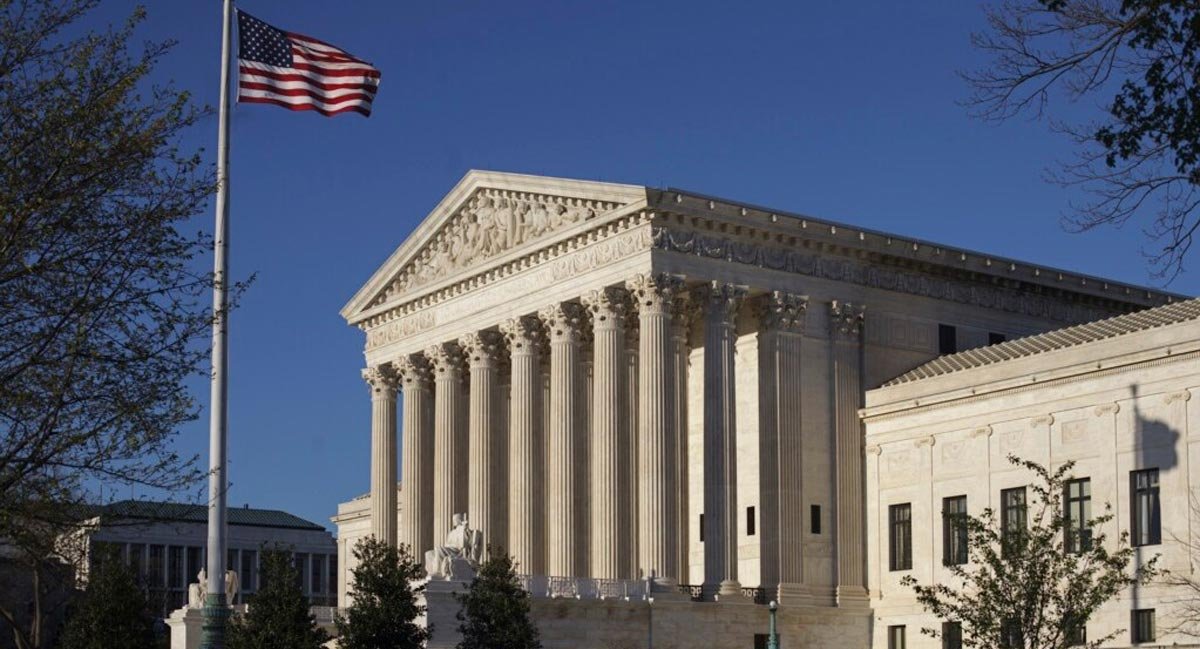

The U.S. Supreme Court unanimously ruled that a federal law barring unlawful users of controlled substances from possessing firearms cannot be applied broadly to all marijuana users, marking a significant victory for gun-rights advocates and cannabis users.
Get today's headlines by email 
In a 9-0 decision, the court found that the federal government could not constitutionally prosecute a Texas man solely because he used marijuana several times a week while owning a firearm. The ruling narrows the scope of a longstanding federal gun prohibition and places new limits on how prosecutors can enforce it.
Narrow Ruling on Drug Use and Firearms
Writing for the court, Justice Neil Gorsuch said unlawful drug use by itself is not sufficient justification for permanently stripping someone of their gun rights or sending them to prison.
Gorsuch acknowledged that marijuana or other drug use can, in some circumstances, make an individual dangerous. However, he noted that the government did not attempt to show that the defendant in this case posed any such threat.
The opinion warned that allowing the government to broadly classify groups as dangerous and deny them firearm ownership could undermine protections guaranteed by the Second Amendment.
Texas Case at the Center
The case centered on Ali Hemani, a Texas resident who admitted using marijuana every other day while keeping a Glock 9mm pistol at home.
Federal authorities charged Hemani with unlawful firearm possession by a drug user. He was not accused of being intoxicated or actively carrying the weapon when he was arrested.
A federal appeals court previously dismissed the indictment, concluding that applying the law to Hemani violated the Constitution. The Supreme Court agreed and upheld that decision.
Other Restrictions Remain Intact
The court emphasized that its ruling was limited and does not invalidate other firearm restrictions contained in federal law.
Gorsuch noted that bans on gun possession by drug addicts, intoxicated individuals, or people deemed dangerous to themselves or others remain unaffected.
The decision also would not have altered the prosecution of Hunter Biden, whose case involved admitted drug addiction while possessing a firearm.
According to the Justice Department, federal prosecutors bring roughly 300 cases each year in which the drug-user firearm ban is a primary charge.
Reactions From Advocacy Groups
The ruling drew praise from the American Civil Liberties Union, which argued that the government should not criminalize gun ownership solely because a person uses marijuana.
The organization said the decision protects the rights of millions of Americans, noting that marijuana use is common despite remaining illegal under federal law.
The National Rifle Association also welcomed the ruling, describing it as an important victory for gun owners and Second Amendment protections.
Gun-control advocates expressed disappointment but said the court reaffirmed lawmakers' authority to restrict firearm access for certain categories of people when public safety concerns are present.
Marijuana has been legalized in some form in more than 40 U.S. states, although it remains prohibited under federal law.
Join the discussion? 
Already a member? 
 Adapted by ASEAN Now. Source 19 June 2026
Recommended Comments
Create an account or sign in to comment