





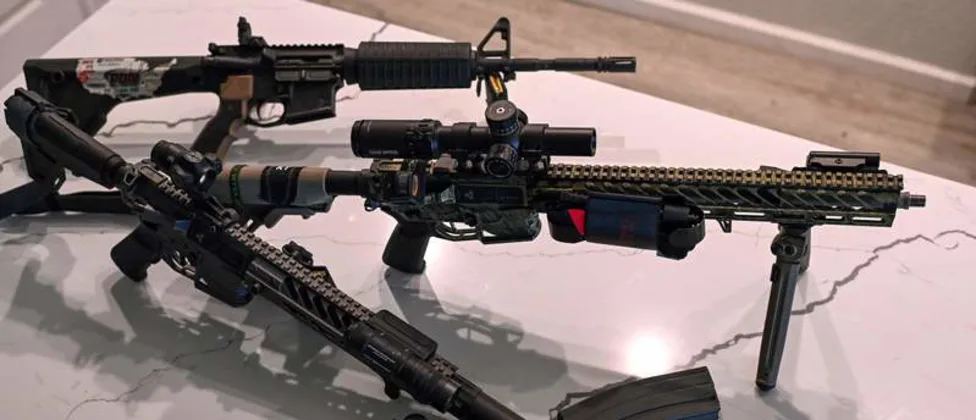
The U.S. Supreme Court has agreed to hear a major Second Amendment case that will determine whether bans on AR-15s and similar assault-style rifles are constitutional, setting the stage for a landmark ruling that could affect gun laws across the country.
Get today's headlines by email 
The justices announced on Tuesday that they will consider challenges to assault weapon bans enacted in Connecticut and the Chicago area. The case will be argued during the court's next term.
Second Amendment Challenge to Be Heard
At the heart of the dispute is whether AR-15s and similar firearms are protected under the Second Amendment. States defending the restrictions argue that these weapons do not fall within the constitutional definition of "arms" that individuals have the right to keep and bear.
Nationwide Impact Expected
The Supreme Court's decision is expected to provide nationwide guidance on the legality of assault weapon bans. Oral arguments are likely to take place after the court's next term begins in October, with a ruling anticipated next year.
According to the National Shooting Sports Foundation, around 32 million modern sporting rifles are currently in circulation in the United States.
The case follows years of legal disputes over state assault weapon bans, particularly after the Supreme Court's conservative majority introduced a new Second Amendment standard requiring modern gun regulations to be supported by a historical tradition of similar restrictions.
State Laws Under Scrutiny
Although definitions vary, 10 states have enacted bans on assault weapons, according to gun control advocacy group Everytown for Gun Safety. The Supreme Court's ruling could have significant implications for those laws.
The justices had considered whether to take up the case for several months before announcing on Tuesday that they would hear the challenges.
The decision also comes after the court concluded its Second Amendment cases for the current term. In recent rulings, the justices limited the government's authority to prosecute people for possessing firearms solely because they occasionally use marijuana and struck down Hawaii's restrictions on carrying guns on private property.
Join the discussion? 
Already a member? 
 Adapted by ASEAN Now. Source 1 July 2026
Recommended Comments
Create an account or sign in to comment