




The United States will phase out funding for HIV and Aids programmes in South Africa, ending support that has contributed hundreds of millions of dollars annually to the country's efforts to combat the epidemic.
Get today's headlines by email 
South Africa has the world's largest HIV-positive population, with more than eight million people living with the virus.
Funding Withdrawal Confirmed
Until 2025, the US provided about $400 million (£300 million) a year through the President's Emergency Plan for AIDS Relief (Pepfar), accounting for roughly one-fifth of South Africa's HIV programme spending.
After receiving a temporary extension under a "bridge plan" last October, a US State Department official has now confirmed that a phased withdrawal of Pepfar funding will begin.
The official said the move was linked to South Africa's failure to make sufficient progress on policy requests made by the Trump administration. The US government said the decision was intended to encourage greater self-reliance and reduce dependence on American assistance, arguing that South Africa, as a middle-income country, is capable of funding its own health programmes.
Growing Diplomatic Tensions
Relations between Washington and Pretoria have deteriorated since President Donald Trump returned to office.
Soon after taking office, Trump signed an executive order alleging that South African policies undermined equal opportunities and contributed to violence against white landowners. The South African government has rejected those claims, defending its Black Economic Empowerment policies as necessary measures to address inequalities rooted in apartheid.
The White House has also criticised South Africa over its case against Israel at the International Court of Justice and its ties with Iran, citing these issues as reasons for ending further aid.
Trump has repeatedly claimed that a "white genocide" is taking place in South Africa, an allegation widely dismissed by experts and the South African government. The administration has also established a refugee programme for Afrikaners, descendants of European settlers, who are currently among the few refugee groups being admitted to the United States.
South Africa Responds
South Africa's health ministry said it had not been formally notified of the funding decision but stressed that the country had long been preparing for greater financial independence.
The ministry noted that while Pepfar funding supported important HIV-related services, life-saving antiretroviral medication is funded separately, with the majority paid for by the South African government.
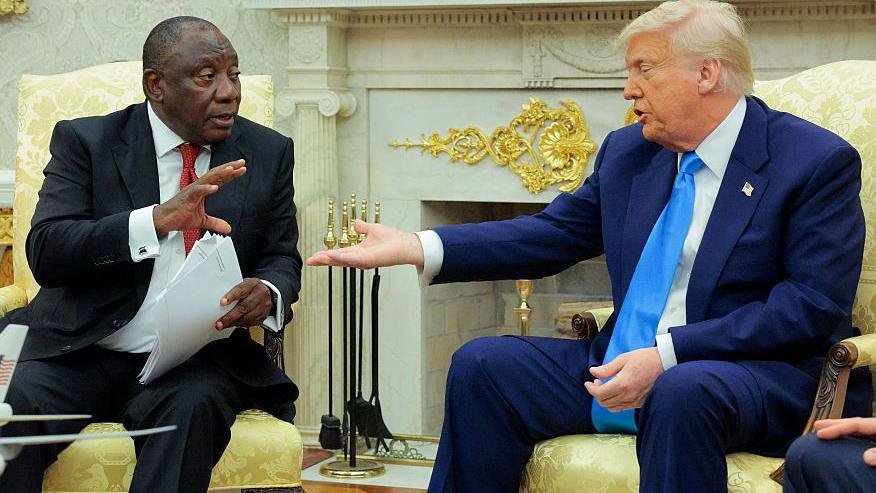
Efforts to repair relations between the two countries have struggled in recent years. A high-profile meeting between Trump and South African President Cyril Ramaphosa reportedly failed to ease tensions, while the US also boycotted a G20 meeting hosted by South Africa last year.
Join the discussion? 
Already a member? 
 Adapted by ASEAN Now. Source 20 June 2026
Recommended Comments
Create an account or sign in to comment