



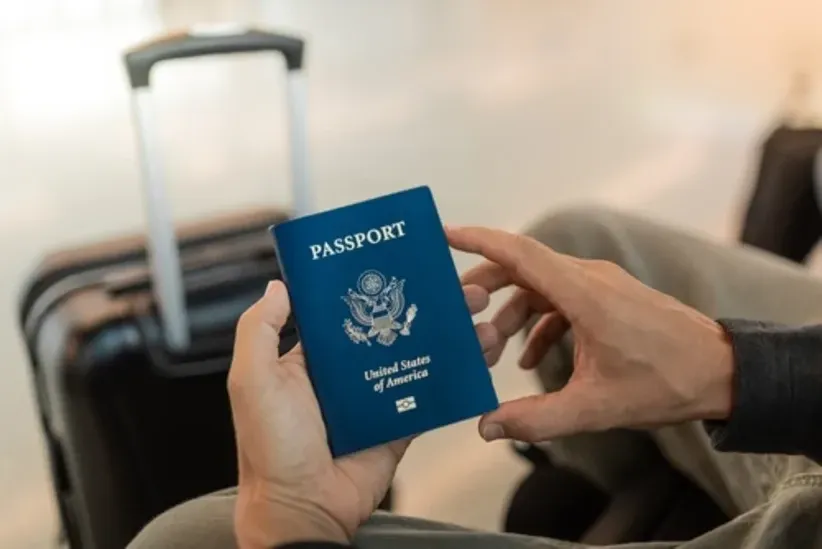

The United States government will begin revoking passports from Americans who owe significant amounts of unpaid child support, the US State Department has announced, as authorities seek to strengthen enforcement of existing federal laws.
Get today's headlines by email 
Officials said parents with more than $2,500 (€1,844) in outstanding child support obligations could face the loss of their passports, though the policy will primarily target individuals with what the department described as “significant outstanding” debt.
The move expands the use of powers granted under a federal law passed in 1996, which allows the government to deny or revoke passports for individuals who fail to meet their child support responsibilities.
Stronger enforcement of existing law
In a statement, the State Department said the measure is intended to reinforce both the legal and moral responsibility of parents to support their children.
The department said it is deploying “commonsense tools to support American families and strengthen compliance” with US laws governing child support payments.
“This action supports the welfare of American children by exacting real consequences for child support delinquency under existing federal law,” the statement added.
Under the policy, individuals whose passports are revoked will no longer be able to use them for international travel. They will also be ineligible to receive a new passport until their outstanding child support debt has been fully settled.
Authorities urged parents who owe money to arrange payment with the relevant state child support agencies to avoid losing their travel documents.
Change from previous practice
The authority to restrict passports over unpaid child support has existed since the mid-1990s but has rarely been enforced through direct revocation.
Until now, the rule was typically applied when individuals attempted to renew their passports. In such cases, those with qualifying debt could be denied renewal until their payments were brought up to date.
Under the new approach, the State Department will proactively identify individuals who owe substantial amounts and move to revoke their passports even if they are still valid.
Officials said the department will work alongside the US Department of Health and Human Services to locate people with unpaid obligations and enforce the policy.
Impact on travellers abroad
The department did not specify exactly when enforcement would begin. However, the Associated Press reported the new policy could take effect as early as Friday.
Those whose passports are revoked while they are outside the United States may face additional complications. According to the report, affected travellers would need to contact a US embassy or consulate to obtain an emergency travel document that would allow them to return to the country.
Such documents would permit entry back into the US but would not restore full passport privileges until the outstanding debt is cleared.
Officials said the aim of the policy is to ensure stronger compliance with child support obligations and to reinforce existing laws designed to protect the financial wellbeing of children.
Join the discussion? 
Already a member? 
 Adapted by ASEAN Now. Source 9 May 2026
Recommended Comments
Create an account or sign in to comment