
Misty
Advanced Member
-
Joined
-
Last visited
Everything posted by Misty
-
So the person is working in San Francisco then? And only traveling to Thailand as a tourist to spend the money, and then going back to San Francisco to work? So that's not the case of a "digital nomad" who is living and working in Thailand, earning Thai-sourced income.
-
I'll try one more time as you seem interested in understanding, but I agree it may be diminishing returns to continue after this. Foreign-sourced income = person is working outside of Thailand. Thai-sourced income = person is working inside Thailand. (Simply getting paid outside Thailand doesn't change this.) A digital nomad working inside Thailand is earning Thai-sourced income, not foreign sourced income. Thai-sourced income rules apply.
-
Hi Dan O I think you may have mistakenly attributed the second quotation to me. Again, if you are physically working in Thailand, any income you earn is considered to be "Thai-sourced" and therefore taxable. It is not "foreign-sourced", not matter where the income is paid. So a digital nomad working in Thailand is earning Thai-sourced and taxable income, no matter if he's being paid in another country. That is what the Thai tax regulations say. Enforcement may be another matter.
-
Again, if you are physically in Thailand when you are earning income by writing, the tax code considers your income to be "Thai sourced" and your writing income is taxable. Waiting a year to bring the income into Thailand doesn't change that.
-
I think what you're missing is that when you are physically in Thailand working, the tax regulations consider the funds to be earned, and taxable, in Thailand. It doesn't matter where the money is paid into, or where the customer is. You may be thinking that if the funds are paid into an account somewhere else, the funds are then earned somewhere else.
-
No. The rule about bringing income into the country in the same year its earned only applies to passive income. It does not apply to income generated by working, or active income. Any income generated by work is taxable, whether or not its brought into the country, or in what year.
-
That's great, best wishes to you. Not sure if you can draw a direct comparison, but my NY consulate LTR e-visa was turned around in one day last October. I'm not sure what happens to your existing visa, as I didn't have an existing visa at that point, had let my former NonB e-visa expire. I do own and work for my own Amity treaty company. The type of work I do requires Thai licensing, so I definitely need a Thai company. However, there is a huge and increasing amount of bureaucracy involved, not to mention specialized US tax filing (my form 5471 filing runs 50+ pages). If I didn't need it for my line of work, I'd look into working for an entity established outside of Thailand - perhaps in the US (although self-employment tax may kick in then).
-
Yes, all that, and as I understand it even more: for example, if you have an LTR visa you can be a so-called "digital nomad". You can work without a work permit. The digital work permit only comes into play if you want to work for a Thai company. That is my understanding, at least.
-
That's correct, the digital work permit is for a specific job. If the job is only a two year contract, the work permit will be issued for just two years. If it's for an ongoing position, it will be issued for up to 5 years.
-
Yes, the digital work permit requires you to work for a Thai company. And if you get a job at a Thai company, then you will need to get the digital work permit. But as BOI staff explained to me, an LTR visa holder can work for any company - their own overseas company for example, and a digital work permit is not needed.
-
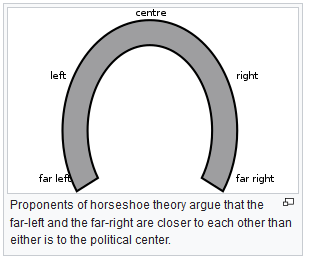
Not 'all Democrat" at all. A case of horseshoe theory? Amazingly, Dennis Kucinich is his campaign manager. Cleveland famously went bankrupt when Kucinich was its mayor.
-
How Thailand doesn't tax offshore investment income, for one.
-
I did too. More than met every requirement and spent a considerable amount of time and effort making sure my application was complete. Language was not an issue, had 3 hour conversation in Thai with the Immigration desk. They could find no issue with the application. But still, they wouldn't accept it. Some clues: they tried to shake down my accountant in a back room (I'd brought her in case they had any detailed questions on our accounts) - had mistaken her for an "agent". In the end, they wouldn't accept my application because I did not use an agent and had not paid the required "VIP service fees." Thank heavens for the BOI and the LTR visa. Even comes with a 5 year digital work permit.
-
From your 'competent lawyers firm' link: "Using these criteria, aren’t most Digital Nomads in Thailand effectively working here illegally? Yes, in a strict sense."
-
Yes, I've also been told by law firms that the BOI has "magical powers" : )
-
Hi Gaccha, I would have been very interested in this online extension option previously. However, I switched to the LTR visa/digital work permit option when it became available last year. You may be one of the first forum members to try this option. If you get a chance, post details of how it goes here. There are certainly other forum members this who will be interested. Some may not know the option exists. I've found other forum members' comments invaluable in the past. I've tried to list direct experience with things like NonB e-visas and the LTR visa to try to help others who may not be retired, tourists, etc.
-
Good point for those it applies too. Sadly I do file a Thai tax return, but am not due a Thai tax refund.
-
It's boom or bust then. Could a plan for sustainable tourism be in order? Oh wait, TIT.
-
I wish my US marginal tax rate were that low too. The only silver lining is that the 15% Thai withholding tax can be used as a foreign tax credit against US tax owed.
-
Just reading this thread and wondering what Samui residents would advise people considering a vacation there? Postpone or don't go?
-
The Senator from South Carolina's phone call to Georgia's Secretary of State sounds like it crossed more than state lines: "Fulton County District Attorney Fani Willis will look into the call Graham made to Georgia Secretary of State Brad Raffensperger 10 days after the Nov. 3 election, the Post reported, citing an unnamed person familiar with the probe. Graham, a Republican and a close Trump ally, asked Raffensperger whether he had the power to toss out all mail ballots in certain counties, Raffensperger has told the Post." https://www.reuters.com/article/us-usa-election-georgia-graham-idUSKBN2AD046
-
Any charges expected for Senator Lindsey Graham?
-
ITV appears to be just a defunct shell company, and has been for 15+ years. It's not a media company. Its station has been closed since early 2008 and frequency reassigned to Thai PBS. https://en.wikipedia.org/wiki/ITV_(Thailand) "ITV was a television station in Thailand that was owned by iTV Public Company Limited, a unit of Shin Corporation. As Thailand's first UHF channel, the station was started in 1995 when the company was granted a 30-year concession by the Office of the Permanent Secretary to the Prime Minister's Office to operate a free-to-air television station in the Ultra High Frequency (UHF) spectrum at 510-790 MHz (from Channel 26 to 60). After a lengthy dispute over unpaid concession fees to the Prime Minister's Office, the government's Public Relations Department took over the station in 2007. Its name was changed to Thailand Independent Television (TITV). Following a previously unannounced order of Thailand's Public Relations Department delivered the same day, the station closed on January 15, 2008. In accordance with the Public Broadcasting Service Act B.E.2551(2008), the channel's frequency was assigned to the Thai Public Broadcasting Service (Thai PBS)."
-
Yes, I have experience in this area. Do you already own a small Thai company? To me, Bt30k for help in applying for a NonB visa/work permit only sounds very reasonable. As BritTim notes if you're setting up a new company, normally this would be part of the overall start-up legal fees. In my case the initial NonB Visa / work permit were handled by the law firm that set up my company. After the initial set-up I hired my book keeping firm to handle the NonB visa and work permit extensions. There's tons of paperwork involved and the requirements change from year to year. Bt30k for handling all of this sounds incredibly reasonable. One year I had to apply for a new NonB e-visa from the Thai consulate in my home country. My work permit had already been extended. I applied myself and it was reasonably straight forward.
-
It's an interesting question. Not sure if this is an indication of the possible answer, but I dealt with all the paperwork and other LTR visa requirements remotely without being in the country for the initial application. And the LTR visa itself has a 10 year date on it.