4myr
Member
-
Joined
-
Last visited
Everything posted by 4myr
-
Yeah sure, how many times facelifts of Thai BYD models have been diluted from the Chinese and even Australian ones. A big reason is price and positioning. Do you see the Thai Atto 3 EVO being priced higher than the Sealion 7 Premium with 400V technology?
-
With the low interest rate I am considering in buying short term Thai govt bonds, as they give a better yield and is tax exempted than fixed deposits with the freedom to sell it and get your funds back the next working day. SCB has SCBTMF vs KKP CASH-E. For my wife's retirement fund I am considering to add world stocks [ SCBWORLD vs KKP WORLD-E ] and global bonds [ SCBGLOB vs KKP BND-H-E ] to the portfolio. The latter is hedged against the Thai baht. It also seems that the KKP Save account gives a higher interest rate than SCB or Kbank. Any preferences for either SCB or KKP, due to lower TCO, more reliable app, etc? Or are they almost identical, so if I wanna profit from the low cost E class funds, I just have both SCB and KKP accounts, as these funds are limited to 1M baht per account.
-
I own the J5 for 2 months now. More than happy with it. It drives efficiently, steering and suspension is fine if you don't drive too fast. There are a few quirks I already got used to: sometimes Android Auto needs a reset to work, the remote fob auto lock/unlock will not always work. Also drive in lowest regen mode and don't trust the lane keep assist, but adaptive stop-and-go cruise control works fine. I did a few DIY improvements, like a rat guard plate to prevent rodents from entering the cabin and extend the AC outlet hose so water will not spread to the metal underbody. The last one took me less than half an hour of work. I noticed that the sea journey from China left some tiny rust spots on the underbody parts. As I live 4km from the coast, I will give the metal underbody, wheel arches and door sills cavities some rust protection treatment [Tuff Kote Dinol]. If you like to drive fast, then I would suggest to do some 3D wheel balancing and lower suspension tuning. I did not have any issues with the car, except one keyfob key did not work, but it was repaired in an hour by Hua Hin service center. But on facebook you will read people stranded, because the software went haywire. So I have a wrench in the car to disconnect the 12V battery to reset the system. Others complain about long wait times for spare parts. I'll keep my ICE car, until this will be resolved. The reasons I bought the car. I would have liked to buy a BYD or MG because of it's popularity. But I drove them it was not to my liking. The same with Deepal S05. AION UT I like driving it, but the company is loosing money. But J5 drove well, price performance is the best, and they expanded their dealerships quite fast. I bought the car at Phetchaburi not knowing 2 weeks later that there was a branch in Hua Hin. The factory to produce J5 in Thailand will start this month. Chery the mother company is expanding fast with new brands/models like Chery, Tiggo, Jetour and Lepas. I just hope they will manage this expansion well. But recently Omoda & Jaecoo admitted that they need to improve on the after sales and spare parts. On facebook there were posts recently from renowned 3rd party EV repair shops, that disassembled the J5 battery and looked at the rear suspension. Overall the quality of materials was good. As J5 can also be bought as an ICE car, they had to make some compromises with the battery layout. The battery is easy to disassemble and is modular, however at the back 3 modules are stacked on top of each other. This makes maintenance, like cell balancing and replacing cells by a repair center harder to do. But the cooling materials are well made.
-
Thanks for the summary. The point they made that battery degrades faster while dc charging and the owner sits in the cabin and turns on the AC is a good one. This is the case to most EVs, as the AC system loop is shared between cabin evaporator and battery/motor heat exchanger. The point is not the high load of the cooling system, but that the cooling system has a finite cooling capacity, and the battery gets less cooling, if the cabin also needs to be cooled. So best is to turn off the cabin AC and get body cooling in Cafe Amazon or 7-11.
-
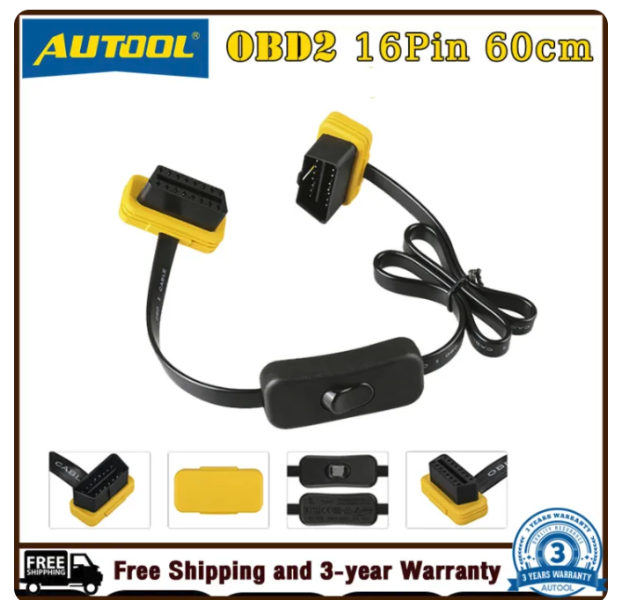
OBD monitoring for EV battery longevity If you are serious with battery health monitoring please read this. This info is the result of some research I have done with the help of various AI chatbots i.e. perplexity, gemini, claude and brave. Note that the recommendations I made here are from these chatbots as I have not yet tested these apps and dongles before. What to monitor Earlier we have learned from chatgpt for longevity of your EV battery, it is best to monitor in real time these parameters: Min/max cell voltage Max cell temperature Voltage delta under load I would like to add also min cell temperature to see if the cooling is uneven. Other parameters like SOH, SOC and power draw are nice to have, but does not tell you much about issues in cooling or that you need to trigger a cell balance. Custom sensors [PIDs] and which apps Parameters like min cell voltage and max cell temperature are not standard OBD2 parameters. You need custom or extended PIDs that are first defined by the EV’s ECU and that can be read out by the app. Therefore the sensor must be provided in the app’s profile database or added and maintained by user communities. Car scanner is best in boiler plate profiles for these custom PIDs, while Torque Pro is better, if there are user communities maintaining these PIDs. For chinese EVs, it is better to stay with Car scanner, because there are hardly any good user community profiles yet. Is your EV supported by Car scanner? You can check here whether your EV has a profile and how often it is updated: https://www.carscanner.info/author/overzealus/. Chinese EVs sold in Thailand that are currently missing in this log are for example GAC Aion, Changan Deepal, Changan Avatr, Geely EX5. Which obd dongle? Bottom line: best is OBDLink MX+ but expensive and overkill. A good value that has all the features is Vgate icar pro 2S. If you don’t need autowake or a fast refresh rate Vgate icar pro is sufficient. In all situations, best is to also have the extension cable with a switch for security. Avoid noname brands without proper specs as they advertise on facebook EV groups, like the Chinese one I mentioned before. Konnwei KW90x as recommended by some has limited ISO-TP support and may struggle with reading reliably custom PIDs. Here the gory details of the aspects needed for a OBD dongle: 1) for reading custom PIDs the dongle must support UDS (service 0x22) and ISO-TP for robust flow control. Also good firmware updates are needed to ensure quality. Good support for 0x22 and firmware updates are: OBDLink xx, Vgate xx, Veepeak BLE+. Note that the Konnwei KW90x has limited ISO-TP support and may struggle with custom PIDs, while Vgate icar pro has full support for custom pids. Chatbots confirm they are different products and not the same white label product. 2) in some situations you want to read out the parameters fast enough from the EV. For example when accelerating, your CAN bus might be busy with loads of data and the dongle must have a good speed. For a good sample speed of 3-5Hz for about 10 custom PIDs while the EV is accelerating, it is then best to get a dongle that supports Bluetooth 5.x. Top of the line is OBDLink MX+ but overkill. Vgate icar pro 2s is good enough. Vgate icar pro and Veepeak BLE+ may struggle when CAN bus is busy, because of lower BT4.0 support. 3) Not necessary for battery health monitoring. An autowake is a very good feature that you need if you want to monitor and log intermittent issues. Some dongles have issues with autowake with an EV, like some reddit users reported on Vgate icar pro. Good candidates: OBDLink MX+, Vgate icar pro 2s. 4) If you don’t need to log intermittent issues, you can buy an extension cable with a switch. This switch will prevent autowake issues and will also prevent any remote access, when you are leaving the car. 5) If you want to have good charger trip planning connected with realtime SOC data, you could use ABRP with a dongle. Best is to have the same dongle for ABRP and battery health monitoring. Good candidates reported by users are the same mentioned before: OBDLink xx, Vgate icar pro xx, Veepeak BLE+
-
So I told chatgpt I wanna be bold and push the envelope. In 10 years time I wanna change EV, as sodium ion will reach nirvana level and solid state will pass early adopter stage. So my questions are: 1) how many km more I can drive to end with 70% soh after 10 years, and how IR degradation will be 2) instead of driving more, I wanna use the EV as home battery at night by discharging V2L or V2H. How much extra kwh I can discharge to reach 70% soh and how about IR degradation BTW. I estimated both DIY V2L vs V2H installation cost. My house uses 90 kwh per month, during the day I sell surplus kwh to PEA. A simple DIY V2L installation that will supply my home during power outage or just on turn of main breaker switch costs below 6k baht. V2H is much more expensive and not worth the investment in Thailand, between 100-150k, as I need a bidirectional dc-dc charger, a hybrid inverter and extra 500v+ solar array, if I wanna charge dc. Besides I will loose my PEA FIT contract. ✅ Option A — More driving LFP rough rule in warm climate: Every +10k km/year ≈ +1.5–2% extra loss over 10 years Annual km 10-year SOH Notes 10k 82–85% ✅ current baseline 15k 78–81% minor difference 20k 72–76% ✅ hits target band 25k 68–72% comfortably at 70% goal ➡️ 20–22k km/year will typically land you at ~70–75% SOH ➡️ Still reasonable in Thailand if charging mostly at night ✅ Option B — More V2L/V2H discharging Baseline 10k km driving = ~2,000 kWh/year cycling To reach ~70% SOH, add ~50–60% cycling: ✅ Add ~1000–1500 kWh V2L per year That’s: 3–4 kWh/day (1000–1500 kWh/year) Similar to running small appliances every night Extra V2L annually 10-year SOH effect +500 kWh Small impact (84→82%) +1000 kWh 80–78% +1500 kWh 75–72% ✅ target +2000 kWh 72–70% ➡️ Daily V2L for home consumption = enough to hit ~70–75% SOH I also wanna know the cost of extra wear and tear of V2L/V2H discharging in terms of charging pins and internal electronic equipment ✅ Total Longevity Comparison System More Driving (20k) V2L Heavy (10k + 4 kWh/day) Battery life (to 70% SOH) ✅ same ✅ same DC/AC charge port wear Low High AC + cooling system wear Low-medium Medium-high Drivetrain Medium wear ✅ Very low wear Overall cost impact Neutral +10k–30k THB over 10 yrs 🔍 Bottom Line Recommendation If you want 70% SOH after 10 years and also want: Priority Best choice Lowest long-term maintenance cost ✅ Drive more (20k km/yr) Highest utility from car energy ✅ V2L nightly usage Lowest stress on mechanical parts ✅ V2L path Lowest stress on EV electronics ❌ NOT V2L (connector + AC wear) Even though the electricity cost gain in 10 years [45k baht] is higher than the wear and tear cost, there is discomfort, if the EV cannot be used due to extra wait & repair time. So better use V2L for your home moderately.
-
I wanted to know how my EV battery degradation will fare after 10 years with 10k km per year: 60/40% between AC and DC charging parking home at 30-35C ambient in shade I am willing to keep the good habits in terms of driving, charging and preventive maintenance but I don't want to wait for EV to cool down before DC charging and DC chargers in Thailand are in the open hot sun 60kwh LFP chemistry, 2C fast charging, performance new: 0-100 km/h in 7s, top speed 160 km/h I asked chatgpt for a very short summary. I noticed that chatgpt is a bit more conservative on the habits in terms of: more frequent AC condenser cleaning lower SoC window charging and driving lower voltage delta to start cell balancing ✅ 1️⃣ Realistic Battery Aging Outcomes After 10 Years / 100,000 km Parameter New After 10 Years Consequence SOH (capacity) 100% 80–85% ~10–15% less driving range Internal Resistance (IR) Baseline +25–35% increase Slower fast charging at high SOC + minor performance reduction 📌 What this means in daily use: Range: ~15% reduction → if new = 400 km, later = 340 km typical DC fast charging: Peak 120–130 kW new → 80–100 kW later More tapering above 60% SOC Performance: 0–100 km/h +0.5 to +1.0 sec slower High-speed power slightly reduced (hill climbing still fine) Still no “end of life” → that’s around 70% SOH 👉 So: battery remains usable and practical after 10 years if cared for properly. ✅ 2️⃣ Required Habits to Achieve This Long-Term Battery Health ✅ Good Driving & Temperature Behavior Avoid repeated hard acceleration in >35°C weather If parked in sun: use sunshade and cabin pre-cooling Prefer Eco mode when possible Keep battery ≤45°C during most use ✅ Safe Charging Habits Charging Best Practice DC fast charging Keep to ≤40% of all km (you said ~40% → ✅) Charging window 20–70% daily use target High SOC avoidance Avoid >85% unless needed for trips Never leave at 100% Drive shortly after reaching 100% Home AC charging Prefer low/medium power (3.5–7 kW) Hot battery after highway ~10–20 min cooldown before DC if possible 📌 If you cannot wait → okay, only occasionally when BMS warns high temp. ✅ Parking Recommendations Duration Best SOC Notes Overnight 50–70% Standard Multi-day 45–60% Best for longevity Weeks/Months 40–50% Plug in if >4 weeks ✅ Preventive Maintenance System Action Frequency Battery coolant Replace OEM fluid Every 40,000 km AC condenser Clean + check airflow Annually Leak check AC system integrity Every 2 years Cabin filter Replace for airflow Every 6–12 months ✅ Monitoring with OBD Track: Min/max cell voltage Max cell temperature Voltage delta under load Trigger cell balancing: When voltage spread >20–30 mV Charge to 80–90% and hold for 1–2 hours ✅ Overall Conclusion for You Under your usage: 📌 The EV will likely remain reliable, safe, and practical for 10–12 years 📌 No major performance or charging limitations expected
-
Wanna share this video in Thai/English AI voice over on "why EV insurance companies make losses and why premiums increase". Title: Deep Dive into the EV Insurance Crisis: Exclusive Interview with Anon Wangwasu, Thai General Insurance Association. I've asked chatgpt to make a summary: ✅ Why EV Insurance in Thailand Is Losing Money (Expert Arguments) 1️⃣ Low number of vehicles per model → High uncertainty Many EV models have only a few hundred to a few thousand units on the road. Insurers need 10,000+ units per model to build a reliable claims-risk profile. Without data → insurers must assume higher risk → raise premiums. 🔎 Example: A small batch of claims on a rare model can already cause >100% loss ratio. 2️⃣ Repairs restricted to brand service centers To keep the battery + powertrain warranty, repairs must be done at official dealer workshops. No secondary repair market → zero price competition. Labour + parts cost increase significantly. 📌 Chery, BYD, MG all enforce strict “authorized center only” repair rules. 3️⃣ Spare parts extremely expensive EV design is high integration → replace entire module, not small components. Full parts control by brand → premium pricing. “Spare parts margins for some Chinese EV brands are higher than vehicle margins.” (Thai EV repair experts comment) PS. On X I read a post about Chery making 20% margin on spare parts, 5% on EVs and 15% on ICE cars 4️⃣ High total loss rate Battery = 60–70% of vehicle value Any damage near the pack (impact, fire risk, flood) → insurer declares total loss These claims are very expensive → loss ratio spikes 5️⃣ Higher accident rate among EV drivers In Thailand, EV buyers are often new drivers (especially younger users) High instant torque → quicker acceleration → more hit-and-run/collision incidents Regenerative braking feel takes time to adapt → rear-end accidents more frequent Insurance companies confirm higher claim frequency vs ICE cars for similar ages 6️⃣ Fast depreciation + uncertain long-term value If a car is totaled after 2 years, the battery still costs almost new price Insurer pays high claim → resale recovers very little Risk grows if brand exits market (warranty + service collapse) 📈 Result: Premiums must rise All insurers now adjust pricing to reflect real costs: Premiums going up every year Some insurers stop covering certain EV models More policies require: ✅ higher deductibles ✅ battery exclusion or sub-limits ✅ tracking and telematics ✅ official service centers only
-
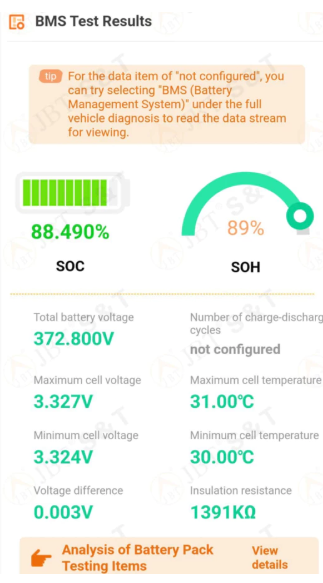
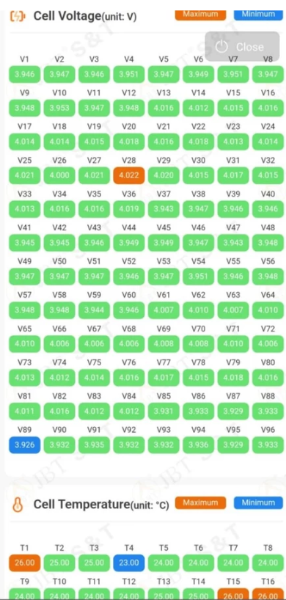
It has it's own Chinese app. The problem with shopee is you have to login. That's why my original post contains the screenshots of interest to me. I don't know if Car Scanner [Pro] supports most of the Chinese EVs that they sell in Thailand. I have asked chatgpt if this is the case and answer was negative. While the shopee link says it supports "BYD, AION, CHANGAN, XPENG, OMODA, ZEEKR". The parameters I'm interested in are the following, which I can put on a dashboard, if Car Scanner can show them: 1) min and max cell temp 2) min and max cell voltage. I am not interested in a dashboard with all cell voltages or cell temps and I have to figure out min and max values.
-
Is anyone using this OBD scanner of an unknown Chinese brand? https://shopee.co.th/product/764543968/27360481115 Why? Because I was triggered by this comprehensive battery health report or dashboard it can generate. I don't know if it can generate this for all the Chinese EVs it supports, like BYD, AION, CHANGAN, XPENG, OMODA, ZEEKR, and more. With this report I can know if I need to start cell balancing or that I need to worry about uneven cell cooling or battery overheating.
-
I agree that the Magazine Battery is module repairable and that one of the GAC centers in Bangkok has a battery repair center. However I am hesitant with lifetime warranty statements in general. I have read MG's document, and it states only "lifetime warranty" but not what it covers. And most of the text describes when the warranty is void. In normal battery warranty docs you would read about capacity degradation below 70% will be covered, and hopefully also performance degradation [ IR value ]. One more note, GAC's top years were 2022 when they were succesful with Aion Y Plus, but they are on a downward trend in terms of sales, negative cashflow and loss. They are in a similar situation like SAIC that the ICE joint ventures with Toyota and Honda have less and less revenue, while NEV sales does not want to pick up so fast to compensate. I follow these investors on X who report on EV automakers' profitability, @glennluk and @alojoh. @glennluk's prediction is still on target
-
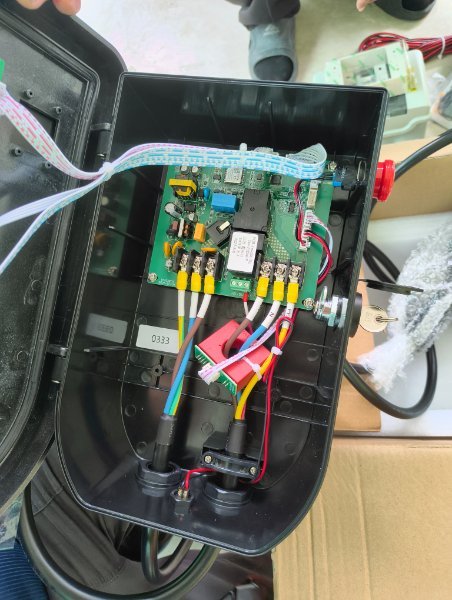
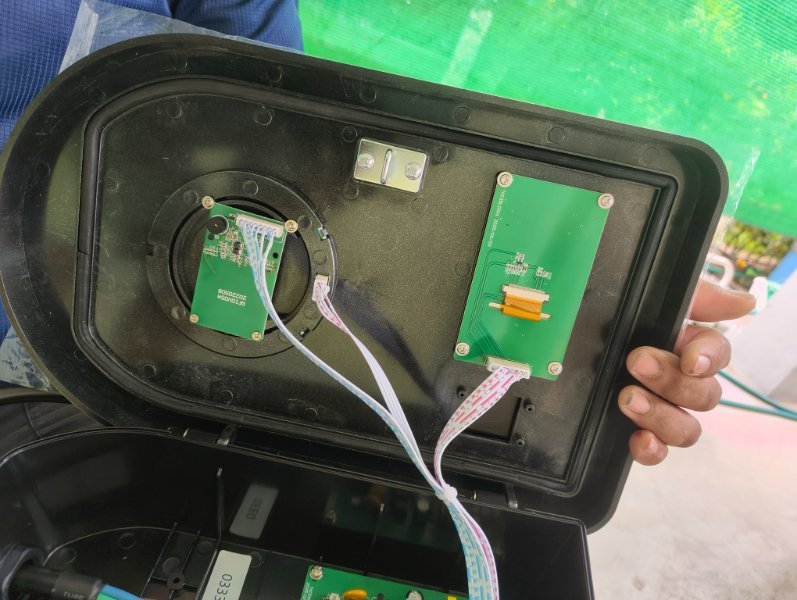
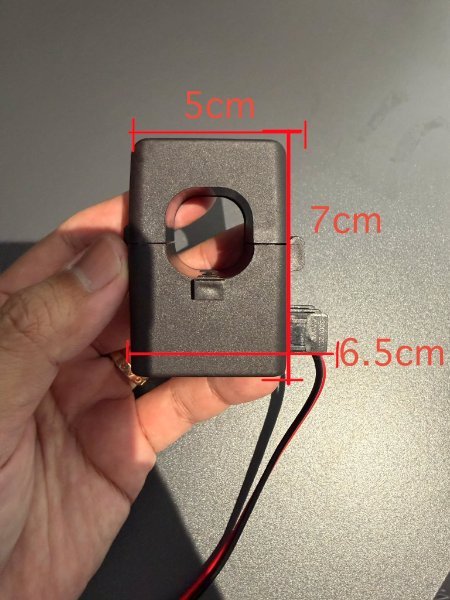
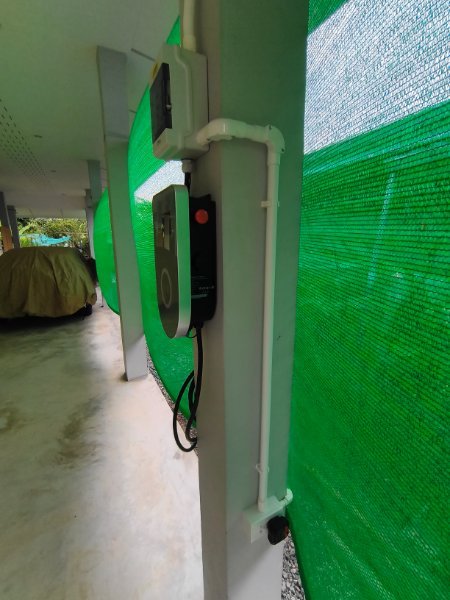
The charger has been installed. If you choose to have it installed, note that the ct sensor is huge.
-
Has anyone tuned and improved the factory installed suspension for their car? This company in Lampang has a secret I don't know. However I am not willing to go so far to Lampang. Here are some testimonies: Hyptec: https://web.facebook.com/share/p/1BFCZjce91/ Deepal: https://web.facebook.com/share/p/1FGQ45ww2r/ As far as I know factory McPherson struts are not tunable. In general you will buy after market coil overs. So I asked perplexity how do they do it. I can't judge if perplexity is just hallucinating here: "The secret to tuning factory-installed McPherson strut suspension for better high-speed stability, despite these struts typically being non-tunable, lies in subtle geometry and hardware modifications that can adjust camber and damping characteristics. Key methods include: Adjusting camber by modifying the lower control arms length or angles, if adjustable, to achieve better tire contact and reduce understeer. "Kicking" or tilting the strut relative to the spindle by using aftermarket or modified mounting bolts and brackets to increase negative camber; some systems allow replacing bolts with slotted or eccentric ones for fine tuning. Using specialized camber plates or adjustable top mounts that allow changes in static camber and caster angles, which improve tire grip at high speeds during cornering. Upgrading to tuned springs and shock absorbers with tailored damping rates that enhance stability and control for the specific vehicle and driving conditions. Ensuring that these adjustments maintain correct wheel alignment geometry and manage wheel clearance, especially when wider tires or altered offsets are involved. While McPherson struts don't inherently have tunable damper or camber settings, these mechanical tweaks and aftermarket components enable tuning for improved handling and stability at high speed. The company you referenced likely uses such techniques and hardware modifications to achieve better dynamic control on the EVs they service. This approach balances enhanced performance with the limitations of standard McPherson strut design, focusing heavily on camber management and damping adjustments through carefully selected parts and alignment settings." So I'm looking for a shop that can do those tricks of Lampang, but closer to Hua Hin or Bangkok.
-
Has anyone tuned and improved the factory installed suspension for their car? This company in Lampang has a secret I don't know. However I am not willing to go so far to Lampang. Here are some testimonies: Hyptec: https://web.facebook.com/share/p/1BFCZjce91/ Deepal: https://web.facebook.com/share/p/1FGQ45ww2r/ As far as I know factory McPherson struts are not tunable. In general you will buy after market coil overs. So I asked perplexity how do they do it. I can't judge if perplexity just garbles some random statements here: "The secret to tuning factory-installed McPherson strut suspension for better high-speed stability, despite these struts typically being non-tunable, lies in subtle geometry and hardware modifications that can adjust camber and damping characteristics. Key methods include: Adjusting camber by modifying the lower control arms length or angles, if adjustable, to achieve better tire contact and reduce understeer. "Kicking" or tilting the strut relative to the spindle by using aftermarket or modified mounting bolts and brackets to increase negative camber; some systems allow replacing bolts with slotted or eccentric ones for fine tuning. Using specialized camber plates or adjustable top mounts that allow changes in static camber and caster angles, which improve tire grip at high speeds during cornering. Upgrading to tuned springs and shock absorbers with tailored damping rates that enhance stability and control for the specific vehicle and driving conditions. Ensuring that these adjustments maintain correct wheel alignment geometry and manage wheel clearance, especially when wider tires or altered offsets are involved. While McPherson struts don't inherently have tunable damper or camber settings, these mechanical tweaks and aftermarket components enable tuning for improved handling and stability at high speed. The company you referenced likely uses such techniques and hardware modifications to achieve better dynamic control on the EVs they service. This approach balances enhanced performance with the limitations of standard McPherson strut design, focusing heavily on camber management and damping adjustments through carefully selected parts and alignment settings." So I'm looking for a suspension tuner that can do those tricks of Lampang, but closer to Hua Hin or Bangkok.
-
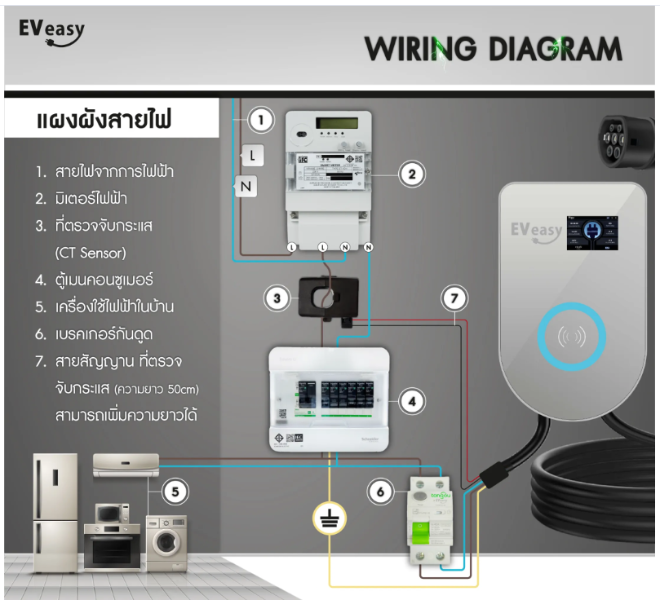
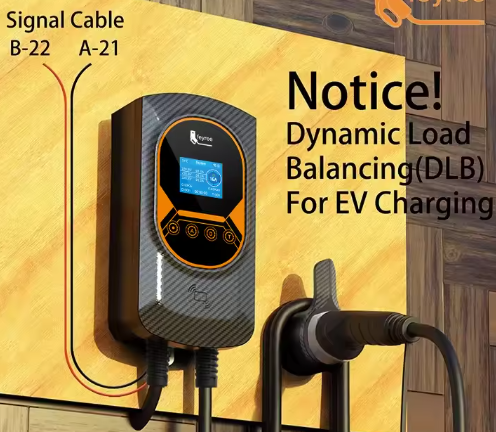
What you are looking for is a more flexible DLB [dynamic load balance] charger that has 2 CT sensors, one sensing your solar inverter output and the other one sensing the house load. With the charger app you can set your own threshold for these 2 sensors then, whether you want to charge pure solar or hybrid. Unfortunately I only found this charger from NZ that can do it. There are probably more but not available in Thailand or Aliexpress. Link: https://smartevchargers.co.nz/shop/wall-mount-ev-chargers/smart-ev-wall-charger-with-dlb-and-wifi/ Next week EV Easy Thailand will install a DLB charger at my house. Unfortunately no 2nd CT sensor to sense my solar inverter output. The reason I bought this, because I don't want to have another ugly second circuit grid cable for the charger. I will connect the charger to the primary house circuit, so house and EV charger loads will be shared. I will set the threshold at around 40A. If I schedule my charges in the night, I can have the full 32A capacity for charging, as my house load will be minimal. Links: https://web.facebook.com/share/p/1FyxdhBQzW/, https://www.lazada.co.th/products/pdp-i5857746810-s24957098494.html UPDATE: I can do some tricks and experiments if I want to charge pure solar, by having the CT sensor sense the solar output in reverse and put the threshold at 0A to do pure solar and higher to charge hybrid
-
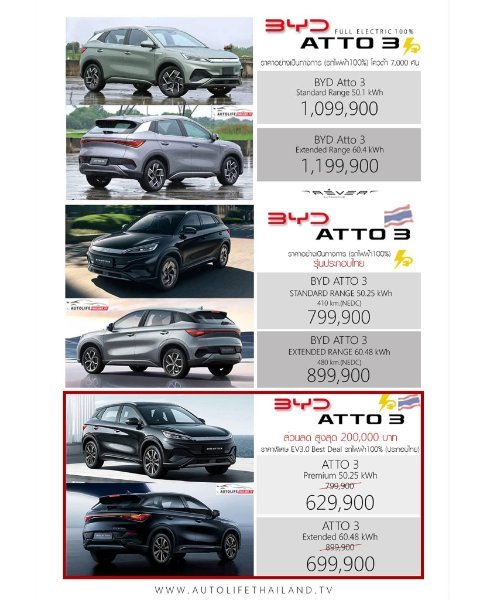
500k baht down from the original price in Nov 2022. Is it still expensive?
-
I was intrigued by these 2 cases. Both of them had a degraded battery due to higher Internal Resistance [IR], which resulted in a battery not giving enough power. Unfortunately during yearly checks IR is not measured and reported to owners, because it is not easy to measure. I have been wondering what may have caused this, so I asked both perplexity.ai and gemini for help: 1) I looked first at the design BYD blade v1 cells are longer [96 cm] than prismatic cells like CATL Shenxing v1 [17cm], thus have a higher nominal IR, 2 times more than CATL, according to perplexity.ai. Cooling, heat and IR degradation are related. For cooling there is a layer of cooling channels on top of all cells, not in between the cells. CATL has cooling channels in between. Therefore blade v1 is restricted to 1-2C fast charging, while CATL Shenxing v1 from 2023 can do 4C charging. If you follow youtuber Bjorn Nyland, you also know about the rapidgate issue. When rapid charging BYDs, sudden drops in power during charging, because BMS detects too much heat in the cells that it lowers the power to charge. 2) wrong practices owner I asked Gemini what the byd owner could have done wrong - frequent dc fast charging generates heat accelerating IR degradation - fast charging when battery already hot - charging immediately after fast driving - parking and charging in hot sun - driving aggressively - constantly charging to 100% and storing at high SoC Thus heat in cells not properly managed => increased IR => causes bigger voltage drop [ less power ] and more heat generation [ due to higer IR ] 3) causes outside fault of owner I asked if issues in the cooling system could also cause this issue Yes, confirmed by Gemini: - dirty AC condenser [ Thai EV mechanics advice to clean every 40k km ] - low AC refrigerant [ well this would be noticed by the owner ] - coolant leak outside the HV battery - coolant leak in the cooling pad inside the battery 4) other scenario's in rainy season - water ingress thru battery valves - water ingress thru holes of case bitten by rodent and not noticed by owner [ known issue with atto3 and dolphin ] According to gemini not very likely scenario's and it would trigger other BMS faults causing a vehicle shutdown
-
It all depend on your requirements. Let me explain. I started my search for an EV about 9 months ago. One that can replace my 10 year old Mazda 3 hatchback. I'm looking for a family car with a firm suspension and having driving dynamics, fit for traveling long distance with 4 adults and has luggage space of around 450-500L. I am still searching, but I've learned a lot. Here are my findings: 1) many EV's below 1.1 M baht will miss the basics of a firm suspension, driving dynamics that you will find in a Mazda hatchback or Honda Civic. Many have a floaty suspension, except MG4 and MG S5. 2) why I did not go for the MG4 or S5? Well I needed at least a 60 kwh for a little bit of range of 400 km WLTP. However the battery of MG this size is made of NMC. NMC is lighter than LFP, however has major drawbacks. It degrades faster in a hot climate, has less charge cycles. You can't charge so often to 100% and is deemed less safe. MG gives a lifetime warranty, but this does not include a battery replacement if the health falls below 70%. This would not be economical to MG, because they have to fulfill this obligation during a lifetime. 3) serviceability Any car needs a good service. Many EV brands have their dealers around Bangkok or big cities. If you are like me living in a rural area, I need to restrict myself to BYD and MG, which are within 1 hour drive. MG seems to have a better name for serviceability and expertise. 4) availability of spare parts This seems to be an issue across all EV brands, even with the models that are made in Thailand. 5) range anxiety Efficiency, weight and size of battery are correlated. For example, these cars have almost the same realistic range: MG S5 with a 64 kwh battery / MG IM6, 75 kwh / BYD Sealion 7, 82.5 kwh. If you want the least amount of range anxiety, choose the lightest EV with the best efficiency that has the fastest DC charger. You can follow Bjorn Nyland on Youtube for this. And don't try to challenge the physics of air and road friction. 6) EV's are more software dependent EV's are fun because of the tech and safety features, however this means they are also more complex to grasp how to use effectively and dependent on a reliable and fluent user interface. There are examples of cars that suffer from this, like the MG4. In this respect BYD scores better than MG. For the IM cars of SAIC sold under the MG brand outside China, the software is much better. 7) if you think you will reduce CO2 emission after buying an EV, think twice if your mileage is low like mine. I am driving 10k km per year. I've asked chatgpt to calculate for me based on the size of the battery, the chemistry and the energy mix of the Thai grid. It would take me 5 years of EV driving to compensate the CO2 emmission in producing a new 60 kwh LFP EV. For a similar sized NMC car it would take 9 years. It would make more sense to continue driving my old Mazda, or move to a a more efficient ICEV with at least 50k km mileage. 8) will my car brand still be there after a decade? We are in a period of transition. This applies to new and established brands. Who would have thought that Volkswagen is now in a period of struggle for survival. Who will survive? Who knows. If you are worried about this question, just stay put. How will I proceed? I have stretched my budget from 1 M to 1.3 M baht to cater for the sedan like MG IM models IM6 [a bobbly liftback] and IM5 [a skinnier liftback]. On the BYD newcomers for 2025, I am not expecting Atto 3 minor change to be less floaty. Maybe their new tires will do wonders.
-
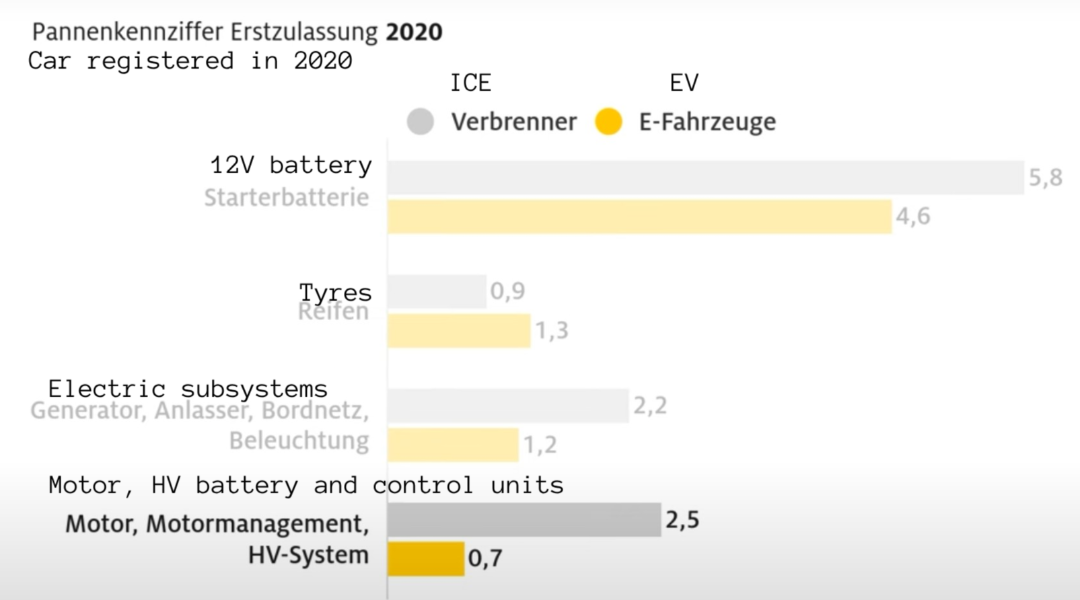
More evidence that EV's are more reliable than ICE. In this case a recent 2025 study from the renowned German motorway breakdown repair service of the car association ADAC. They've looked into 2 groups of 2 till 4 year old ICE and EVs and compared the type of breakdown and how many per 1000 incidents. And the car models that reach the minimum statistical quota of above 7,000 car registrations per group are in this study primarily European, US and Korean. No Chinese like MG or BYD yet. I can only think of only one EV, the Renault Dacia Spring, imported from China, known in China as Dongfeng Nano Box. It got a no 3 rating [2.9 incidents] within the category of budget cars. Unfortunately the road infrastructure context of Germany is not comparable to Thailand. Germany has quite an extensive motorway network, where on some stretches there is no speed limit. The climate is different, cold in winter and summers are less hot and humid than Thailand. This is the main takeaway: Number of Incidents with 12V battery are almost the same between ICE/EV. EV's have slightly more incidents with tyres. Do higher motorway speeds in Germany make things for EVs worse than Thailand? These findings are in line with what I hear from an EV repair shop in Thailand. As tyre incidents are not picked up by EV repair shops, I hear them saying that after the 12V battery the AC onboard charger [or CCU in Kia/Hyundai] is the most frequent component that needs repair or replacement. Kia/Hyundai EV's and Neta V seem to be notorious. I That's why the Ioniq scores very badly in this German study. Besides the German EV's like VW IDx, Tesla model 3 score exceptionally very low incident numbers [0.n].
-
Sources: 1) Thaiexaminer.com: https://www.thaiexaminer.com/thai-news-foreigners/2025/04/19/bangkok-ev-car-self-ignites-while-charging-at-5-am-owner-is-done-as-insurance-costs-soar-over-premiums/ 2) EVinsider Thailand Facebook: https://www.facebook.com/share/p/1AFdZxLyxX/ Please reply with only facts, with what you can share and not any platitudes or anti EV opinion. EVinsider has more recent pictures with what seems like the fire is also coming from the bottom of the EV. We don't have more facts yet than these sources, but given the black plastic pattern below the headlights, I recognize it as a BYD Seal. For what I have found online sofar, this is the third case of a documented EV fire of a personal vehicle in Thailand. 1) 2024 Porsche Taycan. https://www.thaiexaminer.com/thai-news-foreigners/2024/05/25/luxury-porsche-ev-car-worth-10-million-self-ignites-and-is-destroyed-in-minutes-in-central-bangkok/ 2) 2023 BYD Atto 3. Cause was a short in the 12V cable https://www.nationthailand.com/special-edition/ev/40030792
-
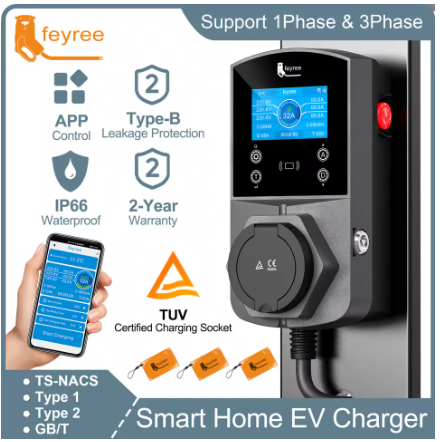
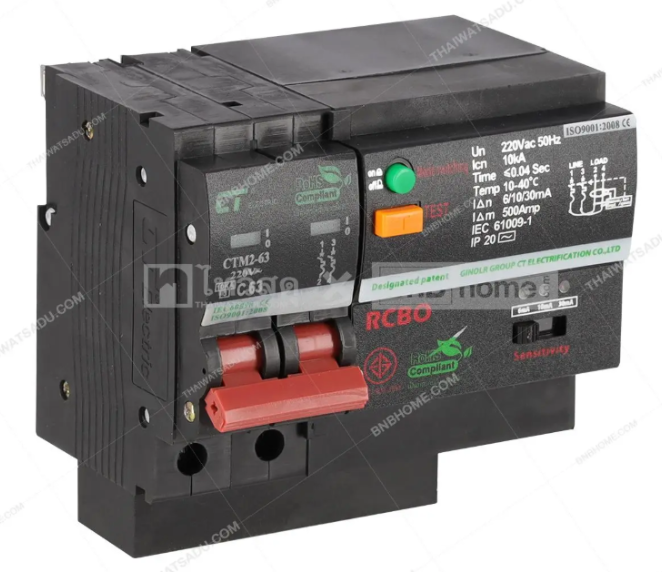
EV charger I want to install a single phase 32A home charger for an EV. Preferably one which the current can be varied, so the idea is I can charge for free during sunny hours from my grid-tied solar by lowering the current [ 8A-10A-13A-16A ]. Later I can automate the current [A] setting in Homekit to dynamically adapt to the actual solar production. I had this Feyree charger [ https://www.aliexpress.com/item/1005005875505790.html ] in mind. I am looking for one which is IEC 61851-1 compliant. It is not explicitly stated to be certified. It says: “Control box meet IEC 61851 control principle”. This one is also an option [ https://www.aliexpress.com/item/1005007741078236.html ]. It has no mention of IEC 61851, but it has RCD type B protection built in. Q1: Which one to take or do I need to look for another charger that is explicitly 61851-1 certified to be on the safe side? PEA meter and smart invoice I am selling my excess electricity to PEA, so they fitted a digital 30(100)A meter. This meter registers off peak consumption separately as seen on my PEA “smart invoice”. However the invoice clubs all consumption into a single rate of 3.2484 baht/kwh. Currently I have a consumption below 100 kwh per month. Also service charge is low at 24.62 baht. Q2: If I start to consume 140 kwh per month extra for my EV and charge it during off peak hours, what do I need to do to get from PEA a lower off peak tariff? Main consumer unit - integrated MCB/RCBO The main breaker is 63A, it will be sufficient for my additional 32A charger. However the MCB is an integrated unit with the RCBO, called CMT-2. See attached picture. Link: https://www.thaiwatsadu.com/en/product/เมนเบรกเกอร์-RCBO-CT-ELECTRIC-รุ่น-CTM2-63c-สีดำ-60264396 What is my gripe? At the EV charger side there will be a RCD type B breaker. All the connections in the main CU are connected to the integrated RCBO. I think this will not work well, having RCBO and RCD on the same EV charger circuit. So I want to route a separate EV breaker from the main MCB without the RCBO. Q3: is there a safe way possible with the existing CMT-2 to break open the bottom cover and route a cable from the MCB without RCBO. Or do I need to replace the CMT-2 unit or even the complete CU. The brand is Gsafe and the CU is 8 years old? Is there another simple route possible, as what I've read PEA does not allow a second line anymore for EV chargers? Solar DC cable interference The easiest way to route the new 15m 32A EV cable is to share a 1 meter conduit with my solar DC cables up to the attic floor. Peak capacity of DC is 4500Wp. Q4: Do I still need to avoid or minimize EMI interference from the dc cables, as Thailand requires onboard EV chargers to be EMC compliant? The home charger I have in mind does not mention any EMC compliance. If so, how to avoid/minimize? EV breaker box / MCB rating The standard configuration I read for the EV breaker box is a MCB for overcurrent protection of the AC cable. The recommended rating in Thai I read is 40A. Also recommended AC cable size is 10 mm2. I agree with oversizing the cable. I want to trip the MCB asap on the lowest overcurrent possible. Because of the bimetal the time that it will trip can take hours also depending on current and ambient temperature. Q5: Is MCB rating of 32A not better to spare the cable than the recommended 40A? EV breaker box / RCD type B Some EV chargers mention a built-in RCD type B with leak current protection of AC 30mA + DC 6mA. Thai papers I read also recommends a rating of 40A for the RCD. Q6: Is it from Thai regulation required to still have an external RCD breaker installed, if the home charger already has a rcd type b? If so, will the circuit work properly with 2 RCD breakers in series? Q7: If the MCB is rated 32A, do I need to match the rating of the RCD to 32A also?
-
Part 2 of my note on extra care needed for AC systems in an EV. I am still in the learning process as it is a complicated topic. My research is based on reading and watching video's online. Why EVs needs extra care vs ICEVs? ICEV uses a separate radiator to cool off the engine. If AC condenser loop breaks or deteriorates it does not affect the engine. Most EVs use a shared AC condenser and if components in the cooling loop breaks or deteriorates, it can effect the separate or combined cooling loop(s) of battery, power electronics and motor, with consequences e.g. battery overheating during DC charging/driving fast or even battery shut off while driving as a precautionary taken by the BMS. There are a few expensive EV models that do not use a shared condenser, like the Lucid Air. Reactive vs preventive maintenance We often do reactive maintenance of the AC system, if it's not cool enough in the cabin, because it's hard, costly and requires expertise to do AC maintenance. Many EV manufacturers also omit to advise scheduled AC maintenance. However there are a few sources that recommend preventive maintenance: https://voltaic.net.au/protect-your-evs-battery-the-critical-role-of-aircon-servicing/ https://keepincool.com.au/electric-vehicles-ac-system-how-does-it-work/ What are the components | how it can deteriorate | how to prevent issues? Cabin filter, cabin evaporator | dirt & dust | remedy: replace or clean. Cabin filter replacement is part of scheduled maintenance. Heat pump incl. compressor, or compressor only | compressor oil leak, refrigerant leak, compressor oil contaminated by humidity | remedy: check leaks or more noise in engine bay, corrective: replace o rings compressor, replace and refill oil and refrigerant Condenser | dirt, debris, corrosion, leaks | remedy: clean Heat exchanger or liquid to liquid evaporator to other coolant loops of battery, power electronics or motor | corrosion, leak | remedy: use glycol coolant, clean Condenser air inlet | insects sticking to condenser | remedy: add aftermarket insect mesh to prevent bugs enter air inlet. Can be found at Aliexpress for a Chinese EV. Documented maintenance online Note that above maintenance applies to most EVs. However I only found a handful documented AC maintenance on EVs online. I've collected around 20 Youtube video's. This topic is also hardly discussed on reddit. Cleaning condenser: Tesla USA/Australia/Thailand, BYD Atto 3 & MG4 in Thailand Fixing leaks of compression oil & refrigerant: BYD Atto 3 Thailand. When the user goes to the repair shop complaining about not cool enough AC, in 7 out of 10 Atto 3's leaks are found. Fixing battery shut off while driving: MG EP Thailand. Older MG EPs uses compression oil type [PAG] that is not recommended for EVs. When contaminated by humidity due to hot climate, it lowers the electrical insulation of the compressor HV cable, leading to BMS shutting off the battery to prevent further damage and danger. This issue occurs to taxi driven EVs in Bangkok: MG EP, AION ES and MG ZS EV. Average km driven per year by taxi Bangkok is 83k km, and repair shop gives warranty for 6 months after a fix. Links: AC preventive maintenance tips: Tip: cleaning condenser Tesla annually Fix MG EP battery shut off: Add insect mesh to BYD Seal air inlet:
-
Many agree that EVs need less maintenance than ICEVs. However you don't hear so often that some EV models need extra care of the AC system, more than with ICEVs especially in a hot climate as Thailand. Because these models use the same cooling system to cool the cabin as to cool the battery. I would like to hear and learn from EV owners, who have driven more than 50,000 km, whether they had to clean their EV AC condenser or add refrigerant after driven a certain amount of km. Because their AC made more noise or the car's electricity consumption went up. Please watch as a context these video's. Unfortunately in Thai, but turning subtitles on will help:
-
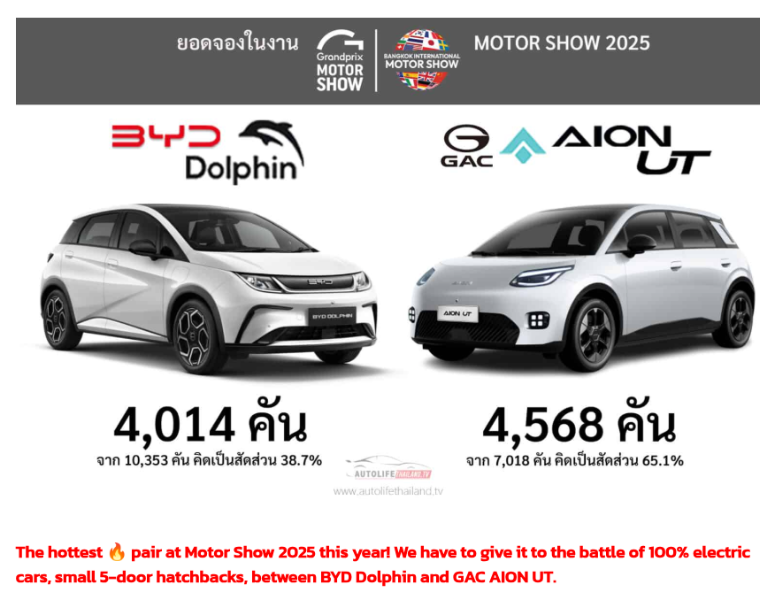
At the Motor Show BYD knew they had to lower the price of the Dolphin [ 499k / 599k ]. Otherwise the fight with the AION UT [ 49xk / 64xk ] would not have been so close. The base model of the AION UT has more value [space, performance ] than the Dolphin base model at the same price. The top model of the Dolphin is 50k cheaper and has more torque than UT top model, so this evens out the volume gains of the UT base model. Source: https://autolifethailand.tv/booking-byd-dolphin-gac-aion-ut-motor-show-2025/
-
This is not correct. According to the Dutch DTA, the old age pension [AOW] is not explicitly excluded to be taxable only in the Netherlands. I think that US citizens are lucky where social security has been explicitly excluded. However this does not mean that your local tax office know how to interpret each tax agreement. From online stories I read, some offices apply the rule that old age pensions from the Netherlands are treated similarly to the old age pension/allowance in Thailand [ Revenue code section 42, clause 25], which is exempt from Thai tax. The term in Thai is referred to as prakan sangkhom.