

GammaGlobulin
Advanced Member
-
Joined
-
Last visited
Everything posted by GammaGlobulin
-
I believe I have found, after a laborious search, a flashcard deck which will not only be of interest to older folks on this forum, but may prove of some significant value to the youngsters here, as well. This flashcard deck is all about learning "Greek and Latin root words (with English examples!)". What is the justification for spending time learning Greek and Latin root words, I hear you asking: "About 80 percent of the entries in any English dictionary are borrowed, mainly from Latin. Over 60 percent of all English words have Greek or Latin roots. In the vocabulary of the sciences and technology, the figure rises to over 90 percent. About 10 percent of the Latin vocabulary has found its way directly into English without an intermediary (usually French)". (Dictionary.com, October 2015) Therefore, it seem only logical that those who seek to attain a better level of reading comprehension will be interested in using such a flashcard deck as this to improve their understanding of English vocabulary by spending time memorizing Greek and Latin roots. During my time in the city where I live, I often see old farang men sitting in coffee shops for hours and hours, gassing away about nothing in particular, and every time I pass by one of these coffee shops, I am reminded of a gaggle of hens. Yet, it need not be this way. If only each of these guys were to bring their phones with the ANKI app installed, they could actually improve their minds through the memorization of Greek and Latin roots. And, no longer would they feel such guilt at whiling away their lives, gassing, without much to show for it at the end of each day. For the youngsters here, even the very young, we know that learning Latin and Greek roots early in life can pay off big dividends when these kids begin Med School, or even when they begin their science classes in high school. Maybe this list is a bit too long for the young ones, but, the beauty of the ANKI app is that it is easily customizable. And, with just a bit of time and effort, one can choose the roots one wants to learn most. In my humble opinion, this flashcard deck is the best I have found on ANKIWEB for learning Greek and Latin roots. But, please feel free to search for a better one if you do not wish to take my word for it. Here is the link to this flashcard deck: https://ankiweb.net/shared/info/1805911436 I have already installed this deck on my ANKI app, and I have found that there is no audio function included. And, in my opinion, audio is not actually that helpful, anyway, for Greek and Latin roots memorization. We all know that Latin is a dead language, after all! As I have previously done with the three (or was it two) other ANKI flashcard decks I linked above, I will export from ANKI a text file comprised of ALL of the cards in this deck and attach the text file to this comment. You may be surprised, but I once had a Chinese student who had memorized an impressive list of Greek and Latin roots. She became a true whizz at correctly guessing some rather abstruse vocabulary that she had never seen before. In fact, she, when she was just about to graduate 12th-grade, put me to shame, vocabularily speaking. Where is she now? She is going gangbusters at a top university in the USA, some school like U. South Carolina, maybe. Therefore, my advice is, when sitting in a coffee shop near the back gate of CMU, pull out your phone and use ANKI to review just five or ten minutes of Greek and Latin Roots. Five a day just might keep the doctor away.. It might take you only 10 minutes, total, to download the ANKI app to your phone, and then add this deck to your ANKI app. If you do not like this flashcard deck, then there are thousands of others. Selected Notes LATIN AND GREEK ROOTS.txt
-
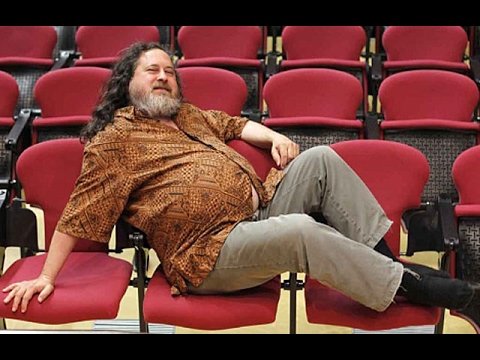
No! The previously posted photo is not kooky. (The photo I posted previously is conservative and handsome.) BUT....THIS ONE is!
-
Perhaps...but... Not HALF as KOOKY as those that use it, today, methinks.
-
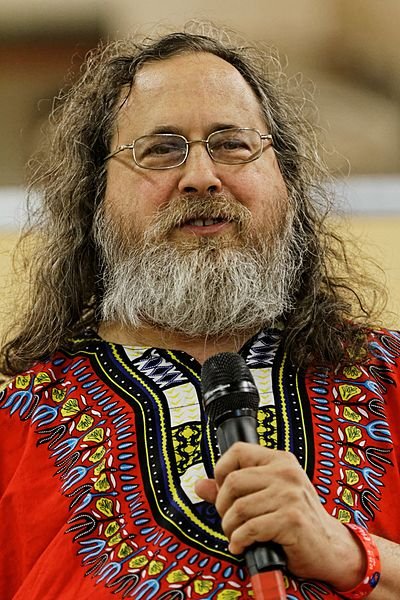
You know, I am really thankful you broached this subject of kooks in your comment, or I might have needed to mention the word, myself. In my view, if one wants to remain young in one's old age, and wishes to be creative at any age, then one should strive to be playful in thought and spirit. Let me give you an example: I don't know if you have read much of the writings of Richard Stallman, but he is one of my many heroes. Stallman was pretty much at the forefront of the opensource movement, and I think he might have even coined the term, COPYLEFT, as opposed to COPYRIGHT. He is also known for his work on the Linux Kernel, and we all now realize that almost anytime we use any piece of "smart" electronics, any electronic device, such as, even a smart toaster, or drive our cars, it is LINUX that is embedded in the control systems of all the electronic devices we see around us. Linux is so versatile because it is OPENSOURCE and the code can be easily modified by anyone to suit any specific requirement. Stallman has been viciously attacked in the past, but he just keeps on going like the Energizer Bunny. He is able to do so because, he says, he has a very playful mind. Is he a KOOK? Yes! Definitely. https://en.wikipedia.org/wiki/Richard_Stallman You can tell just from some of his photos... This photo is DEFINITELY NOT his kookiest, however.
-
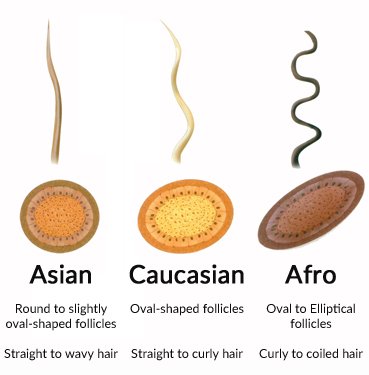
I have always been less interested in head-hair color, and far more interested in cross-sectional shape of head hair. I will attach an image to demonstrate the three basic shapes. What do you think? If you could choose for yourself, which shape would you opt for?
-
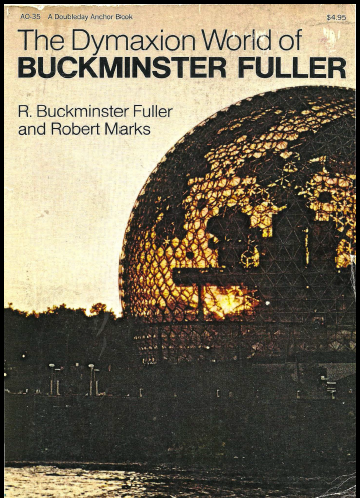
Fuller books like this one are no longer in print. These days, although these books now seem to be in the public domain, and past the restrictions of copyright, still they are not so easy to find. So I have here attached a PDF file, just in case anyone might wish to read more about Fuller's concept of ephemeralization, and doing more with less. For some here, seeing this book cover, you may become suddenly flooded with nostalgia for the good old days. There is even an excerpt from Frank Lloyd Wright's review of Nine Chains to the Moon, which I mentioned in the OP. I have searched the net, and nobody seems to be reading Buckminster Fuller, much, anymore. Take a look at the attached file, and see what you think. Hopefully, you will find the quality of the attached copy, although rather poor, is still up to snuff. the-dymaxion-world-of-buckminster-fuller.pdf
-
Culture is important. Color and ethnicity are not.
-
What about the color purple? I mean the Spielberg film. One of my favorites.
-
When I first encountered these huntsman spiders in Taiwan, which are extremely fleet of toe (spiders don't have feet, but have toe pads), I became deathly afraid to enter the bathrooms in the house, because the bathrooms was where they usually hung out. After a few years, one becomes accustomed to having them around. These days, I see them as a positive addition to my house. I even think that I might be lost without them. It truly is amazing just how fast these spiders can zoom around when you try to chase them. My advice is to view these spiders from a different perspective. Try to put yourself in the shoes of arachnologist. As yourself, "What would an arachnologist do?" If you follow my advice, you will be able to save money by not needing to buy many cans of Raid while living in Asia.
-
Dear Friends, When posting on various social-media forums, do you always write in the same style? Or do you mix it up a bit? The reason I ask this question is because I am just wondering about what you might do, while posting, to avoid becoming STALE. Here is what I do: While posting, I sometimes imagine that I am a famous author. And then, I try to emulate and duplicate the famous author’s writing style, even while communicating my own ideas. For example, some of the writing styles I have not yet tried, except maybe during very occasional fleeting and fanciful moments, are the writing styles of authors such as Voltaire (Candide, my favorite!), Kafka (Castle, Trial, and my favorite short story, The Metamorphosis), Dostoevsky (Brothers K., another great short story), Twain (Innocents Abroad, exceedingly humorous style of writing), and a few others. In my view, one would do well to practice writing using slightly different styles in order to avoid becoming boring to others. And, speaking of being bored, my favorite quote from Zelda’s writing is: 'She refused to be bored chiefly because she wasn't boring.’ -Zelda Fitzgerald Of course, nobody is able to go through life writing in only one style. We must focus on pleasing our audience, for one. And, when we write for children, then we must appropriately change our style in order to more effectively communicate with our little friends. And when I say “little friends” I am using the phrase that most Chinese use to refer to people under the age of about 10. In Chinese, “little friends” is translated XiaoPengYou-小朋友. So, really, I am asking how others here stay fresh when posting comments on forums. What strategies have you attempted to use, recently? Best regards, And may your writing never be boring, GammaGlobbulin
-
One other thought: While at university, I was lucky enough to have a rather famous Linguistics professor. He impressed upon me the importance of always being respectful of others when speaking or writing. I have always done my best to show respect for others, and I just hope it shows. Therefore, I would prefer to think of the girls in Pattaya as FRIENDS. Friend is a better word than Prostitute, in my view.
-
With regard to the words, Prostitute, Bar Girl, and B-girl, I read all of Ian Fleming’s James Bond books while sitting in my 7th-grade classes at public school before they kicked me out and sent me to a prep school for gifted children. As I clearly recall, Ian Flemming seldom if ever used the word “prostitute”, instead preferring the term B-girl. You can check the corpus of Ian Flemmings entire work, and verify this if you wish. Following is a quote from an analysis of Ian’s book, Casino Royale, if you are interested. This might explain why Ian chose to use the term B-girl over the use of the word prostitute. And, like Ian, I NEVER use the word prostitute to refer to the women working in bars, or even the freelancers, in Pattaya. The connotation of the word prostitute in the context of the Pattaya sex workers is just WAY too demeaning from my perspective. “In this article we investigate keywords and key semantic domains in Fleming’s Casino Royale. We identify groups of keywords that describe elements of the fictional world such as characters and settings as well as thematic signals. The keyword groups fall into two broad categories that are characterized as text-centred and reader-centred, with the latter providing particular clues for interpretation.” The above quote is taken from the University of Nottingham/University of Huddersfield article: A case for corpus stylistics Ian Fleming’s Casino Royale https://benjamins.com/catalog/etc.4.2.03mah/fulltext Please Note: After being exposed to Ian’s great writing at age 12, my view of women has been shaped accordingly relatively early in my life, and I am so thankful for my boring teachers at that public junior-high school. Otherwise, I might never have had the pleasure of reading the Fleming books.
-
Wow, Man! I am gratified that you clearly understand this OP: This OP is really all about doing LESS with MORE! In other words, this is the TRUE meaning of EPHEMERALIZATION, in fact. You may not know, but BUCKY Fuller, during one period in his life, actually decided to go a FULL YEAR without talking, not even one word! Maybe I should do the same? Or, maybe I should begin posting in more of a HAIKU style? Anyway, if you are interested in BUCKY's writing style, which is anything but "less is more", I will, in the comments below, add a few samples of BUCKY's scribblings. I am sure that you will enjoy reading what he wrote about DOING MORE WITH LESS. I have always found this guy fascinating, as have many others during the past century. Thank you for your reply!
-
No harm done. All constructive comments are definitely welcome.
-
Dear friends, Of late, we have increasingly seen many topics posted on the forum about AI taking over the world, about AI-related automation taking our jobs, even one recently posted Topic about AI-proof Pattaya Bar Girls, no less. But I am confident that this OP will not remind you too much of those tired old memes. The young people of today seem to mistakenly believe that this concept of robotics and automation is new, but it’s not. Ephemeralization is a term coined by R. Buckminster Fuller in 1938. At the time, he wrote of “the ability of technological advancement to do "more and more with less and less until eventually you can do everything with nothing," that is, an accelerating increase in the efficiency of achieving the same or more output (products, services, information, etc.) while requiring less input (effort, time, materials, resources, etc.),” (Nine Chains to the Moon, Fuller, 1938) Fuller envisioned a “future prosperity driven by ephemeralization.” And he was sure that ephemeralization would “lead to ever-increasing standards of living and an ever-growing population despite finite resources.” Well, that doesn’t sound very Malthusian, and he must have been an optimist at heart. If you haven’t already, I think you might like to read (re-read) a few of Fuller's books, not just for a better historical perspective, but because they are fun, just like his Dymaxion Car, for example. A link from the Guardian about the Dymaxion: https://www.theguardian.com/artanddesign/2010/oct/05/norman-foster-dymaxion-buckminster-fuller I am sure that there are many people on this forum as old as I who remember Fuller, or may even have listened to him lecture. If you have now forgotten what he sounded like when giving a presentation, here is a lecture sample on UTUBE: Bucky was extremely popular with the hippies in San Francisco, as I recall. But that was before they cut off all their hair. Was he popular with you, too, when you were a hippy in San Francisco during the late 1960s? I was never a hippy, but he was still a favorite of mine when I was young and impressionable. These days, knowing what I know, I would be much more circumspect about having faith in famous technologist-visionaries. And, as well, I don’t think my fellow-alumnus Elon is an optimist, either. Elon’s prime directive seems to be finding some way to move human intelligence to Mars, as if he expects armageddon on Earth, any day now. He has even stated that he is in a hurry! Since my arrival in Thailand, my views about humanity and our place in the universe have changed quite a bit. I do not mean that my views have changed solely due to my experience living immersed in Thai culture, though this is probably a part of my shift in perspective. Being the scientist I am, I am free to change my views which are not based on faith or ideology. Technology is NOT science. People can have faith in technology, just as Marxism is also faith-based. But there is no room for faith in science. These days, I am seriously considering making a move up to Chiang Rai and becoming even more of a hermit than I have ever been. I do not mean that I intend to live off the land, unconnected to the grid or the internet, or anything like that. I am just saying that I want to find a quiet place where I can focus on the few things that still interest me, or remain meaningful to me, such as tea for example. And, I’m tired of dreaming about the greening of Mars. Let the Red Planet be! When I was younger, before the advent of the internet, I would spend most of my free time reading books. But I don’t read books anymore. The internet spoiled that pleasure for me. Somehow, like the frog in the pot, I became obliviously caught up in this technological world, and one not of my choosing. So then, Guys, what do you think? Here you are in Thailand, and surely it is a blessing. Are you going to waste this precious gift by spending time in tourist areas, in the farang bars,or on a jet ski, ฯลฯ? Or, is being here in Thailand one of the last remaining places where we can still experience life in a less technologically-driven world, if only we would do so, maybe up in the mountains in Chiang Rai. I once lived for a few years under martial law, with no television, no radio, no English newspapers, and no uncensored magazines. Life was anything but boring for me. How did I spend my days? I enjoy food, and so I ate. I enjoy music, and so I listened to my studio-grade Nakamichi professional cassette deck. I enjoy reading, and I had books. I drank a LOT of Chinese tea, and it was usually DongDing WuLong. I am happiest immersed in Asian culture, and so I became immersed in it. Naturally, I am aware that one cannot achieve purest bliss by retreating into complete hermitness without some meaningful work, or committing to some ongoing self-imposed obligation to provide service to others. Concerning meaningful work, this need not be gainful employment. For example, I have been toying with the idea of writing my memoirs and then posting them, in installments, on some good forum. Having spent time chatting with people in the local community, it is my belief that some members of this group of people prefer not to worry or plan too far into the future, as Savoy Brown seemed to advocate, too, in the song, “Stay While The Night Is Young.” As for me, I would prefer to now have some sort of well-formulated five-year plan for returning to the kind of existence I once enjoyed under martial law, replete with tea, books, music, good food, and a bit more. Still, I am not saying that it would not be absolutely impossible for me to live without access to a free and unfettered internet connection to the outside world. (This must be my first triple negative on TV, or actually this is a quadruple negative if you were to count.) I am saying that I am, in a sense, wasting my life when I permit myself to be so distracted by internet fare that I lose sight of the importance of books, and I do NOT mean ebooks, either. I also do not mean stupid books written by dumb authors; I mean the fantasy-type garbage such as Potter and that loony Ring book. I am also not saying that I am against the further exploration of outer space at an increased pace. However, logically, we should be doing our exploration using robots, not humans. Humans are utterly ill designed for space travel or living on Mars. My fellow-alumnus Elon has become carried away with his Tom Switian fantasies, just like Tolkien, except that Elon actually believes in his. I read the trilogy, Red Mars/Green Mars, and I doubt we will ever see a Blue Mars. So, again, I need a five-year plan which will wean me from the internet so that I can stop wasting my life in the virtual world, and, instead, get back to the garden, like Chauncey. Likewise, I wonder if you, too, have some five-year plan with a similar goal in mind. Or, are you still more of a believer in ephemeralization? It’s good to follow the scientific method. It’s bad to lose yourself in some technological-salvation-of-humanity fantasy. I don’t even care if you buy a car, or two, or three, but just don’t delude yourself into believing that more than one is necessary. So what’s your plan to get back to the garden, with Chauncey? Fondest regards, And may you finally find your piece of heaven, Gamma Note: If your plan is to go to some place similar to the place I would like to be, then continuing practice of passa Thai is essential.

-
If loving you is wrong, I don't want to be right. So true.
-
You forgot item "f)" f) all of the above But seriously, and thank you for your reply, I think I have hit upon a solution. Please let me explain, if you have the time to listen. aa. First, I did as you suggested. And it was a good suggestion. I DID consult an AI for guidance. Unfortunately, Google's Bard was not much help. He just gave me the same old books I already knew. And he also mentioned the Academic Word List (AWL), which I had spoken of in one of my previous comments. However, after much discussion with Bard, he finally coughed up a wordlist of only 10 words which are these: "I understand. Here are some more advanced vocabulary words that you might not know: adumbrate: (v.) to foreshadow or hint at something apperception: (n.) the process of understanding something through one's own experience circumspect: (adj.) cautious and wary conundrum: (n.) a difficult or puzzling problem discombobulate: (v.) to confuse or bewilder someone eldritch: (adj.) strange or unearthly esoterica: (n.) the study of esoteric subjects frivolity: (n.) the quality of being silly or trivial hermetic: (adj.) sealed or closed off from the outside world These are just a few examples of the many advanced vocabulary words that are available. I hope this helps!" Now, as you can see, I think Bard is really getting somewhere on this project. For example, truth be told, I did not know the meaning of adumbrate and eldritch. Therefore, I would most definitely add these two to my perfect MasterList for flashcard deck creation. Therefore, again, thank you for your suggestion. bb. But here is where your suggestion really paid off: As soon as I thought about the idea of adding only the words I did not know to some grand vocabulary flashcard deck, it immediately hit me. It was a true Aha moment. I was suddenly struck with the insight that I could create my OWN personal English vocabulary flashcard deck which would be more challenging to ME! cc. Let me explain how you, TOO, can EASILY create your own personal ANKI English-vocabulary flashcard deck using the two GRE decks that I have already linked in my comments above: a. Just download both text files. (Importantly, the words adumbrate and eldritch are in these lists, BUT, most unfortunately, the word apperception is MISSING from the GRE lists.) b. Next, import these two text files to your favorite spreadsheet program, and mine is GOOGLE SHEETS. c. Then, methodically go down the list of about 12,000 entries, row by row, while deleting all vocabulary terms that you already know. This might take only an hour of quick work. d. After completing step, c, then you might be left with a few words, or more, depending. Let us say, for arguments sake, you are left with 500 words out of the original 12,000, that you do not know, and that is being very optimistic. You can proceed on to step 'e'. e. You really should have chosen GOOGLE SHEETS as your spreadsheet of choice. Why? Because, you need to be using GOOGLE SHEETS in order to upload your spreadsheet to the ANKI deck you are creating. You just need to NAME your deck after clicking the CREATE DECK button. And then go to the IMPORT function. And then upload your spreadsheet to the deck you just named and created. f. So, really, it's as simple as that. g. But, your are NOT finished yet! h. After you have your flashcard deck working on ANKI app, then you will probably want to add audio for each vocabulary term in your deck. i. How To: How to add audio to your flashcard deck? It's easy. Just use the ANKI browser to open your deck, and then select ALL of the words in the deck. Then, just hit the ADD TTS AUDIO TO SELECTED NOTES button. Here, you will see a menu giving you choices of various ROBOT VOICES. I always choose Google Translate Voice, just because Google's Female Voice is better than that of BAIDU SPEECH or IBM Watson, to name but two of the many ROBOT VOICES available. Well, there you have it, my friend. This is the best and easiest way to create an ANKI flashcard deck containing all the GRE vocabulary that you might not know, and NONE of the GRE vocabulary that you already know. In my case, I have not yet tried to estimate, by careful analysis of the entire two posted text files, how many words I will have in my final and personal GRE-exam-related flashcard deck. However, at the present time, as I write these words, I can only tell you that I only notice a very few that I am able to add to my personalized ANKI vocabulary flashcard deck. I am not ashamed to list a few here. I am old, and I am not so easily embarrassed by my ignorance, as I once may have been. That's just one of the many blessings of the aging process. So here are a few.... Acarpous (HaHaHa! Even the spellchecker used on the forum does not recognize this word! When I type acarpous, all I get is a long red line under acarpous. Really cracks me up!) Arabesque A posture in which the body is supported on one leg, with the other leg extended horizontally backward. Luculent (of writing or speech) clearly expressed. Clear, lucid, crystal clear, limpid, pellucid, unambiguous So, just guesstimating, which is not even a real word, I think my final vocabulary flashcard deck might have about 60 words in it. Probably not worth the effort of creating and uploading an ANKI deck. Still, there might be some useful words in the two text files that some might wish to use on this OP, such as the word...LOGORRHEA. I dunno, because I cannot speak for what words others might or might not wish to use here. So, in conclusion, I think the two text files are still fun. And, some of you might wish to upload the relevant decks which have already been created on ANKI. Hey! I spotted another word I am not sure about... Sure, it is clear to all of us what the word lucid means... But, the word PELLUCID? Clearly, this is a word worth knowing....
-
OK...But...THANK YOU....and...I think I might have just found something of interest to "some" of the old geezers (like me, of course) in the Pub: Here is a deck I found published on ANKIWEB. The title of the flashcard deck is "Lifelong Learning - Advanced English Vocabulary" The link for this deck which is a cinch to download and install on ANKI app is here: https://ankiweb.net/shared/info/1748072575 I have now downloaded and installed this deck on my ANKI app, and I have also exported the complete vocabulary contained therein to a text file, which I will attach to this comment. As the title of this deck suggests, this wordlist might be suitable and interesting for many in the Pub. However, if you ask my honest opinion, for many guys in their 60s and 70s, native-English speakers who have done a lot of reading throughout their lives, and also for the guys who love to do crosswords, this GRE-based wordlist will be anything BUT a fun challenge. Fortunately, however, the attached vocabulary list DOES include the word "TURGID", because one of the commenters above implied that my writing style was verbose. I would have preferred that he had used the more appropriate adjective, turgid, to describe my writing. So, maybe the attached vocabulary list will be of some use to him. In conclusion, If someone here believes that the attached LIFELONG-Learning-vocabulary offering might be of use, then download the flashcard deck, and have at it. I am sure that some here will appreciate it. (By the way, this flashcard deck is very long with 8000 entries, it seems, and it might take about a minute to download and install, as a result of its size.) I do hope this deck might bring happiness to at least somebody here. The creators of ANKI flashcard decks, some of them at least, truly do spend a great deal of effort, and hundreds of hours, if not thousands of hours, on deck creation before publishing on ANKIWEB. So...thank you for your work! Selected Notes LIFELONG LEARNING -Advanced English Vocabulary.txt
-
Thank you, but this is not the resource I need to find a suitable wordlist composed of much more advanced Tier-2 and Tier-3 vocabulary. Here, we are not really concerned with the teaching of language, nor the strategies for teaching languages, not the teaching of ESL students. The interest here is in finding a suitable wordlist for use with the ANKI app, one which is advanced enough so that daily practice of such list will be interesting to native-English speakers. If you have any suggestions, please post here. And I will continue to search, as well. It is possible that a suitable wordlist has already been created and posted on ANKIWEB. If you know of one, that would also be helpful.
-
In light of my previous comment, what is needed to play "The GAME", as originally proposed in the OP, is a more challenging wordlist for all the many wordsmiths either lurking or posting on the forum. During the past hour, I have been googling a suitable list of ACADEMIC VOCABULARY composed of words that are critical for comprehension of academic writing at either the PhD level or the research level. Of course, I am aware of the Academic Word List (AWL) compiled by A. COXHEAD, and copied by many in the year 2000. However, the AWL is quite short, and seems to be compiled for those non-native-English speakers, such as ESL learners preparing for TOEFL, who are about to enter their undergrad years at university. Such a list is just completely unsuitable for playing The GAME. I will continue to search for a better list of academic vocabulary. When I find a suitable list, I will create an ANKI flashcard deck, and publish it on ANKIWEB. Better yet, I am quite certain there are those on this forum who already know of a FAR BETTER wordlist, even without searching the internet. The list must be composed mostly of academic vocabulary which is commonly encountered in academic textbooks in the Social Sciences and the Natural Sciences, but NOT in Economics textbooks. Economics, after all, is not a science. If someone here can post an excellent wordlist in the comments, then I will use it in compiling a list to be published on ANKI. If you know of a vocabulary list already existing on ANKIWEB, please link in the comments. That would be the preferable solution....(no need to reinvent the wheel, as they say). Please kindly refer to this link if you wish to know more about COXHEAD and her AWL... https://www.victoria.ac.nz/__data/assets/pdf_file/0020/1626131/Coxhead-2000.pdf She is a prof based in NZ, and she knows a heck of a lot about wordlists and also about ESL learners. She is very well known and well respected in her field. You will find that the AWL existed before her work, and that she seems to have worked on a New Academic Word List (NAWL).
-
As promised above, attached here is a text file exported from ANKI showing the entire GRE MASTERLIST. In fact, when you see the entire list, you will realize that this BARRON's GRE vocabulary list is, with a few rare exceptions, definitely a PIECE OF CAKE. Therefore, anyone choosing to use this deck should be able to finish it posthaste. And furthermore, if you are interested in blowing your mind memorizing some difficult English vocabulary, then you will need to search for a more difficult deck, using the ANKI search function. Personally, I find this list to be kind of a letdown after all my unintended hype about it. Still, this deck will definitely be useful for the many good non-native-English speakers who enjoy this Pub forum. And so, this deck is my gift to them. Please ENJOY your practice. (I am really surprised by this list because I have come across far more challenging vocabulary prep lists for the GRE. And, call me lazy, but this is the first time I have exported this list from ANKY to a text file. Sorry about that!) What we REALLY need in any suitable list are more words like EPISTEMOLOGY, and so many more. Otherwise, such a list is just not worth its salt. But that, ironically speaking, is just my opinion. Selected Notes GRE MASTERLIST.txt
-
Thank you VERY much for your comment in support of my opinion concerning the many benefits of using the ANKI app. As for verbosity, it's just not my bag, Man. Speaking of mnemonic strategies for learning Trig functions: What do you know about that teacher who was suspended for dancing in Math class while chanting... SOH-CAH-TOA? (ANKI is certainly safer than doing that!) https://www.newshub.co.nz/home/world/2021/10/california-teacher-suspended-over-offensive-native-american-imitation.html Thank you for your comment.
-
OK, FINE.... And NOW, a word about this all-too-important concept of DELIBERATE PRACTICE, of which the use of the ANKI app is a perfect example: What, actually, IS this concept of DELIBERATE PRACTICE? Well, before I give you the formal definition, I just want to say that any good golfer is already familiar with the term or the concept of deliberate practice. Do you think that a golfer scores below par for the course because he spends all his time practicing easy golf shots? NO, that would be ludicrous. Great golfers practice, over and over and over, the most difficult shots, they work tirelessly to correct their weak points, their improper form. This is the concept of deliberate practice, and deliberate practice is NOT fun. Only the practice of easy shots, or re-learning what we already know, is FUN. And ANKI definitely is a perfect example of DELIBERATE PRACTICE because ANKI faithfully, day after day, week by week, month after month after month, consistently ONLY asks you to practice what you DON'T already know. And THIS very hard work, with no easy work, is what makes ANKI effective. After stating the above, do you think it is really necessary for me to give you the formal definition of DELIBERATE PRACTICE? YES!: "Deliberate practice is defined as being effortful in nature, with the main goal of personal improvement of performance rather than enjoyment, and is often performed without immediate reward." Therefore, Guys, when using the ANKI app, day after day, you WILL make RAPID progress. But, PLEASE, just be MINDFUL of the fact that DELIBERATE PRACTICE is NOT FUN. If deliberate practice were fun, many more of us would consistently shoot under par, even on the more difficult golf courses. For some reason, the process of memorization is not fun. If you do not agree with MHO, I respect your different point of view.
-
One more important point about the use of the app ANKI, as it pertains to the Pub. Some of you might be asking the question: Do I need to significantly above average intelligence in order to memorize almost anything, including the GRE MASTERLIST of 5000+ vocabulary words. The answer is definitely.."NO". ANKI use an algorithm based on the proven method of spaced-repetition. I am convinced that even a 10-year-old of average intelligence could use the ANKI app to learn all 5000 words in the GRE list within a reasonable period of time. When I was at university, many moons ago, I was attending at a time of great experimentation using various methods of learning. One thing we discovered just through working with pigeons is just how effective some of these learning techniques can be. These days, as we know, the behaviorists (Behaviorism) have been almost completely pushed aside by new theories, but only superficially. ANKI, and other learning apps, still performs well partially based on the same old idea of stimulus-reward. We peck at the correct answer after being presented with a stimulus, a vocabulary term, we peck at the correct or incorrect answer, and then we are negatively or positively rewarded accordingly. Also, the algorithm of spaced-repetition is extremely effective for memorization and for maintaining in memory what one has already memorized. Forgetting what we have learned is less easy. The link between the word and its definition is more persistent in memory. Also importantly is the fact that one can use ANKI pretty much mindlessly, if one wishes. One need not spend a lot of effort "thinking about" the correct answer. In fact, if one wastes time thinking about the correct answer, more than a fraction of a second in most cases, then ANKI actually does not work for the learner as effectively as it otherwise can. So, what I maintain is that ANKI is quite suitable for old geezers like me who like to learn new facts, even a plethora of either obscure or non-obscure facts, but who are just too tired to bother thinking, or find the effort of thought just too taxing. These guys would prefer to just sit in a coffee shop and use the ANKI app for five minutes each day, and then, at the end of a 90-day period, be possessed of many new facts that they had never anticipated they were capable of learning. Sometimes, they might even wish to impress their fellows during morning coffees with the breadth of their newly acquired knowledge. And, doing so is FUN, for some. With regard to learning the GRE masterlist, ANKI does provide, of course, the basic function to easily adjust the number of new vocabulary words that it presents to the learner, per day. Therefore, it is a simple matter of dialing down this number to its lowest setting: maybe one or two new vocabulary terms per day. In this case, you will see one new word per day, and you will also see the words you are in the process of learning, as well as a few words that you have already mastered. I do not wish to go on and on about this because the best way for you to understand the ANKI app is to use it. As John Dewey famously (or infamously) maintained throughout his ignoble career as a two-bit philosopher: The best way to learn, and the ONLY way to learn, is... "Learning by Doing". I have always thought such nonsense could have only been proselytized so insistently by someone who was a dullard. (And this is the way one uses the word, DULLARD, in a sentence. I add this sentence because one of you commenters posted the word dullard in a comment above.)
-
One more reason, one among many, that I chose to post this TOPIC here, rather than post it in any Language-related forum, is because I know that there are a few grandfathers in the Pub who have grandchildren. And, it is sometimes the case that one's grandchildren may experience difficulties in school which are directly related to their lack of understanding about the best ways to memorize information which is presented to them in school. Therefore, I wished to suggest to these grandfathers that there is help at hand, and that grandfathers might pass this information along to the children they care about most. Let me relate just one anecdote I am most familiar with: I once had a Chinese lady tell me that her son was completely unable to memorize English vocabulary. She told me that she was at her wit's end, and had been losing sleep due to the worry involved. Being an exceedingly helpful person, by nature, I sent her the link to the ANKI app. I even offered to spend my time, for FREE, to create a few flashcard decks for her son, which ate up quite a few hours of my time. To make a long story short, as I often try to do, the upshot of this potentially divisive mother-son issue was that her son learned his English vocabulary, flawlessly. English became her son's favorite subject in school. He graduated with honors from his high school. And being an intellectually gifted child, he was later accepted at Harvard under its early admissions program for students showing particularly strong academic performance. This just goes to show that: Often, when a student suddenly is given the tools to excel in one subject, his success spills over in ways that help him to perform in all of his school subjects. ANKI app is, therefore, really nothing to sneeze at. And, the ANKI app works great for all ages. I hope that, through posting this topic here, at least one or two of you might give ANKI a try. I love ANKI...I DO!