
Skip to content
View in the app

A better way to browse. Learn more.

Thailand News and Discussion Forum | ASEANNOW

A full-screen app on your home screen with push notifications, badges and more.

To install this app on iOS and iPadOS
  1. Tap the Share icon in Safari
  2. Scroll the menu and tap Add to Home Screen.
  3. Tap Add in the top-right corner.
To install this app on Android
  1. Tap the 3-dot menu (⋮) in the top-right corner of the browser.
  2. Tap Add to Home screen or Install app.
  3. Confirm by tapping Install.

Brit's leg left 'hanging off' in Thailand crash

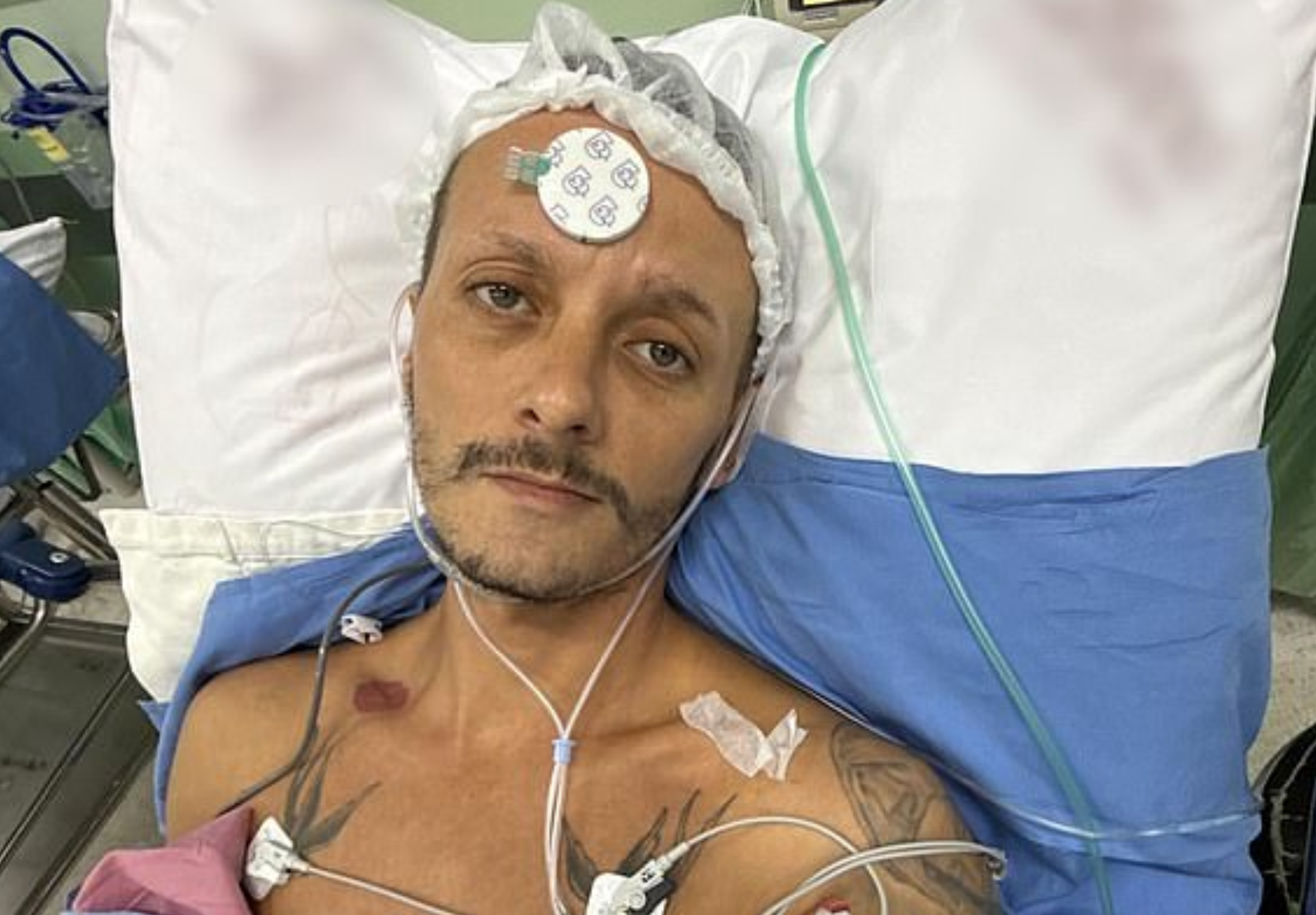
British expat Darren Cummins, 34, is facing GBP22,000 in hospital bills after a motorbike crash in Thailand left him with severe leg injuries, including the loss of five inches of tibia bone.

Cummins, originally from Falkirk, Scotland, moved to Thailand in 2015 after first visiting on holiday. The business development consultant said the crash on 13 June has turned his and his girlfriend's lives "upside down", with three operations still needed before rehabilitation.

Collision on a triple carriageway

Cummins said he was travelling at 100kph when a car allegedly made a U-turn across oncoming traffic on a triple carriageway.

"The driver was travelling in the opposite direction to me so he was on the other side of the triple carriageway and he wanted to do a U-turn," he said.

He said the driver crossed all three lanes and may have believed he could clear two vehicles ahead of Cummins. However, Cummins said he did not see the car until it had passed the second vehicle in the middle lane and was about a metre in front of him.
collage_export_E7171425-B9AF-4AA6-8004-B99E475731E4.jpeg

He said it was impossible to avoid the impact. "My leg took the brunt of the impact but had that been any other part of my body, whether it was my chest or my head, then I wouldn't be here right now."

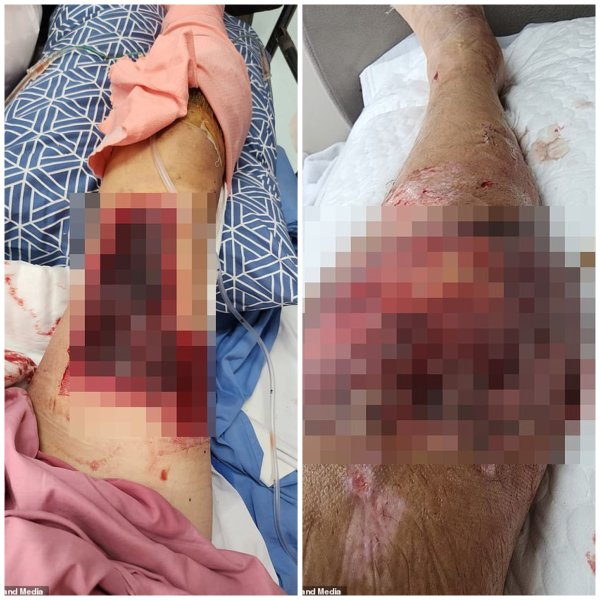
Cummins said he was thrown about 30 yards from his motorbike, was in and out of consciousness and went into shock. He recalled seeing his "leg just dangling off" and screaming uncontrollably before waking in hospital with an oxygen mask on.

Long recovery and mounting costs

The crash caused a compound fracture at the top of his tibia, with five inches of bone lost. He also suffered comminuted fractures to his ankle and shin and lost the use of his Achilles tendon.

"I lost five inches of tibia, smashed out of my knee, [it] scattered across the road," he said. "I'm lucky to be here."

Cummins, who describes himself as a "motorbike guy" and regularly rode to see Thailand's "beauty", said it is less than likely he will ever walk properly again, though there remains a small chance. He said he has cried himself to sleep over the prospect and doubts he will be able to ride again.

For foreign residents and visitors, his account underlines the potentially substantial upfront costs of serious treatment after a road crash. Cummins said the hospital that accepted his case had already exceeded its initial estimate of about GBP15,000.

"Every single procedure now we get hounded for money before they work on me - even if it's an emergency you have to have the money," he said.

After exhausting his savings, Cummins set up a GoFundMe fundraiser, saying he had never wanted to become "that foreigner in Thailand" asking for help but had swallowed his pride.

image.png

Pictures courtesy of Daily Mail

Join the discussion? Create account. orange.png


image.png

17 July 2026

User Feedback

Recommended Comments

Reddavy Gold Member

Reddavy

Advanced Member
5 hours ago, blaze master said:

Ya I dont believe you hit a concrete barrier full on at 100km. You might have clipped something or slid into one at a drastically reduced speed.

But full on at 100. Na bro sorry.

It’s 62mph not 100 🙈🙈

kwilco Ruby Member

kwilco

Advanced Member
2 hours ago, Hummin said:

Risk management is about always staying ahead of the situation. It does not come just because you want to be a safe rider. It comes from years of experience and understanding risk.

When you hit the Thai roads, you have to treat everything that moves as a potential threat to your life. There was not a single day of riding when I did not experience a near miss or someone doing something unexpected. After a while, that becomes the normal pattern in Thailand. Adapt, anticipate, and never assume other road users will do the right thing.

It also helps to have proper insurance, as that is part of risk management too.

I think you've misunderstood my point. I said risk assessment, not risk management.


Risk management is what governments, employers and organisations do through engineering, legislation, enforcement and policy. Risk assessment is what an individual does every time they get behind the wheel or on a bike.


A risk assessment is a systematic process: identify the hazards, assess the likelihood and consequences, then decide how to minimise the risk. That process is exactly the same whether you're driving in Thailand, Britain, Australia or anywhere else.

"When you hit the Thai roads, you have to treat everything that moves as a potential threat to your life."

Why would you do anything different in any other country? Defensive driving isn't uniquely Thai; it's the basis of good driving everywhere.


"There was not a single day of riding when I did not experience a near miss..."

If that's literally true, I'd suggest it says as much about your own risk assessment as it does about Thailand. I've driven well over 600,000 km in Thailand since the 1990s and I certainly haven't experienced a near miss every day.


"Adapt, anticipate and never assume other road users will do the right thing."

Absolutely—but that's Defensive Driving 101. You should adapt to the local driving environment in every country.

The mistake many foreigners make is assuming "the right thing" means behaving as drivers do back home. Thai traffic has different conventions, priorities and expectations. Failing to recognise that is often where the problems begin.


Insurance is another good example. Many foreigners who would never dream of driving uninsured at home arrive in Thailand, rent a motorcycle, rely on the compulsory Por Ror Bor cover, or don't even have the correct licence. That's a failure of risk assessment before they've even started the engine.


Good driving isn't a uniquely Thai skill. The principles of observation, anticipation, space management and hazard perception are universal. The only thing that changes is the environment in which you apply them.


And finally, with respect, this is exactly why anecdotal evidence is so unreliable. Your personal experience—whether it's "a near miss every day" or "I've never had an accident"—doesn't tell us anything about road safety as a whole. It simply illustrates confirmation bias. Road safety is a science, not a collection of driving stories. People tend to judge risk by what they can easily remember, not by what the evidence shows. A dramatic near miss sticks in the memory, so they conclude it happens "all the time". That's one reason why personal anecdotes are such poor evidence in discussions about road safety.

blaze master Diamond Member

blaze master

Advanced Member
18 minutes ago, Reddavy said:

It’s 62mph not 100 🙈🙈

100kmph is what I said. Try to keep up.

Hummin Star Member

Hummin

Advanced Member
15 minutes ago, kwilco said:

I think you've misunderstood my point. I said risk assessment, not risk management.


Risk management is what governments, employers and organisations do through engineering, legislation, enforcement and policy. Risk assessment is what an individual does every time they get behind the wheel or on a bike.


A risk assessment is a systematic process: identify the hazards, assess the likelihood and consequences, then decide how to minimise the risk. That process is exactly the same whether you're driving in Thailand, Britain, Australia or anywhere else.

"When you hit the Thai roads, you have to treat everything that moves as a potential threat to your life."

Why would you do anything different in any other country? Defensive driving isn't uniquely Thai; it's the basis of good driving everywhere.


"There was not a single day of riding when I did not experience a near miss..."

If that's literally true, I'd suggest it says as much about your own risk assessment as it does about Thailand. I've driven well over 600,000 km in Thailand since the 1990s and I certainly haven't experienced a near miss every day.

Thaicooking classes


"Adapt, anticipate and never assume other road users will do the right thing."

Absolutely—but that's Defensive Driving 101. You should adapt to the local driving environment in every country.

The mistake many foreigners make is assuming "the right thing" means behaving as drivers do back home. Thai traffic has different conventions, priorities and expectations. Failing to recognise that is often where the problems begin.


Insurance is another good example. Many foreigners who would never dream of driving uninsured at home arrive in Thailand, rent a motorcycle, rely on the compulsory Por Ror Bor cover, or don't even have the correct licence. That's a failure of risk assessment before they've even started the engine.


Good driving isn't a uniquely Thai skill. The principles of observation, anticipation, space management and hazard perception are universal. The only thing that changes is the environment in which you apply them.


And finally, with respect, this is exactly why anecdotal evidence is so unreliable. Your personal experience—whether it's "a near miss every day" or "I've never had an accident"—doesn't tell us anything about road safety as a whole. It simply illustrates confirmation bias. Road safety is a science, not a collection of driving stories. People tend to judge risk by what they can easily remember, not by what the evidence shows. A dramatic near miss sticks in the memory, so they conclude it happens "all the time". That's one reason why personal anecdotes are such poor evidence in discussions about road safety.

I do not think I misunderstood your point. Risk assessment and risk management are connected, and individuals do both. You assess the risk, then manage it through your choices, speed, position, equipment, licence and insurance.

I also never claimed defensive riding was unique to Thailand. I said the Thai road environment requires constant adaptation and anticipation. A near miss does not necessarily mean emergency braking or nearly crashing. It can be someone pulling out, changing lanes without looking, riding against traffic or doing something unexpected that you had already anticipated and avoided.

My experience was not presented as scientific proof of road safety in Thailand. It was personal experience explaining how I learned to ride there. Calling every personal observation confirmation bias does not automatically make it unreliable. Statistics tell us the wider picture, while experience teaches us how to survive within it.

If you never experienced a near miss in Thailand, or maybe you are not aware, you maybe the problem 😁

kwilco Ruby Member

kwilco

Advanced Member
(edited)
1 minute ago, Hummin said:

If you never experienced a near miss in Thailand

You still don't seem to understand – you are conflating risk management and assessment – and you don't seem to understand the difference. When it comes to riding a motorcycle, risk assessment is the key; it's a personal choice. Risk management is what governments do to mitigate the problems of road safety

"My experience was not presented as scientific proof of road safety in Thailand; it was personal experience explaining how I learned to ride there." - Unfortunately, people also conflate "learning" and "experience" with the accumulation of bad habits. Also, as said, you are presenting anecdotal evidence and confirmation bias – the plural of 'anecdote' is not 'data'.

A lot of this is down to perception, which is misleading, and, as said, experience is so often just the accumulation of bad habits.

As said, I've experienced near misses all over the world.

Edited by kwilco

scorecard Star Member

scorecard

Advanced Member
16 hours ago, Upnotover said:

There's one in the photo, maybe it's his.

But maybe he has a personal attitutude of: 'Yes I have a crash helmet attached to the frame of the bike and I'll put it on when I'm going to have a crash'.

(But does that include properly putting on the under the chin straps?)

NoDisplayName Ruby Member

NoDisplayName

Advanced Member
4 hours ago, alanrchase said:

What is your point? You asked for a posted speed limit, suggesting 100 might have been legal on the stretch of road involved? I pointed out that 90 is the maximum limit in the left lane on all highways.

I'm pretty sure the stretch of highway 2 northeast out of Korat has a speed limit of 100.

NoDisplayName Ruby Member

NoDisplayName

Advanced Member
15 hours ago, Front Row said:

FWIW if you are going 120 kph in the USA then you are almost certainly going over the speed limit. 70 mph / 112 kph is the absolute maximum speed limit on American highways. (There may be a few rare exceptions.)

Of course everyone else on the highway is probably going 80 mph too. 😝

Interstate highways in Texas have maximum speed of 75, except in some areas set at 85mph.

Hummin Star Member

Hummin

Advanced Member
16 minutes ago, kwilco said:

You still don't seem to understand – you are conflating risk management and assessment – and you don't seem to understand the difference. When it comes to riding a motorcycle, risk assessment is the key; it's a personal choice. Risk management is what governments do to mitigate the problems of road safety

"My experience was not presented as scientific proof of road safety in Thailand; it was personal experience explaining how I learned to ride there." - Unfortunately, people also conflate "learning" and "experience" with the accumulation of bad habits. Also, as said, you are presenting anecdotal evidence and confirmation bias – the plural of 'anecdote' is not 'data'.

Thailandtravel guides

A lot of this is down to perception, which is misleading, and, as said, experience is so often just the accumulation of bad habits.

As said, I've experienced near misses all over the world.


You keep returning to textbook definitions, while I am talking about practical riding and personal responsibility. An individual assesses risk and then manages that risk through speed, position, awareness, equipment, licence and insurance.

Experience can include bad habits, but it can also include learned judgement, improved awareness and survival. Calling personal experience confirmation bias does not make it meaningless. You can continue your lecture, but you do not convince anyone with your pedagogic behaviour. I have managed risk in several professions and extreme sports, came through it in one piece, and hope it continues for as long as possible.

And yes, near misses happen all over the world. My point is that in Thailand I learned to expect the unexpected every day and ride accordingly.

kwilco Ruby Member

kwilco

Advanced Member
16 minutes ago, Hummin said:

You keep returning to textbook definitions, while I am talking about practical riding and personal responsibility. A

you clearly don't understand what you are talking about – road safety is a science - road users suffer from perceptions that are distorted and unhelpful – the plural of 'anecdote' is NOT 'data'.

Hummin Star Member

Hummin

Advanced Member
9 minutes ago, kwilco said:

you clearly don't understand what you are talking about – road safety is a science - road users suffer from perceptions that are distorted and unhelpful – the plural of 'anecdote' is NOT 'data'.

You are trying hard to control the definitions. That is all you have when you try to dumbify others in debates.

alanrchase Gold Member

alanrchase

Advanced Member
3 hours ago, NoDisplayName said:

I'm pretty sure the stretch of highway 2 northeast out of Korat has a speed limit of 100.

The 120 limit roads in my area are only 120 in the right lane. The centre lane is 100 and the left is 90. The 120 lane also has a minimum speed of 100. The highways without a 120 limit are all 90 for all lanes. There are lower limits for various vehicles. That does not mean you are not right about roads northeast of Korat.

Create an account or sign in to comment

Account

Navigation

Search

Search

Configure browser push notifications

Chrome (Android)
  1. Tap the lock icon next to the address bar.
  2. Tap Permissions → Notifications.
  3. Adjust your preference.
Chrome (Desktop)
  1. Click the padlock icon in the address bar.
  2. Select Site settings.
  3. Find Notifications and adjust your preference.