



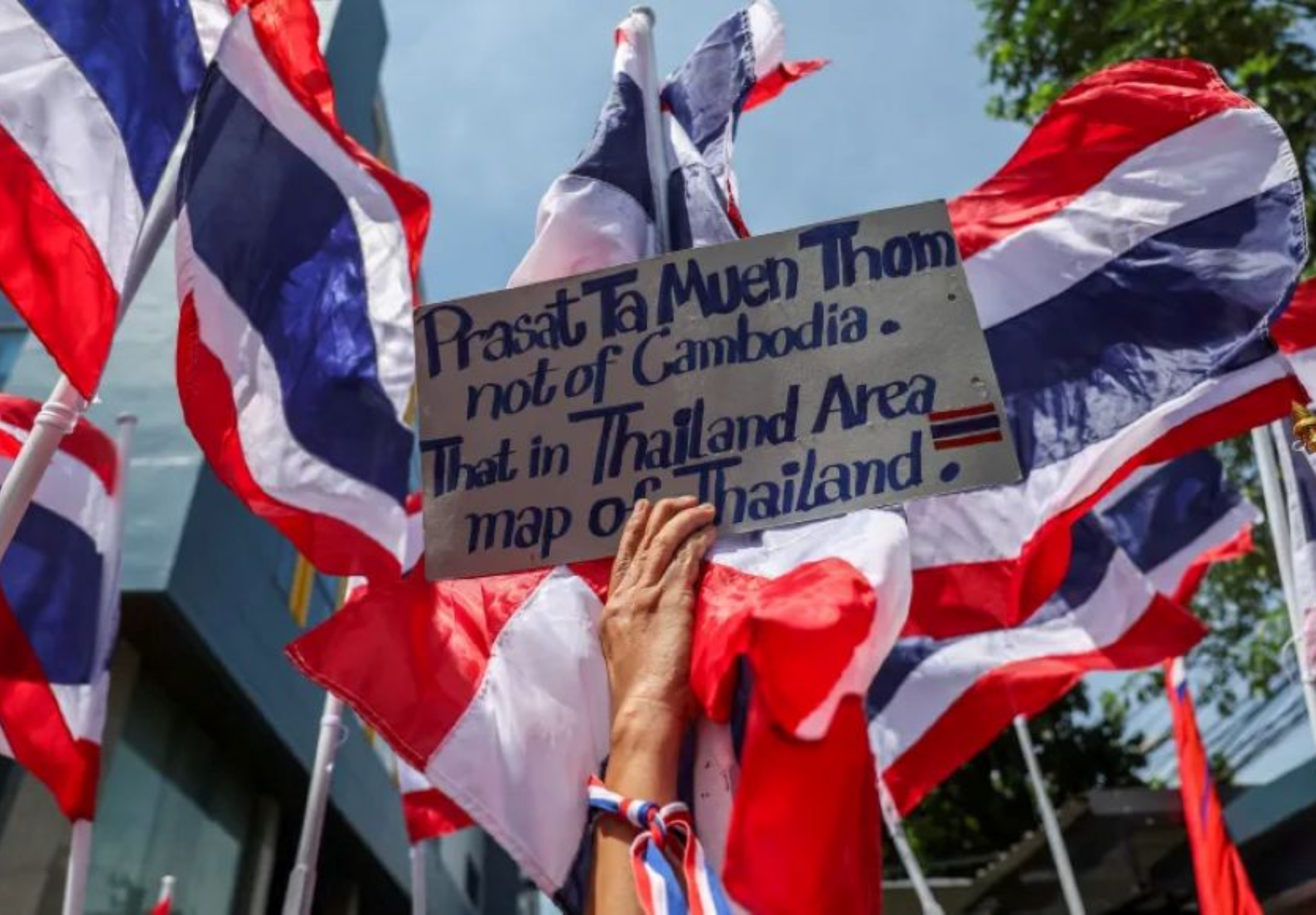

Cambodia has reaffirmed its commitment to defending its internationally recognised border with Thailand, citing agreements inherited from the colonial era and rejecting any attempt to alter the boundary through the use of force.
Get today's headlines by email 
Government spokesperson Pen Bona made the remarks on Thursday 18 June 2026, stating that Cambodia maintains a firm position on protecting the Cambodia-Thailand international border as established by the Siam-French Boundary Commission. He said the border arrangements are consistent with principles of international law.
Pen Bona referred to the principle of uti possidetis juris, under which newly independent states inherit pre-existing legal borders. He argued that inherited boundaries must not be violated and stressed that Cambodia respects conventions, treaties, maps and border demarcation records agreed between France and Siam, as well as subsequent agreements and documents jointly recognised by both countries.
The comments come amid continuing discussions over border issues between the neighbouring nations. Cambodia has repeatedly maintained that existing border arrangements are supported by historical legal instruments and international law.
On maritime matters, Pen Bona said Cambodia has exercised its right to compulsory conciliation under the United Nations Convention on the Law of the Sea to address overlapping maritime claims with Thailand.
He expressed confidence that the process would demonstrate the value of international law and peaceful dispute resolution. He also reiterated Cambodia’s complete rejection of any border changes resulting from the use of force.
Cambodia’s Ministry of National Defence echoed the government’s position, stating that border issues must be resolved through formal mechanisms rather than unilateral actions. The ministry also called for the Joint Boundary Commission to resume work immediately to facilitate the safe return of displaced civilians.
The Cambodian authorities further expressed support for ASEAN observers and called for stronger powers to ensure full compliance with any ceasefire agreements.
The statements underline Cambodia’s continued reliance on international legal frameworks and bilateral mechanisms in addressing both land and maritime disputes with Thailand. The emphasis on the Joint Boundary Commission and international processes suggests that diplomatic and legal channels will remain central to future discussions.
The Manager Online reported that how Thailand and Cambodia proceed through existing border mechanisms, including the Joint Boundary Commission and maritime conciliation procedures, is likely to shape the next stage of negotiations between the two countries.
Join the discussion? 
Already a member? 
 Adapted by ASEAN Now MGRonline 20 June 2026
Recommended Comments
Create an account or sign in to comment