



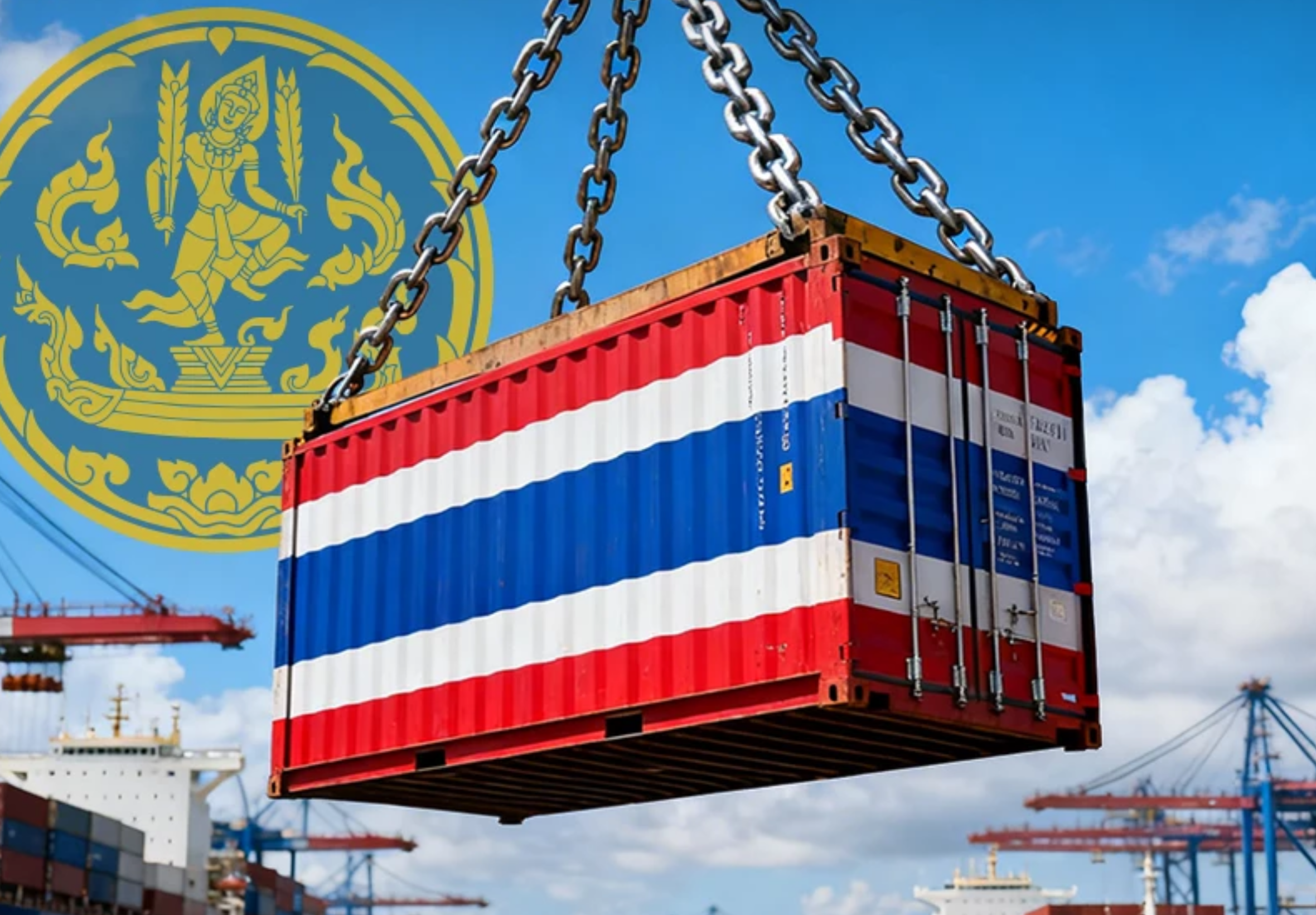

The Commerce Ministry has launched a “Resilience” strategy aimed at protecting the country’s export sector from global risks including geopolitical conflicts and trade polarisation. The policy seeks to strengthen Thailand’s ability to maintain export growth while navigating an increasingly uncertain global trading environment. Officials say the plan focuses on diversification, trade agreements and adapting to emerging economic trends.
Get today's headlines by email 
The strategy encourages exporters to expand into new markets such as the Middle East, Africa and South Asia, reducing reliance on a limited number of major trading partners. It also prioritises accelerating Free Trade Agreement negotiations with key partners including the European Union and the United Arab Emirates. Officials say these agreements could provide tariff advantages and help attract foreign investment from companies seeking new production bases.
Thailand’s exports performed strongly in 2025 despite global tensions, reaching a record USD339.635 billion, or THB11.138 trillion. This represented growth of 12.9% compared with 2024, far exceeding the government’s initial target of 2–3%. In January 2026, exports continued to expand, reaching USD31.5731 billion, the highest monthly value on record, rising by 24.4% and marking the 19th consecutive month of growth.
However, the Trade Policy and Strategy Office (TPSO) warned that exports face both risks and opportunities in 2026. Forecasts suggest exports could range from a 3.1% contraction to 1.1% growth compared with 2025, with a midpoint projection of a 1.1% decline. In value terms, exports are expected to total between USD329.1063 billion and USD343.371 billion.
Recent global events have added pressure to international trade. The outbreak of war in the Middle East between the United States and Iran has disrupted shipping routes and increased logistics costs following the closure of the Strait of Hormuz. Rising oil and natural gas prices, combined with financial market volatility, have further complicated the outlook for global trade.
TPSO analysis also shows Thailand’s exports remain closely tied to its largest markets. In 2025, the United States, China, Japan, India and Malaysia accounted for 48.6% of total export value, up from 38.8% in 2016. The top three markets alone increased their share from 31.9% to 40.0%, highlighting the country’s strong dependence on major trading partners.
Nantapong Chiralerspong, Director of the Trade Policy and Strategy Office, said geopolitical rivalry and global polarisation are forcing medium-sized economies such as Thailand to carefully balance their trade strategies. “Maintaining economic balance among the major powers and ensuring that exports continue to serve as a strong and sustainable engine of the Thai economy over the long term,” he said.
The Nation reported that the ministry’s resilience framework is built on three pillars. These include diversifying export markets and raw material sources, accelerating FTA negotiations, and promoting exports in sectors aligned with global trends such as Future Food, environmentally friendly products under the BCG ( Bio-Circular-Green, Thailand's national strategy for sustainable development) Model, and digital commerce.
Join the discussion? 
Already a member? 
 Adapted by ASEAN Now Nation 9 Mar 2026
Recommended Comments
Create an account or sign in to comment