
Skip to content
View in the app

A better way to browse. Learn more.

ASEAN NOW

A full-screen app on your home screen with push notifications, badges and more.

To install this app on iOS and iPadOS
  1. Tap the Share icon in Safari
  2. Scroll the menu and tap Add to Home Screen.
  3. Tap Add in the top-right corner.
To install this app on Android
  1. Tap the 3-dot menu (⋮) in the top-right corner of the browser.
  2. Tap Add to Home screen or Install app.
  3. Confirm by tapping Install.

Frenchman faces Koh Samui nominee business claims

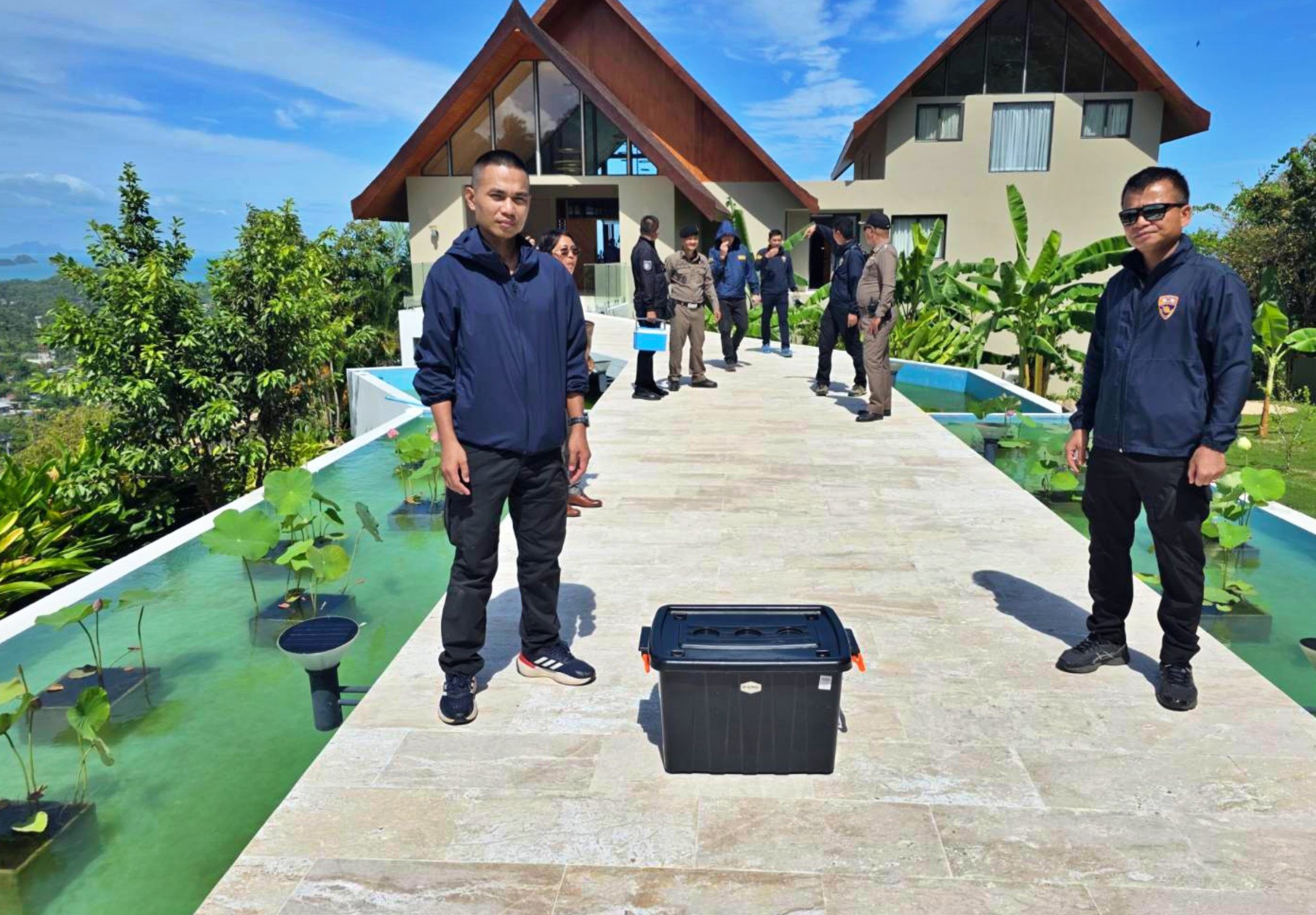
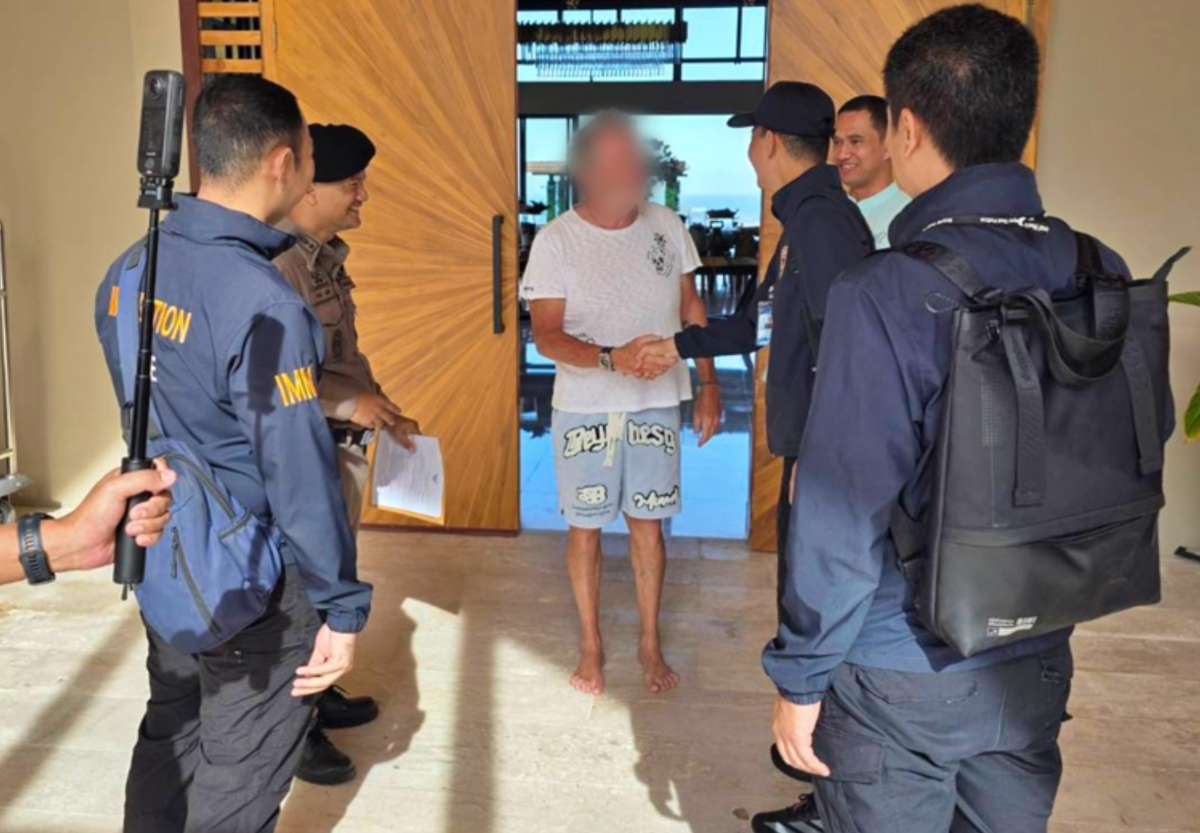
Surat Thani Immigration Police are investigating a French businessman accused of using Thai nominees to control businesses and land on Koh Samui, including a 12-room property allegedly operating without a hotel licence.

Stephane Thierry Bastok, 74, is also facing separate legal proceedings over claims that he persuaded eight French nationals to invest about 3.3 million baht each, in a cannabis farm project that investigators say was never established.

The investigation forms part of "Crackdown on Foreign Nominee Networks, Phase 7", launched under policies set by National Police Chief Pol. Gen. Kittirat Phanphet and Pol. Gen. Samran Nualma, deputy national police chief and director of the Centre for the Suppression of Transnational Crime and Illegal Immigration.

On 15 August 2026, Immigration Bureau commissioner Pol. Lt. Gen. Phanumas Boonyalak ordered an inquiry through Immigration Division 6 commissioner Pol. Maj. Gen. Chuthares Yingyongdamrongsakul.

Koh Samui firms and accommodation examined

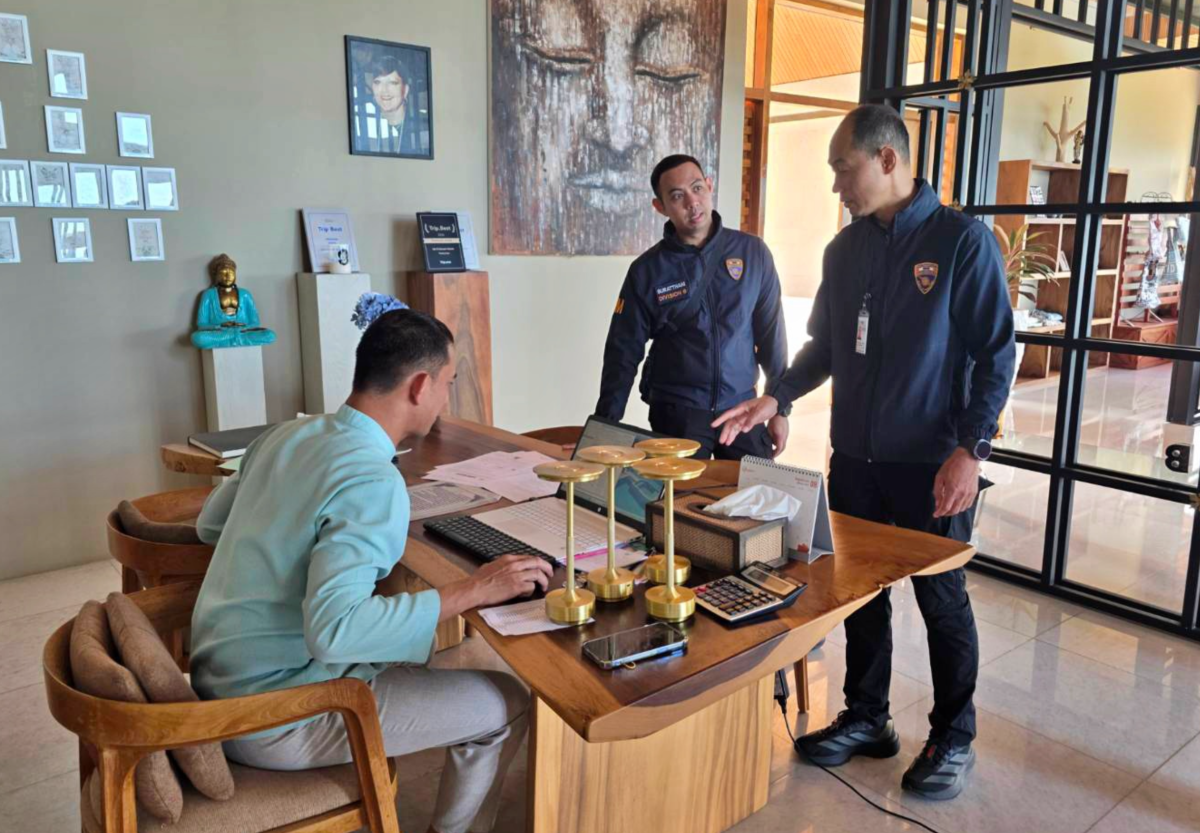
Pol. Col. Naruet Phutthawiro, superintendent of Surat Thani Immigration, said officers expanded their work after identifying suspicious company shareholding arrangements involving Thai nationals.
IMG_0361.png

Investigators linked Bastok to Ida B Co Ltd and IDA B Domain Co Ltd, which were involved in land ownership and accommodation businesses in Moo 5, Lipanoi subdistrict, Koh Samui district.

Ida B Co Ltd owns about 7 rai, 3 ngan and 80 square wah of land. A three-storey building was constructed there in 2021 and later operated as IDA B Domain, with 12 rooms, a restaurant, online daily booking advertisements and its own website targeting tourists.

However, officers found no hotel business licence issued by the Koh Samui district hotel registrar. Immigration records filed under Section 38 of the Immigration Act indicated short guest stays, while an application for a health-hazardous business licence described the operation as a 12-room rental business.

Ida B Co Ltd reported continuing losses and no genuine business income, officers said. Three Thai shareholders holding a combined 60% were restaurant employees and a driver, with no apparent capacity to fund such an investment.

IDA B Domain Co Ltd had two Thai shareholders holding 60%. One admitted he was an employee whose name was used as a director and document handler, without control over company finances.

Records showed more than 7.7 million baht transferred from company accounts to Bastok and more than 1.5 million baht to his son. Officers said this suggested Bastok supplied the funds and controlled both businesses.

Risks for foreign investors and nominees

For foreigners in Thailand, the case is a reminder that using Thai shareholders as stand-ins to bypass foreign business or land-ownership restrictions can expose both the foreign investor and Thai participants to prosecution. A Thai-registered company does not automatically make an arrangement lawful if its Thai shareholders are not genuine investors.

Pol. Lt. Col. Arun Musigim has filed a complaint against Bastok under the Foreign Business Act B.E. 2542 (1999), including Sections 8, 36, 37 and 41, and the Hotel Act B.E. 2547 (2004) for allegedly operating a hotel without a licence.

The two companies face allegations of allowing a foreigner to conduct business unlawfully, using Thai nominees and operating an unauthorised hotel. The five Thai nominees face allegations under Sections 36 and 41.

Bo Phut and Koh Samui police have completed the cannabis-farm case files and sent them to prosecutors. Immigration is also considering possible money-laundering action, including whether allegedly illegal proceeds funded investments.

Pol. Col. Naruet said officers had credible information that Bastok previously advertised a hotel, buildings and land for sale at 300 million baht.
IMG_0360.png

Pictures courtesy of Khoasod


Related story

Koh-Samui-nominee-crackdown-targets-60-companies


Join the discussion? Create account. orange.png


image.png

17 August 2026

User Feedback

Recommended Comments

kingstonkid Ruby Member

kingstonkid

Advanced Member
8 hours ago, sunrisecoconuts said:

These places are not from even more than 5-7 years ago, that's the entire issue, a massive influx since covid with the 'social media hyped' arrogance attitude to ignore the social and red tape rules there are in Thailand. They then proceeded to just do business direct with a lawyer, ignoring local areas and people that matter.

This then became more and more and more, for example a 400sqm plot in phangan costing just 300-500K baht up until covid, they now try to sell you for 1-2M baht with dry eyes. 1 rai sea view you talk 7-10M from 2M. None of this made any logic or sense if having a thai business partner or wife in the traditional sense. It was just capitalist abuse max.

It is not a fair game anymore if you get certain families from a certain country that come with 20 friends, all put in 5K USD, and take over areas. If any of this was remotely logical or reasonable, 'we' would have done it decades ago ourselves as 'farangs'. Also quite a important detail that they not pay interest on their loans and can share land without needing formal land changes easily. It's like a free second home to them.

Most of the older ones are actually working with Thais, or mostly have Thai wives or even children too. They also mostly follow all the rules and do not really own the business properties themselves; in many cases, they just rent them for decades, or the owner is a big family and also a stakeholder in the same business.

The issue with Thailand is that they act like teenagers with black-and-white thinking when forced to deal with a problem.

The challenge that will hurt these people is that they should all have known better. We are all aware of the property rules, and that Nominal Corps was just riding the edge of the law. For the guy who just bought his house and was told that it was okay, I feel sorry, BUT for those who set up multiple companies and bought or set up multiple businesses, I am not sorry at all.

For the Farang married to a Thai, the solution should be a little simpler. Fine him, slap his wrist, and give him 30 days to either sell or change everything over to their spouse.

ericthai Platinum Member

ericthai

Advanced Member
11 hours ago, sunrisecoconuts said:

Well worse is the officials of course, they set the price that lawyers and agents pay, to then be the necessary middle men for hidden bribes. They should clean up their own house first, then make proper new laws, then offer amnesty 1 year, then enforce.

This is how Thailand works. It's been like this for decades.

Rules can be unclear or subject to interpretation, so how they're applied can vary from one office or officer to another. It doesn't matter what department.

Our accountant would go to a government office for this permit or that permit and be told it would take 3–4 weeks. Then somehow, for another 150 it could be done immediately.

You keep bringing up 2014 / 2015 as though there was some major change that hurt every normal foreign / Thai business. What specifically are you referring to?

From what I can recall there wasn't a major change that suddenly made a legitimate 51% Thai / 49% foreign company illegal or substantially changed the rights of a normal foreign shareholder.

What was happening around that period was increased scrutiny of nominee arrangements and discussion of tightening the Foreign Business Act, particularly situations where the Thai 51% existed mostly on paper while the foreigner actually owned or controlled the business.

That was especially an issue with companies being used to get around foreign business or land ownership restrictions.

So if there's a particular 2014 / 2015 law or rule you're referring to, I'd be interested to know which one.

sunrisecoconuts Explorer Member

sunrisecoconuts

Member
(edited)
10 hours ago, ericthai said:

This is how Thailand works. It's been like this for decades.

Rules can be unclear or subject to interpretation, so how they're applied can vary from one office or officer to another. It doesn't matter what department.

Our accountant would go to a government office for this permit or that permit and be told it would take 3–4 weeks. Then somehow, for another 150 it could be done immediately.

You keep bringing up 2014 / 2015 as though there was some major change that hurt every normal foreign / Thai business. What specifically are you referring to?

From what I can recall there wasn't a major change that suddenly made a legitimate 51% Thai / 49% foreign company illegal or substantially changed the rights of a normal foreign shareholder.

What was happening around that period was increased scrutiny of nominee arrangements and discussion of tightening the Foreign Business Act, particularly situations where the Thai 51% existed mostly on paper while the foreigner actually owned or controlled the business.

That was especially an issue with companies being used to get around foreign business or land ownership restrictions.

So if there's a particular 2014 / 2015 law or rule you're referring to, I'd be interested to know which one.

That is not how Thailand works for decades at all, how thailand used to work is that things are possible by paying compensation. Now this only applies if having the right connections. In terms of what changed in 2014/2015? you have to be kidding me, everyone knows that since that time you pay the army too.

As well that this caused the initial OG gangster digital nomads, still 'real people' that today would be in age 30-45, that were booted out with the same visa nazi practices they are running today. This caused a mass exodus in Chiang Mai of over 10,000 digital nomads, that were spending 2K USD a month each average. Chiang Mai had literally the chance for a magic golden boom era, it could have progressed to become what Hanoi is today already in terms of Technology hub.

They then were saved by the chinese boom only, to otherwise ever since have been virtually a deserted place. The same applies to almost everywhere. As well now again today, a mass exodus of the actual legit long stayers is taking place.

Covid in between was a mess up, also then we can go further back and this 5 year pattern goes all the way to early 2000. Aside of 6 decades messing around with foreign investors and businesses, losing all of them in the process. Event virtually all rich today that are Thai, are this thanks to those same foreign businesses and investors. There was none of that before.

There was a very very good change of attitude in covid by Shretta who then was ousted while they did the judicial coup on elections. They learned from the sanctions taken against Thailand so they figured they can do it without the tanks now.

If this comes as news to you, you really are not paying attention for a long ass time.

Edited by sunrisecoconuts

Liverpool Lou Star Member

Liverpool Lou

Advanced Member
17 hours ago, kingstonkid said:

Again, you really think the media can be successfully sued for reporting criminal cases that are ongoing in court or police investigations?

Successfully, I don't know, but consider how many times a Thai person has sued another Thai person for slander, and you never know.

The truth has very little to do with the charge, it seems

What? Being charged for criminal offences is not slander.

Liverpool Lou Star Member

Liverpool Lou

Advanced Member
17 hours ago, kingstonkid said:

I am sure you remember the guy who had bad service at a restaurant, and it was verified, but he and I believe the booking company got sued by the restaurant and won.

No, I don't remember that but I do recall the case where an American visitor to a hotel was charged corkage in the restaurant and he issued a negative review about it. Ultimately the case was dropped and apologies were issued all around.

kingstonkid Ruby Member

kingstonkid

Advanced Member
1 hour ago, Liverpool Lou said:

What? Being charged for criminal offences is not slander.

1 hour ago, Liverpool Lou said:

No, I don't remember that but I do recall the case where an American visitor to a hotel was charged corkage in the restaurant and he issued a negative review about it. Ultimately the case was dropped and apologies were issued all around.

The point I am making is: look at all the Thai slander cases whenever someone charges a big gun in parliament.

It does not seem to matter in Thailand whether you are guilty or not; it is still a tool that is used to silence the media and critics,

BTW I never said it was a good idea I just wondered why some of these people do not use it.

Create an account or sign in to comment

Account

Navigation

Search

Search

Configure browser push notifications

Chrome (Android)
  1. Tap the lock icon next to the address bar.
  2. Tap Permissions → Notifications.
  3. Adjust your preference.
Chrome (Desktop)
  1. Click the padlock icon in the address bar.
  2. Select Site settings.
  3. Find Notifications and adjust your preference.