



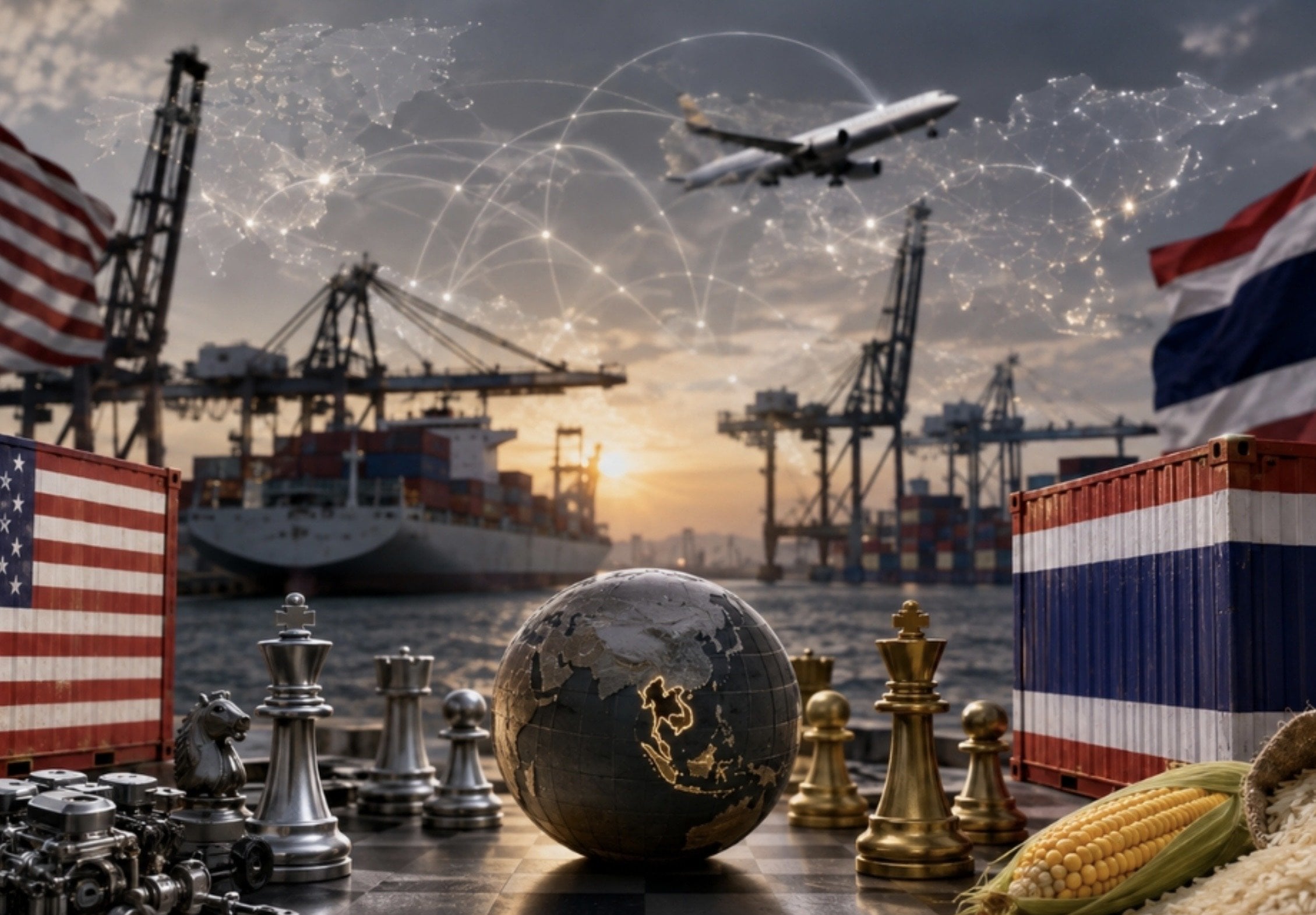

Thailand is facing a potential turning point in trade talks with the United States, with the outcome of a proposed Agreement of Reciprocal Trade (ART) expected to determine the level that Thai exports face in a new tariff structure, likely to be 19%, but with a worse case scenario being as high as 36%.
Deputy Prime Minister and Commerce Minister Suphajee Suthumpun said Thailand must navigate the US move towards using Section 301, which allows Washington to investigate and impose measures against trading partners over practices it considers unfair.
The analysis, published by SiamRath, said the US approach has moved from the International Emergency Economic Powers Act (IEEPA), through Section 122, to Section 301. Unlike the previous mechanisms, Section 301 includes public hearings, giving Thailand time to submit evidence but also exposing it to scrutiny on politically sensitive issues.
Forced labour rules under scrutiny
One issue under preliminary consideration is forced labour. Thailand has reportedly been assigned a 12.5% tariff rate on this issue, compared with 10% for countries that have already signed an ART agreement.
Thailand has laws regulating labour within the country, but it does not yet have legislation banning imports made through forced labour. The Commerce Ministry and Justice Ministry are therefore pushing a Human Rights Due Diligence (HRDD) bill towards parliament.
The proposed law is intended to strengthen human-rights checks across supply chains and bring Thai industry more closely into line with environmental, social and governance standards. Supporters see it as a longer-term trade safeguard, rather than simply a concession to the US.
US questions Chinese-linked capacity
The more sensitive issue is alleged industrial overcapacity. The US is focusing on Thailand's automotive, automotive-parts and tyre sectors, which have received substantial Chinese investment in recent years.
Thailand's negotiating team has submitted figures showing capacity utilisation of 75% to 95%, well above the 60% level that has raised US concerns. Yet the wider US worry is reportedly that Thailand could be used as a route for Chinese goods to gain Thai origin status and avoid US tariffs.
Thailand will need to demonstrate that its industries create genuine domestic value and operate as independent supply chains, rather than acting as a transit point for overseas capital and products.
Suphajee's wider strategy includes accelerating an ART deal and reviewing a joint statement to make planned imports from the US more flexible. Options mentioned include spreading agricultural purchases over stages or reducing the number of aircraft bought.
Agriculture remains a domestic red line
Any agreement could also face resistance at home. The SiamRath analysis noted that Thai civil-society groups and farmers are politically active, and warned that allowing cheaper US agricultural goods into Thailand could hurt local producers.
Join the discussion? 

7 August 2026
-
 1
1
Recommended Comments
Create an account or sign in to comment