



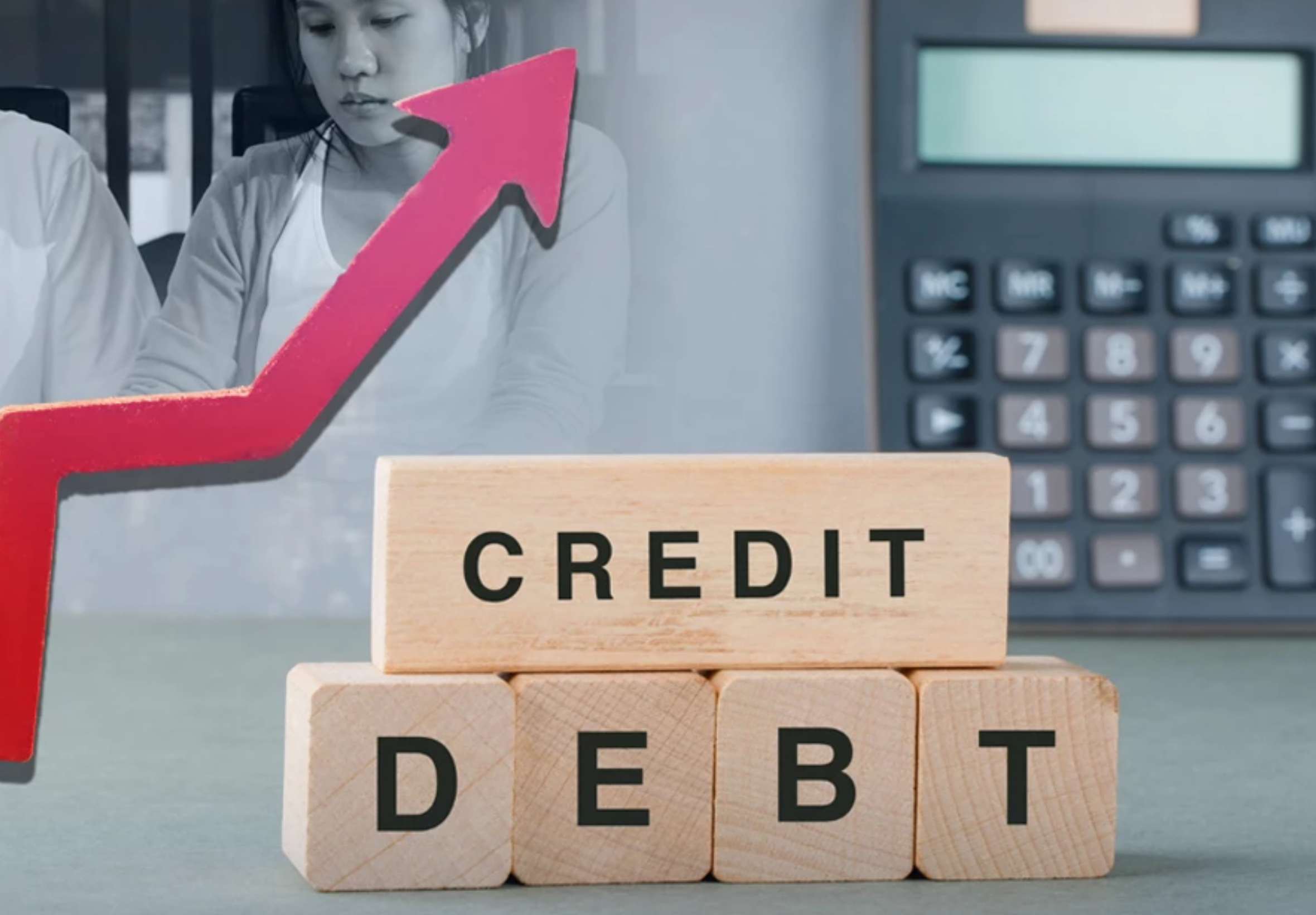

Thailand’s household debt rose to 16.44 trillion baht in the fourth quarter of 2025, pushing the debt-to-GDP ratio up to 86.7% and highlighting ongoing financial strain in the household sector. The increase reflects continued reliance on borrowing, particularly for consumption, as incomes recover unevenly and living costs remain high.
Get today's headlines by email 
Data from the Bank of Thailand show total household debt reached 16,443,669 million baht at the end of the fourth quarter, up from 16,329,846 million baht in the third quarter, an increase of 113,823 million baht. While the rise was modest, underlying trends point to growing vulnerability, with more borrowing directed towards day-to-day expenses rather than income-generating activities.
The debt-to-GDP ratio rose from 86.4% in the previous quarter, although on a seasonally adjusted basis it edged down slightly to 86.3% from 86.6%. Despite this, the overall picture indicates sustained pressure on households, with limited financial resilience amid economic uncertainty.
Commercial banks remained the largest source of household debt, with loans totalling 6,087,986 million baht, showing minimal growth as lending standards tightened. Debt owed to specialised financial institutions increased to 4,550,212 million baht, reflecting continued reliance on state-backed lenders, particularly among lower-income groups.
More significant increases were seen outside the core banking system. Debt through savings cooperatives rose sharply to 2,534,882 million baht, while borrowing from other financial institutions climbed to 2,438,225 million baht. Credit card, leasing and personal loan debt reached 1,953,096 million baht, indicating rising dependence on short-term financing.
Pawnshop debt also increased to 121,339 million baht, signalling tighter liquidity conditions for some households. In contrast, borrowing linked to securities firms and asset management companies declined slightly, suggesting reduced leverage and slower debt restructuring activity.
A breakdown by purpose shows that personal consumption debt remained dominant at 12.72 trillion baht, rising by more than 100 billion baht. Property-related borrowing increased only marginally to 5.73 trillion baht, while vehicle loans fell to 1.31 trillion baht and education loans edged down to 668,887 million baht.
Debt used for occupational or income-generating purposes declined slightly to around 2.90 trillion baht, reinforcing concerns that borrowing is increasingly being used to manage living costs rather than to support future earnings.
The data suggest that households are under continued financial strain, with growing reliance on non-bank and short-term credit channels as access to traditional lending becomes more constrained. This trend raises concerns about long-term financial stability and the ability of households to absorb further economic shocks.
The Nation reported that policymakers are expected to monitor both the level and composition of household debt closely, as the structure of borrowing remains a key risk to Thailand’s broader economic outlook.
Join the discussion? 
Already a member? 
 Adapted by ASEAN Now Nation 4 Apr 2026
Recommended Comments
Create an account or sign in to comment