





Thailand risks losing ground to Vietnam’s rapidly expanding economy as concerns grow that short-term stimulus measures are taking precedence over long-term structural reforms needed to improve competitiveness.
Get today's headlines by email 
The issue was highlighted during Vietnamese President To Lam’s visit to Thai Prime Minister Anutin Charnvirakul to mark the 50th anniversary of bilateral relations. While the visit underscored diplomatic ties, it also drew attention to the widening economic gap between the two Southeast Asian neighbours.
Earlier this year, foreign media labelled Thailand the “sick man of Asia”, a characterisation rejected by Anutin, who pledged to achieve GDP growth of more than 3%. Despite this, critics argue that government policies continue to focus on boosting short-term consumption rather than addressing deeper economic challenges.
The government has allocated 175 billion baht for the “Thai Help Thai Plus” programme and 1.62 billion baht to provide AI skills training for five million people. However, concerns remain that these measures lack a long-term strategy to improve productivity and competitiveness.
Thailand’s economy grew by 2.8% in the first quarter of 2026, but analysts note that the figure may not yet reflect the full impact of energy shocks linked to Middle East tensions and inflationary pressures. The National Economic and Social Development Council forecasts GDP growth of between 1.5% and 2.5% this year, with a midpoint of 2%.
Vietnam, by contrast, is projected to achieve GDP growth of 7.2% in 2026. The country has continued to attract foreign investment through lower labour costs, strong manufacturing growth and policies aimed at becoming a high-income economy by 2045.
There are several factors behind the differing economic trajectories. Following the 1997 Asian Financial Crisis, Thailand experienced moderate growth, while Vietnam expanded rapidly. Thailand’s reliance on tourism also exposed vulnerabilities during the Covid-19 pandemic, when its economy contracted by 6.05%, while Vietnam maintained positive growth.
Demographic trends further highlight the contrast. Vietnam’s population exceeds 102 million, with a median age of about 34 years, while Thailand’s population is more than 70 million with a median age of 41, reflecting its transition into an ageing society.
Business leaders stated that investors increasingly favour Vietnam because of its investment environment and younger workforce. Thailand is also seen as facing difficulties competing with Vietnam in labour-intensive industries while lacking the research and innovation ecosystem that has helped Singapore dominate high-value sectors such as artificial intelligence, finance and advanced technology.
Thailand must urgently reform regulations, improve education, attract skilled immigrants and encourage multinational companies to establish regional hubs in the country. Questions are also raised about whether major technology firms would choose Thailand as a base for advanced research and development investment.
The Nation reported that Thailand continues to benefit from geographic advantages, a strong tourism sector, medical services and a competitive food industry. However achieving the government’s aim of high-income status by 2037 and progressing towards OECD (Organisation for Economic Co-operation and Development) membership will depend on deeper reforms in human capital, innovation and economic competitiveness under the government of Prime Minister Anutin.
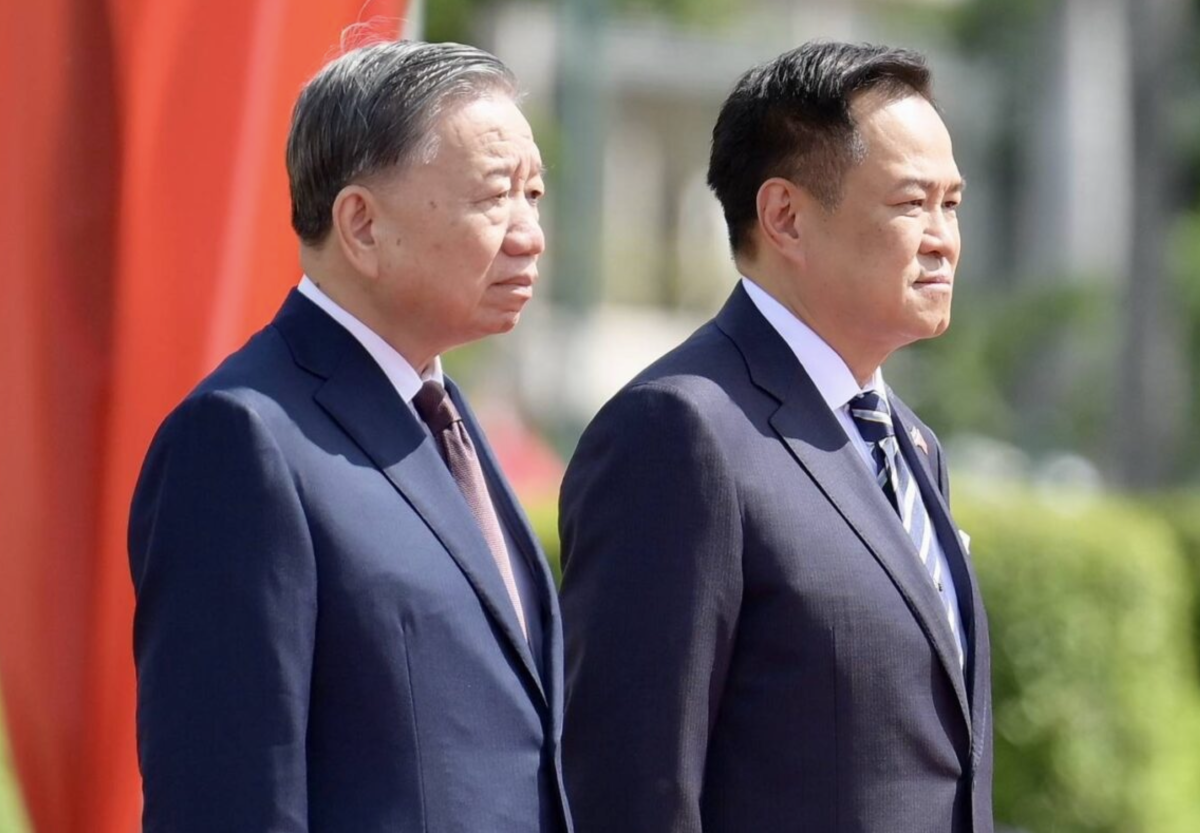
Picture courtesy of The Nation
Join the discussion? 
Already a member? 
 Adapted by ASEAN Now Nation 31 May 2026
Recommended Comments
Create an account or sign in to comment