



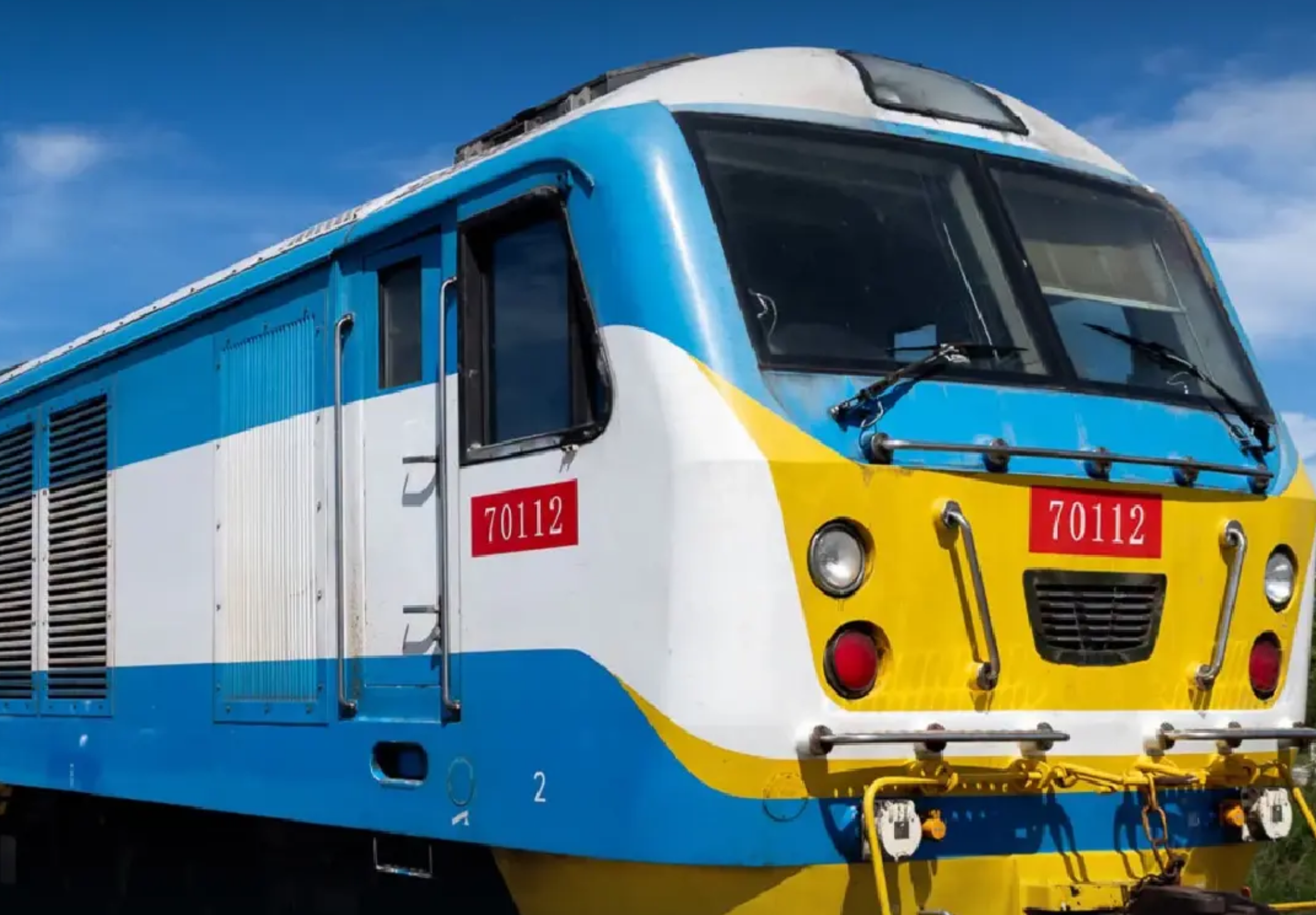

Thailand has launched a trial freight service between Laem Chabang Port in Chonburi and Nong Khai, testing a new model that would let private firms use State Railway of Thailand infrastructure.
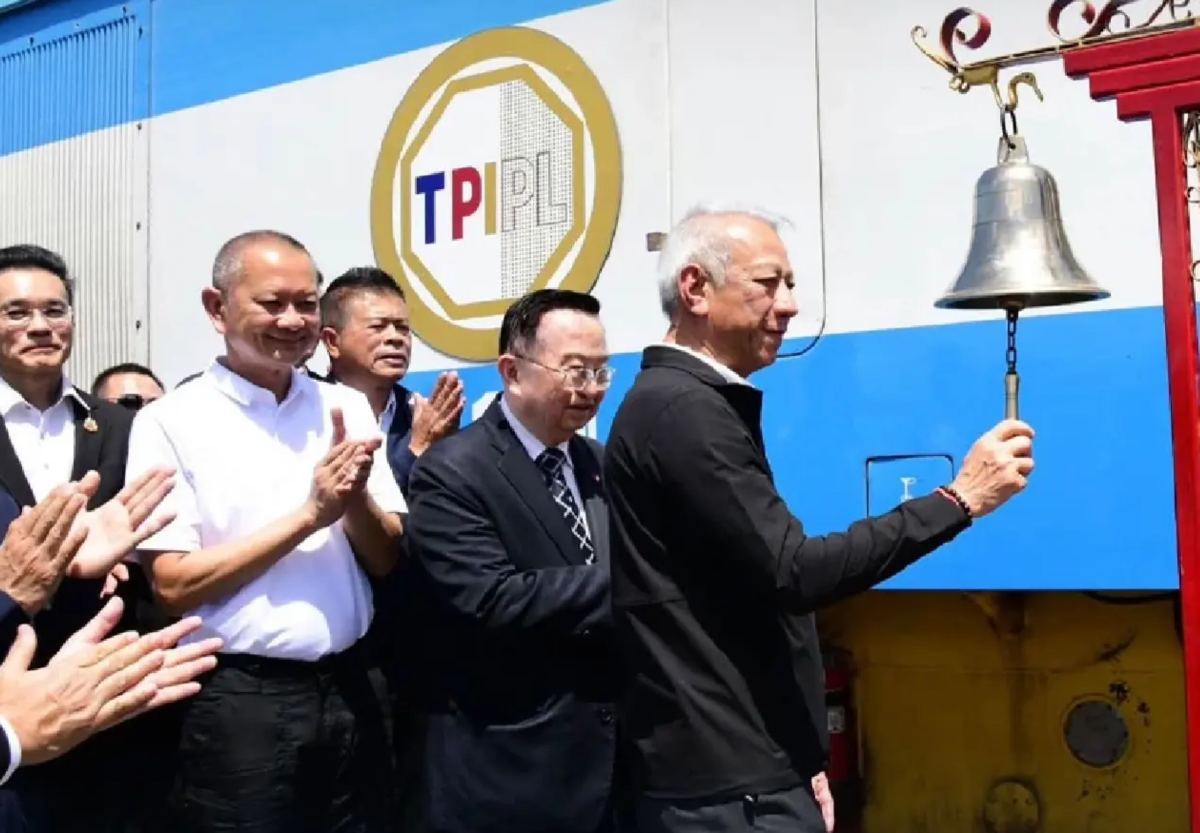
Deputy Prime Minister and Transport Minister Phiphat Ratchakitprakarn presided over the inaugural run at Container Yard Side C, Port C, Laem Chabang Port, in Sriracha district. The route is intended to shift more cargo from roads to rail, cut logistics costs and strengthen links to southern China through Laos.
Private firms test access to state tracks
The trial is a flagship project under the Railway Transport Act B.E. 2568 (2025), which introduces an "Open Access" approach to the rail network.
For the first Laem Chabang-Nong Khai return journey, TPI Polene Public Company Limited provided the locomotive. It pulled State Railway of Thailand flat waggons carrying natural rubber supplied by Sri Trang Logistics Company Limited.
The train operated at full haulage capacity, with 24 flat waggons carrying 48 TEUs, or twenty-foot equivalent units.
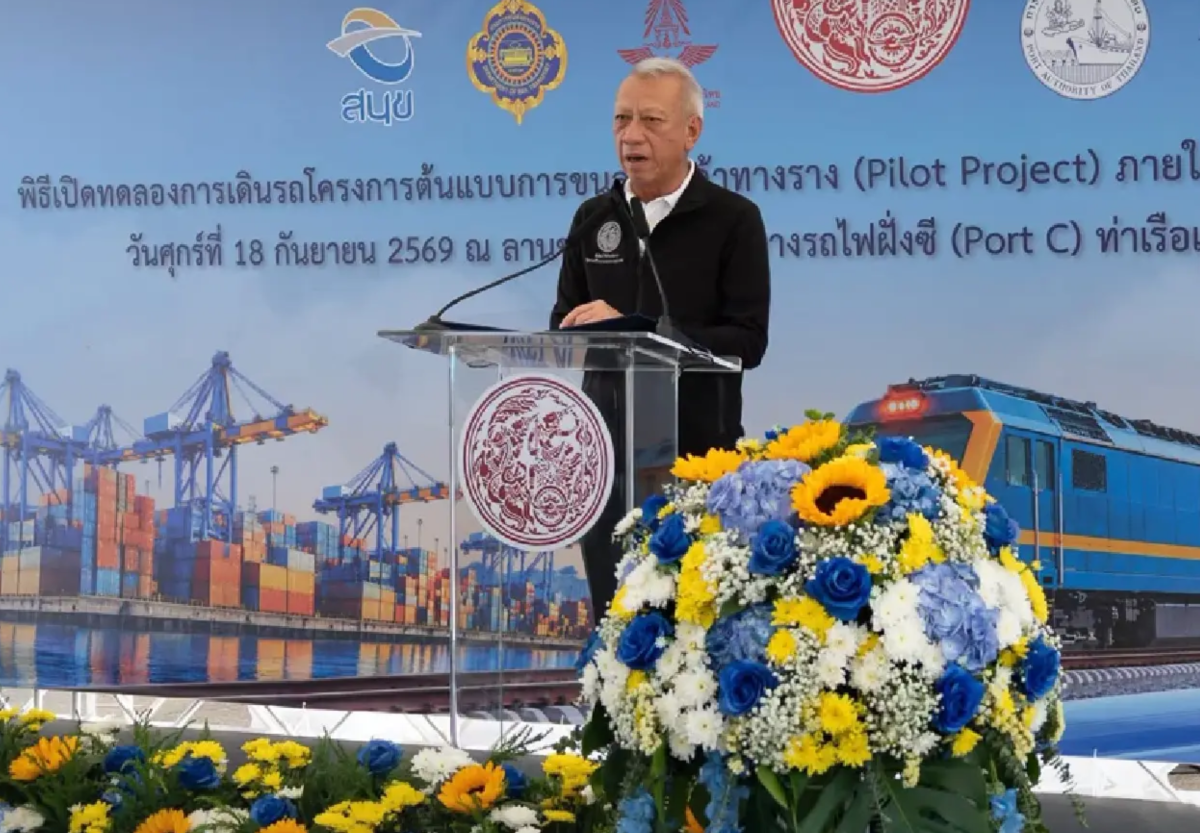
The scheme involves the Office of Transport and Traffic Policy and Planning, Department of Rail Transport, State Railway of Thailand, Federation of Thai Industries, Thai Chamber of Commerce, Board of Trade of Thailand and private-sector partners.
SRT governor Anan Phonimdang said the test will provide data on fuel use, track-access charges, locomotive fees and cargo-handling costs across the supply chain. Officials will use the findings to review charges before a full Open Access framework allows private firms to lease SRT tracks.
Lower costs are the main target
The Transport Ministry estimates that using existing diesel locomotives could reduce logistics costs by about 10 per cent. A future switch to electric locomotives could lift the saving to 20-30 per cent.
The ministry wants rail to become Thailand's main national freight spine, with road transport used largely to move goods from rail terminals to regional destinations.
The SRT currently has about 120 working locomotives from a fleet of 200, with around 60 more than 40 years old. It plans to buy 50 to 60 replacement locomotives, while future freight expansion is expected to depend heavily on private-sector cooperation.
Cross-border network plans
The Laem Chabang-Nong Khai corridor is designed to support trade through Laos and into southern China, part of Thailand's wider ambition to become an ASEAN transport and logistics hub.
The ministry expects the north-eastern double-track rail conversion to be completed by 2027. Modernisation of the southern trunk line from Chumphon to Su-ngai Kolok is scheduled for completion in 2030.
Longer-term proposals include rail links south to Malaysia and Singapore, plus feasibility studies for an Andaman Sea corridor connecting Thailand with the Indian Ocean. Officials said Thailand's central location and relatively low exposure to severe natural storms support its hub ambitions.
Pictures courtesy of The Nation
Related story
Bangkok-port-move-to-Laem-Chabang-under-study
Join the discussion? 

21 September 2026
Recommended Comments
Create an account or sign in to comment