



Skip to content
View in the app

A better way to browse. Learn more.

Thailand News and Discussion Forum | ASEANNOW

A full-screen app on your home screen with push notifications, badges and more.

To install this app on iOS and iPadOS
  1. Tap the Share icon in Safari
  2. Scroll the menu and tap Add to Home Screen.
  3. Tap Add in the top-right corner.
To install this app on Android
  1. Tap the 3-dot menu (⋮) in the top-right corner of the browser.
  2. Tap Add to Home screen or Install app.
  3. Confirm by tapping Install.

Thailand Education System Fails Poor Pupils, Experts Warn

Featured Replies

  • Popular Post

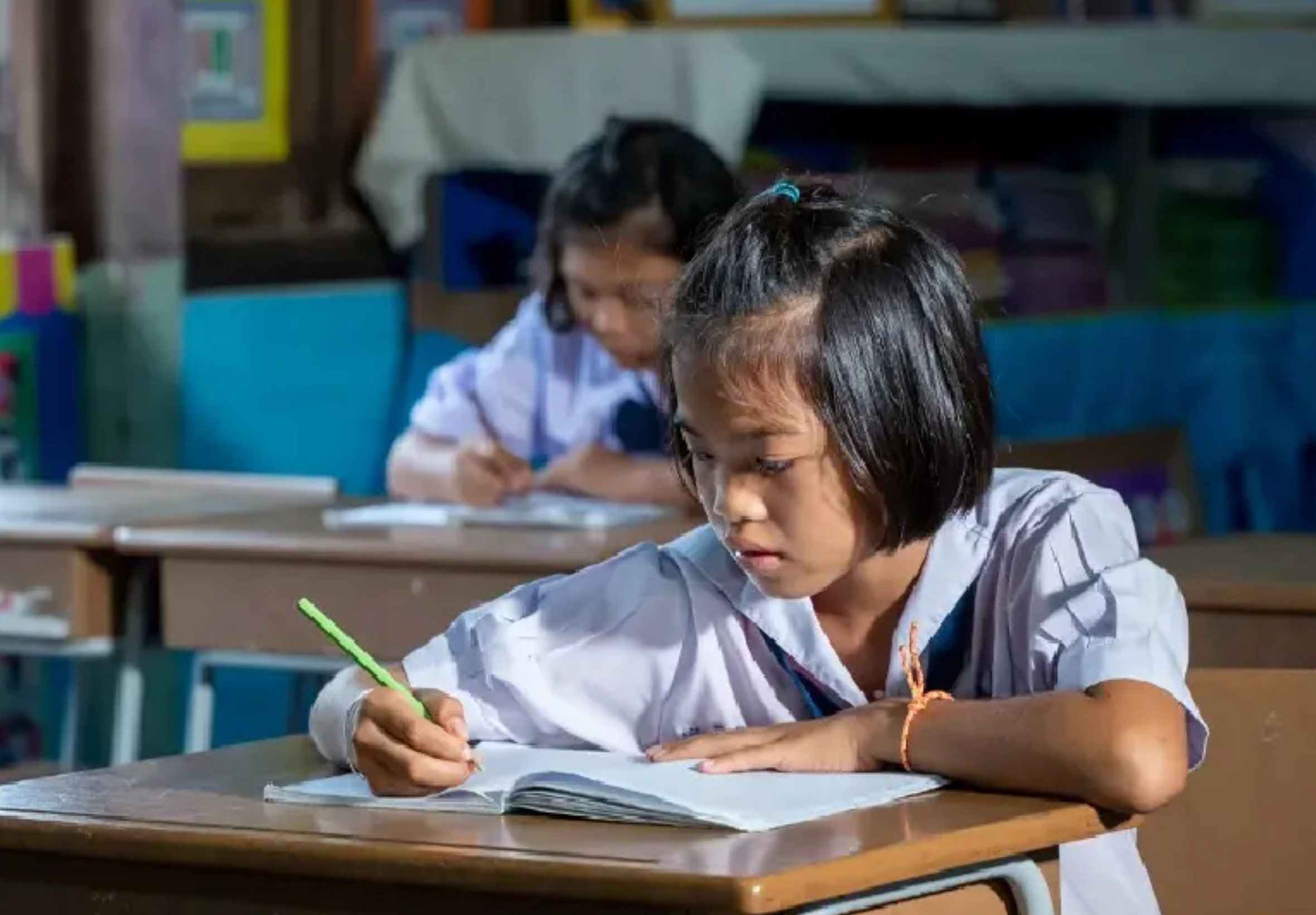
Thailand’s education system is failing to provide genuinely free and equitable schooling, with experts warning that current policies are deepening inequality and limiting opportunities for disadvantaged children.

Get today's headlines by email image.png

Speaking at a Nation Visionary Club roundtable on Monday 8 June 2026, education specialists and student representatives said poor families continue to face significant education costs despite nearly 20 years of free education policies. They argued that children from low-income households not only pay more than they can afford but also receive a lower quality of education than wealthier students.

Dr Kraiyos Patrawart, managing director of the Equitable Education Fund (EEF), said data collected over nearly two decades shows Thailand’s education system is not truly free. He noted that the Covid-19 pandemic increased the number of economically disadvantaged students, with figures falling briefly before rising again in the post-pandemic period.

According to Dr Kraiyos, households in the poorest tenth of the population still spend about 10,000 baht annually on their children’s education. Families in the wealthiest tenth spend around seven and a half times more. He described this as a “two-dimensional inequality”, where poorer families face financial burdens while receiving lower-quality education.

The disparity is also reflected in learning outcomes. While Thailand regularly produces world-class students who win gold and silver medals in international academic Olympiads, Dr Kraiyos said roughly two-thirds of the population remains below the OECD baseline standard for learning proficiency.

Parit Wacharasindhu of the People’s Party said Thailand would fail if quality education could only be accessed through international schools. He argued that public education is currently neither sufficiently high in quality nor genuinely free, despite substantial government spending on the sector.

A major concern raised during the discussion was the Ministry of Education’s per-pupil funding model. Under the system, schools receive funding based on student numbers, leaving many rural schools with insufficient budgets to cover basic operating costs. In some cases, primary schools covering six year levels have fewer than six teachers, requiring one teacher to teach multiple year groups at the same time.

Student representative Krai Satarak of Chulalongkorn University said the problem is compounded by a national curriculum that often ignores local needs. Drawing on fieldwork in Nan province, he described students leaving school to help on family greenhouse farms despite possessing valuable agricultural knowledge. He argued that the curriculum prioritises abstract subjects over practical skills relevant to local economies.

The Nation reported that Dr Kraiyos urged Thai society to reconsider the purpose of education in a future shaped by artificial intelligence, artificial general intelligence, brain-computer interfaces and quantum computing. He called for debate on future curricula, the role of the National Education Act and whether memorisation-based learning should continue to dominate classrooms.

The roundtable concluded that structural reforms are needed within the next decade. Participants called for needs-based funding, greater autonomy for schools and reform of the National Education Act, warning that the gap between well-resourced and under-resourced schools will widen further as technology advances.
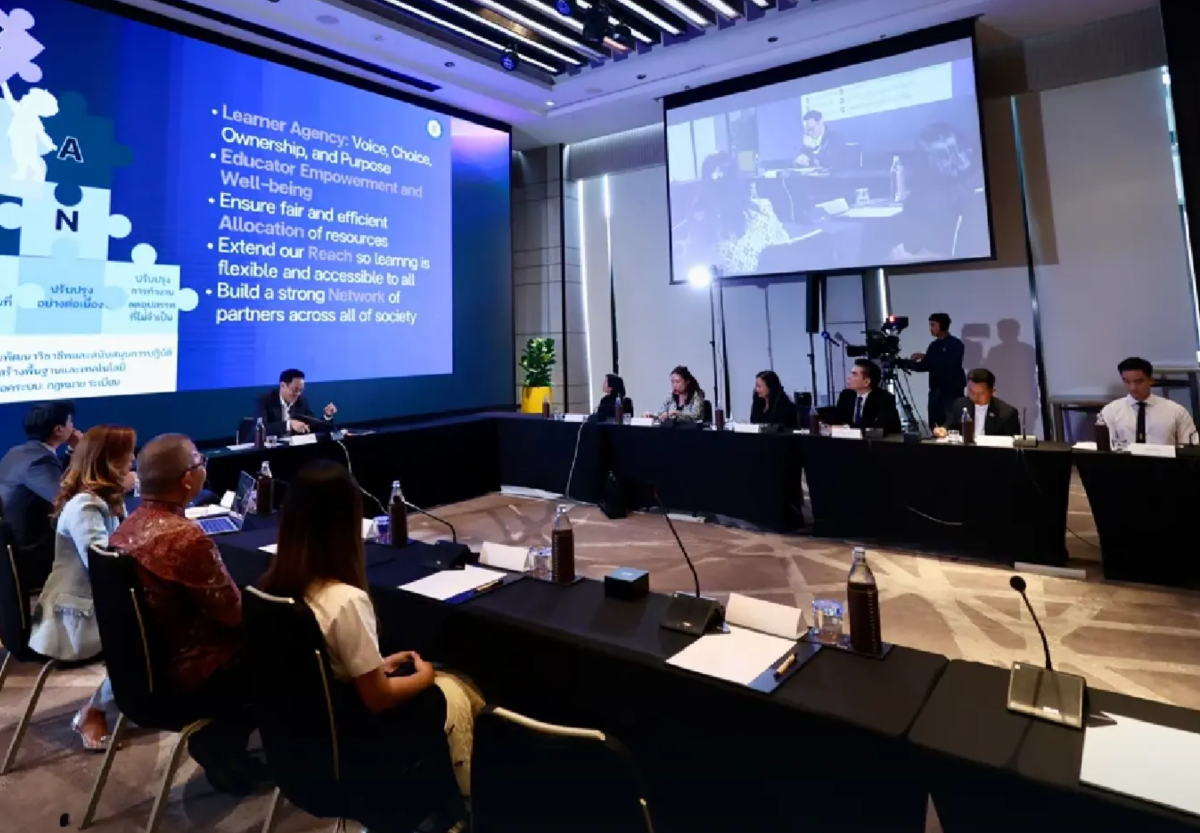
image.png

Picture courtesy of The Nation

Join the discussion? image.png

Already a member? image.png

image.png Adapted by ASEAN Now Nation 10 June 2026


View full article

  • Replies 31
  • Views 1.7k
  • Created
  • Last Reply

Top Posters In This Topic

Most Popular Posts

  • ikke1959
    ikke1959

    The whole Thai education system must be reformed... free means free and if underprivileged kids must pay more it is just one thing out of many. The non fail policy is another, the idea that there are

  • Jim Waldron
    Jim Waldron

    This is pretty much a worldwide problem! And, it is one that fosters a two-tier society. Poor families pay more than they can afford and still get worse outcomes, while wealthier households effectiv

  • Jim Blue
    Jim Blue

    Perhaps cut down on a land bridge or a sub.or two?

  • Popular Post

This is pretty much a worldwide problem! And, it is one that fosters a two-tier society.

Poor families pay more than they can afford and still get worse outcomes, while wealthier households effectively buy their kids a head start to success.

Add the familiar Dunning–Kruger loop faced by poorer families: low exposure, low confidence, low expectations, and it's little wonder that whole communities are effectively locked into generational poverty.

Thailand’s problem is compounded by a curriculum that imposed abstract theory on kids who actually need practical, local‑economy skills.

  • Popular Post

The whole Thai education system must be reformed... free means free and if underprivileged kids must pay more it is just one thing out of many. The non fail policy is another, the idea that there are "famous" schools with good education and overloaded classes, while schools nearby their house have mixed classes because of lack of students. Teachers have to do too much administration, and many schools are corrupt and people pay to get a place at these "famous" schools. Money is the main and most important word in all fields all over Thailand. poor will stay poor and rich will become richer...and rich look down on the poor, while the rich buy themselves a better life.

  • Popular Post

Perhaps cut down on a land bridge or a sub.or two?

  • Popular Post

My son goes to government school in English program on Koh Samui.

Cost me 50.000 baht per year.

20 pupils with two teachers, one English and one Thai.

Separate building with aircon and special lunch, separate toilets etc..

Special school uniform sit separated from others in school morning raising of the flag, black shoes,black belt, crest on shirt.

All rich Thai want their children enrolled but must pass English test.

My son (15 years) has the most connected friends on Samui.

Yes, total class society, you know who is hi-so, but you must speak English so many Hi-so try to bribe them in but fails.

  • Popular Post

Education should be equitable. It isn't in Thailand and it isn't by design.

2 hours ago, Jim Waldron said:

This is pretty much a worldwide problem! And, it is one that fosters a two-tier society.

Poor families pay more than they can afford and still get worse outcomes, while wealthier households effectively buy their kids a head start to success.

Agree but my son is more important than me.

Giving him a hi-so start compared to me that did not have.

Swedish school system that broke me, only education was leveled at worst performance.

Steel town , Father and mother and me was working there.

Got University degree from Sweden and Minnesota in IT and Finance.

Fortunately my higher education was free based on tests

30 minutes ago, Jim Blue said:

Perhaps cut down on a land bridge or a sub.or two?

Nonsense....Leave no millionaire or billionaire behind...Wortless projects are worth quite a lot....

Not a lot of profit to be made in education.

2 minutes ago, redwood1 said:

Nonsense....Leave no millionaire or billionaire behind...Wortless projects are worth quite a lot....

Not a lot of profit to be made in education.

Having the nation's children more educated is a major reason the government should put as much money towards that goal as possible. Not carting if people better themselves is how a nation has economic inequality. Gatekeeping in extreme terms.

Does enough to show they care, by performative empathy, but not enough so they prosper. Some, a lot of politicians, only care about bettering themselves or their cronies, and will do anything to maintain that, even if it means doing what's actually right occasionally for the people they were hired to help. Educating their children should be a priority, but some choose military strength, even if it's unnecessary.

Reminds me of a good tune by one of the best guitarists, Warren Haynes- Movers and Shakers--------

Sit behind your desk in a little blue chair
Last week it was red guess you got tired of that
Stare out the window at the rest of the world
Used to be your world guess you got tired of that

You like to keep yourself busy, busy, busy
Don't want to be like moss on a tree
Everybody knows you're busy, busy, busy
Being all that you can be

Movers and shakers big deal makers
Acres of corruption in this little big town
Heartbreakers fakers and undertakers
That's what it takes to keep it all spinning
Keep it all spinning around

Looking back on a time when you were no big deal
Just a boy from Brooklyn
Guess you got tired of that
The only hits you knew were the Italian kind
Yeah you used to be a good boy
Guess you got tired of that

You like to think that you're invincible, invincible
Safe from it all behind these black rock walls
The titanic was unsinkable
Nobody's too big to fall

Movers and shakers big deal makers
Acres of corruption in this little big town
Heartbreakers fakers and undertakers
That's what it takes to keep it all spinning
Keep it all spinning around

Yeah you like to think that you're invincible
Safe from it all behind these black rock walls...........................https://www.youtube.com/watch?v=D-zYV90-myI.

Edited by fredwiggy

Anytime somebody says "equitable", hold on to your wallet there is a grift incoming/

5 hours ago, Georgealbert said:

Thailand’s education system is failing to provide genuinely free and equitable schooling, with experts warning that current policies are deepening inequality and limiting opportunities for disadvantaged children.

Get today's headlines by email image.png

Speaking at a Nation Visionary Club roundtable on Monday 8 June 2026, education specialists and student representatives said poor families continue to face significant education costs despite nearly 20 years of free education policies. They argued that children from low-income households not only pay more than they can afford but also receive a lower quality of education than wealthier students.

Dr Kraiyos Patrawart, managing director of the Equitable Education Fund (EEF), said data collected over nearly two decades shows Thailand’s education system is not truly free. He noted that the Covid-19 pandemic increased the number of economically disadvantaged students, with figures falling briefly before rising again in the post-pandemic period.

According to Dr Kraiyos, households in the poorest tenth of the population still spend about 10,000 baht annually on their children’s education. Families in the wealthiest tenth spend around seven and a half times more. He described this as a “two-dimensional inequality”, where poorer families face financial burdens while receiving lower-quality education.

The disparity is also reflected in learning outcomes. While Thailand regularly produces world-class students who win gold and silver medals in international academic Olympiads, Dr Kraiyos said roughly two-thirds of the population remains below the OECD baseline standard for learning proficiency.

Parit Wacharasindhu of the People’s Party said Thailand would fail if quality education could only be accessed through international schools. He argued that public education is currently neither sufficiently high in quality nor genuinely free, despite substantial government spending on the sector.

A major concern raised during the discussion was the Ministry of Education’s per-pupil funding model. Under the system, schools receive funding based on student numbers, leaving many rural schools with insufficient budgets to cover basic operating costs. In some cases, primary schools covering six year levels have fewer than six teachers, requiring one teacher to teach multiple year groups at the same time.

Student representative Krai Satarak of Chulalongkorn University said the problem is compounded by a national curriculum that often ignores local needs. Drawing on fieldwork in Nan province, he described students leaving school to help on family greenhouse farms despite possessing valuable agricultural knowledge. He argued that the curriculum prioritises abstract subjects over practical skills relevant to local economies.

The Nation reported that Dr Kraiyos urged Thai society to reconsider the purpose of education in a future shaped by artificial intelligence, artificial general intelligence, brain-computer interfaces and quantum computing. He called for debate on future curricula, the role of the National Education Act and whether memorisation-based learning should continue to dominate classrooms.

The roundtable concluded that structural reforms are needed within the next decade. Participants called for needs-based funding, greater autonomy for schools and reform of the National Education Act, warning that the gap between well-resourced and under-resourced schools will widen further as technology advances.

image.png

Picture courtesy of The Nation

Join the discussion? image.png

Already a member? image.png

image.png Adapted by ASEAN Now Nation 10 June 2026


View full article

Even if you start an improvement there will be a lack of proper education so far.

And rich people send their kids abroad, as it was always.

(A famous family got a Chalet in Switzerland)

14 hours ago, PoorSucker said:

My son goes to government school in English program on Koh Samui.

Cost me 50.000 baht per year.

20 pupils with two teachers, one English and one Thai.

Separate building with aircon and special lunch, separate toilets etc..

Special school uniform sit separated from others in school morning raising of the flag, black shoes,black belt, crest on shirt.

All rich Thai want their children enrolled but must pass English test.

My son (15 years) has the most connected friends on Samui.

Yes, total class society, you know who is hi-so, but you must speak English so many Hi-so try to bribe them in but fails.

I hope they are teaching him English phonetically instead of concentrating on grammar and the impossible task of trying to learn all the words in the English language.

It’s not hard if they do it properly.

  • Popular Post

Most of us expats have know the system deliberately under educates the poor...the rich, and powerful, need their slaves, slaves that don't question things.

4 hours ago, StevieAus said:

I hope they are teaching him English phonetically instead of concentrating on grammar and the impossible task of trying to learn all the words in the English language.

It’s not hard if they do it properly.

Well no need,

My son learnt English before Thai.

  • Popular Post

Whilst there is obviously an equality problem in Thailand regarding many things, not just education, but the main problem here is the high school section of the education system. Some of the most formative years for kids are during the high school years, and quite frankly, most Thai high school students spend their time during those 6 years in what is basically a giant cultural brainwashing machine that barely teaches them much that is useful... plus your average high school Thai teacher is a deluded moron mostly. By the time they get to university, the damage has been done and it's very hard to wave a magic wand when they are 20 and ta-da... fixed. Doesn't work like that. If they were to seriously reform one section of the education stystem, then I'd say that it should be high school.

However, having said all that, there is always resistance to change in places like education as the modern and traditional worlds collide, and the decision makers are often living in the past. Secondly, in all countries pretty much, education is a black hole and throwing more money at it often doesn't fix things... attitudes and policies have to change and there be a will to implement it.

Edited by Sir Dude

The Thai education system is doing what it was intended to do - advance the interests of the ruling classes, and keep the masses in a condition of life-long subordination and dependency.

No fail policy must be got rid of. However, the problem then is how will the children of the rich & powerful get in to the 'best' Thai universities. So, the system will not change.

Every time this topic comes up it sounds as the education system need to change from both the political opposition and most foreigners but are there anyone who hear the government leaders or the elite complain?

They want to keep it as it is by all means because who wants to crawl on their knees and be a servant if everyone had access to the same education and thus more general knowledge and higher economic status!

Felt

My six year old grandson goes to the local school. I pay Bht 1500 twice a year for school and insurance, plus Bht 20 per day for lunch.

He learns his English from me so has a Manc accent, Blue of course.

This is like a broken record !! we all know Thailand’s education system is failing and we all know nothing will happen !!

Hardly any original"English" speaking teachers left.

Years ago the kids were always taught by USA, Canadian and English speakers.

17 hours ago, Jim Waldron said:

This is pretty much a worldwide problem! And, it is one that fosters a two-tier society.

Poor families pay more than they can afford and still get worse outcomes, while wealthier households effectively buy their kids a head start to success.

Add the familiar Dunning–Kruger loop faced by poorer families: low exposure, low confidence, low expectations, and it's little wonder that whole communities are effectively locked into generational poverty.

Thailand’s problem is compounded by a curriculum that imposed abstract theory on kids who actually need practical, local‑economy skills.

What do you mean poor families pay more than they can afford? When did the school system start charging fees for education? What are they paying for? Please don't tell me uniforms or food or school supplies, because the children would still have to be clothed and fed if they were not in school. School supplies are still very affordable in Thailand, and there are subsidies and donations for the poor.

You say that wealthier families buy their kids a head start. No, they invest in their children. Big difference. Nor does the investment guarantee a positive outcome. Families who spend more time with their children and are more likely to attend school events are a big factor in positive outcomes. Your position is a rehash of the biased political assumptions that were made to push political agendas in the 1960'sand 1970's.

Yes it is a worldwide problem, but there are also worldwide successes. It's all about parental involvement and culture. If a person is unmotivated or unfocused or lazy, and they have children, that behavior is taught to the children. Again, family members who are involved in their children's lives are a significant factor in outcome. For every grim tale of disadvantaged children and hardship, their are success stories of people making the best of a situation and moving forward. We rarely hear of the self made people who the ones who are normal and well adjusted. If they weren't the majority, our society would have collapsed long ago.

1 hour ago, NobbyClarke said:

Hardly any original"English" speaking teachers left.

Years ago the kids were always taught by USA, Canadian and English speakers.

That might be true, but those teachers were often neither qualified, nor competent. There is a big difference between Louie the uneducated loser who picks up a teaching gig because he couldn't get anything other than warehouse job, and Orville, the university educated teacher, who studied childhood development, went through a learning cycle and was certified as a teacher. The ability to drive a small vehicle does not mean that one can also operate a bulldozer or drive a heavy truck.

4 hours ago, Felt 35 said:

Every time this topic comes up it sounds as the education system need to change from both the political opposition and most foreigners but are there anyone who hear the government leaders or the elite complain?

They want to keep it as it is by all means because who wants to crawl on their knees and be a servant if everyone had access to the same education and thus more general knowledge and higher economic status!

Felt

More simplistic political sloganeering. There is no advantage in having have an under performing educational system. The trades are called skilled for a good reason. Manufacturing requires people who can operate sophisticated equipment. Even agriculture requires people who can read and write, and who can perform the basic math needed when preparing the pesticides or measuring livestock feed and their supplements. The skill set taught today, is often more advanced than what foreigners assume it was based on their experience from 50 years ago. Kid today, may be lacking in common sense, but as a group are much better educated than they were in previous generations.

Two examples. My girlfriend's nephew is the principal of a secondary school. He's also an English teacher. It's impossible to exchange even a few words in English with him. Another example: one day I was at a friend's restaurant. One of her friends, also an English teacher, was there that day. My friend introduced her so we could chat. It proved impossible because her English was so poor. The biggest problem is the low level of the teachers.

3 hours ago, vangrop said:

The biggest problem is the low level of the teachers.

So not overcrowded classrooms and corruption then. It's the teachers, the teachers who are overworked, underpaid and bogged down in administrative paperwork.

It starts with arrogance which stems from the pathological fear of losing face. If a student is not allowed to question a teacher in an earnest manner, how is the student expected to be able to learn at an efficient level?

Don't be arrogant, because arrogance kills curiosity and passion. Arrogance is knowledge minus wisdom. Arrogance is blind to the stumbling block.

Arrogance is a roadblock on the highway of wisdom.

An arrogant person considers himself perfect. This is the chief harm of arrogance. It interferes with a person's main task in life - becoming a better person.

Leo Tolstoy

“Patriotism is, fundamentally, a conviction that a particular country is the best in the world because you were born in it….”

— George Bernard Shaw

“Every miserable fool who has nothing at all of which he can be proud, adopts as a last resource pride in the nation to which he belongs; he is ready and happy to defend all its faults and follies tooth and nail, thus reimbursing himself for his own inferiority.”

— Arthur Schopenhauer

“Nationalism is an infantile thing. It is the measles of mankind.”

— Albert Einstein

11 hours ago, Patong2021 said:

What do you mean poor families pay more than they can afford? When did the school system start charging fees for education? What are they paying for? Please don't tell me uniforms or food or school supplies, because the children would still have to be clothed and fed if they were not in school. School supplies are still very affordable in Thailand, and there are subsidies and donations for the poor.

You say that wealthier families buy their kids a head start. No, they invest in their children. Big difference. Nor does the investment guarantee a positive outcome. Families who spend more time with their children and are more likely to attend school events are a big factor in positive outcomes. Your position is a rehash of the biased political assumptions that were made to push political agendas in the 1960'sand 1970's.

Yes it is a worldwide problem, but there are also worldwide successes. It's all about parental involvement and culture. If a person is unmotivated or unfocused or lazy, and they have children, that behavior is taught to the children. Again, family members who are involved in their children's lives are a significant factor in outcome. For every grim tale of disadvantaged children and hardship, their are success stories of people making the best of a situation and moving forward. We rarely hear of the self made people who the ones who are normal and well adjusted. If they weren't the majority, our society would have collapsed long ago.

I don't agree ... I notice that several kids with more than average income in Thailand are given special classes. After school the teacher is giving them extra lessons for a payment. In return these kids are the favorite kids of the teachers. They are chosen for all kind of activities, they will get better grades, although several are not much better than a kid that does not have special class. Most of the times these kids are also kids parents who are friends with the teacher.

In my class there was a kid once and he was good in the first term. Bu tin the second he was talking with his friends, doing half of the job he did in the first term, and almost did not participate anymore in the class. I graded him conform, but his mother came and he had to be upgraded as he was a good student. I told her what he did in my class but a Thai teacher said she would take care of it. When I saw his grades she had changed it and instead of 2 he got 4 in my subject... Just to say... The EP kids are even worse

Our daughter is now a doctor but for her to get there was a major problem due entirely to the thai schools/teachers, teachers wanted the students to pay them or approached parents to subsidise their living standards, we tried a fe different schools in her last few years of schooling but she had to attend night school every night as well as weekends to reach the standards required to pass the tests to get into university and become a doctor. Fortunately all the extra after shool work paid off and she was offered a top university, if we had of just relied on daytime schooling she would not have made it due to it being so poor, she was in the top class at her last school yet the teachers were hopeless, the teaching standards are so poor in Thailand because the govt doesnt want smart kids so teaching standards are fairly pathetic and the top teachers would be lucky to teach lower primary shool grades overseas.

18 hours ago, wil iam not said:

My six year old grandson goes to the local school. I pay Bht 1500 twice a year for school and insurance, plus Bht 20 per day for lunch.

He learns his English from me so has a Manc accent, Blue of course.

That's a form of abuse, being a blue of course😀. But being serious, those who want to learn English need to practice speaking it.

As others have pointed out, many Thai teachers who are teaching English and foreigners who are masquerading as professional pedagogical teachers, need to understand the research on learning English effectively. Once you can learn to read and build up your vocabulary, then practice speaking. Sadly, most go with the grammatical rules and not the science behind effective communicative English.

Now, academic English proficiency requires different skills, but most people need effective English communication first.

Create an account or sign in to comment

Recently Browsing 0

  • No registered users viewing this page.

Account

Navigation

Search

Search

Configure browser push notifications

Chrome (Android)
  1. Tap the lock icon next to the address bar.
  2. Tap Permissions → Notifications.
  3. Adjust your preference.
Chrome (Desktop)
  1. Click the padlock icon in the address bar.
  2. Select Site settings.
  3. Find Notifications and adjust your preference.

