



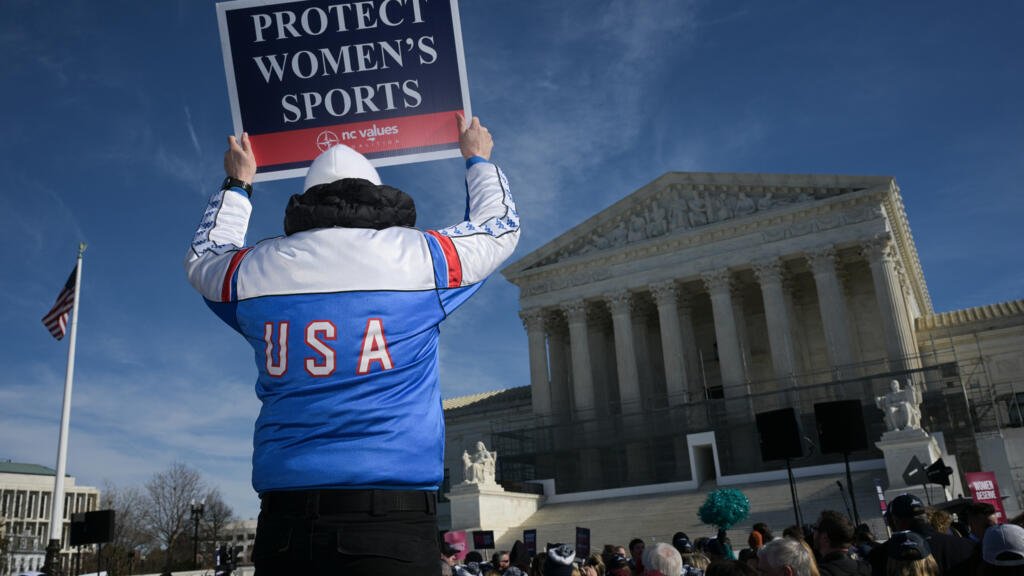

The US Supreme Court has ruled that states may ban transgender women from competing in female school and college sports, upholding laws that require athletes to compete according to their sex recorded at birth.
Get today's headlines by email 
The decision came in two cases involving challenges to laws in Idaho and West Virginia, where transgender students argued the restrictions were unlawful. More than two dozen states have introduced similar bans since Idaho became the first to do so in 2020.
The court unanimously found that the state laws do not violate Title IX, the federal civil rights law that prohibits sex-based discrimination in schools.
States Win Challenge Over School Sports Rules
However, the justices split 6-3 over whether the bans breached the US Constitution's 14th Amendment, which guarantees equal protection under the law. The court's six conservative justices concluded the restrictions were constitutional, while its three liberal members disagreed.
Writing for the majority, Justice Brett Kavanaugh said the Constitution and Title IX "do not require an overhaul of women's and girls' sports throughout America."
Justice Sonia Sotomayor, writing in partial dissent, criticised the ruling, saying the majority had adopted "a diminished view of equal protection" in cases involving school sports.
Challenges From Idaho and West Virginia
One of the cases was brought by Lindsay Hecox, a transgender woman and long-distance runner, shortly after Idaho enacted its law. She had previously secured injunctions from both a federal district court and an appeals court while the legal challenge continued.
At the time the legislation was passed, Idaho state lawmaker Barbara Ehardt, who introduced the measure, said it was intended to ensure that "boys and men will not be able to take the place of girls and women in sports because it's not fair".
A federal appeals panel had later ruled that Idaho failed to provide sufficient evidence that its law protected equal opportunities for female athletes, concluding that it violated constitutional rights. The Supreme Court's ruling overturns that outcome.
Supporters Welcome Decision, Campaigners Condemn It
West Virginia Attorney General JB McCuskey welcomed the ruling, describing it as a victory for common sense that would give states "the clarity and confidence to ensure fairness and safety for female athletes today and for generations to come".
LGBT advocacy group the Human Rights Campaign strongly criticised the decision. Its president, Kelley Robinson, said the ruling was "heartbreaking for transgender student athletes who are being forced to sit on the sidelines simply for who they are".
President Donald Trump also praised the judgment, calling it a "BIG WIN" in a social media post. The participation of transgender athletes in women's sports was a prominent issue during his 2024 election campaign.
After returning to office, Trump signed an executive order aimed at preventing transgender women from competing on female school and college sports teams. The NCAA, which governs US college athletics, subsequently barred transgender women from women's competitions.
Broader Debate Continues
Supporters of the restrictions argue that transgender women retain physical advantages over athletes recorded female at birth, making separate eligibility rules necessary to protect fairness in women's sport.
The International Olympic Committee said in March that, following an 18-month review of scientific evidence, it would restrict the women's category at the Olympic Games to biological females. The IOC said its working group found a "clear consensus" that male sex provides a performance advantage in sports that depend on strength, power and endurance.
Opponents of the bans argue the policies discriminate against transgender students and dispute claims that there is a scientific consensus showing transgender women and girls possess an inherent competitive advantage in all cases.
Join the discussion? 
Already a member? 
 Adapted by ASEAN Now. Source 1 July 2026
Recommended Comments
Create an account or sign in to comment