
Skip to content
View in the app

A better way to browse. Learn more.

ASEAN NOW

A full-screen app on your home screen with push notifications, badges and more.

To install this app on iOS and iPadOS
  1. Tap the Share icon in Safari
  2. Scroll the menu and tap Add to Home Screen.
  3. Tap Add in the top-right corner.
To install this app on Android
  1. Tap the 3-dot menu (⋮) in the top-right corner of the browser.
  2. Tap Add to Home screen or Install app.
  3. Confirm by tapping Install.

Become a member

Become a member

Almost 50,000 Migrants Flood Spanish Enclave of Ceuta

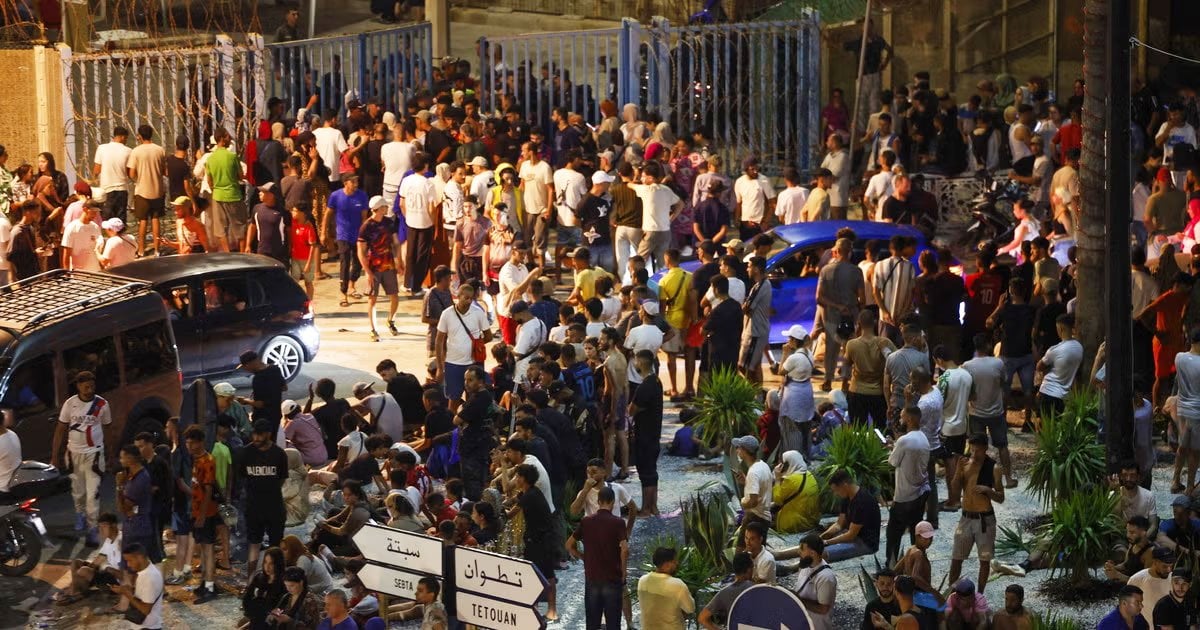
More than 49,000 migrants have entered Spain’s North African enclave of Ceuta from Morocco in the past 24 hours, Spanish officials said, with arrivals coming both by land and by sea.

Local videos and images showed thousands of people swimming into the city on Thursday, while local media reported that crossings continued overnight.

Deaths Reported during Recent Crossings

Officials said at least 18 people have died in recent days while trying to reach the territory.

The influx comes after Spain’s Supreme Court ruled earlier this month that migrants stopped at sea while attempting to reach Ceuta or Melilla, another Spanish enclave, cannot be summarily returned to Morocco.

Chaotic Scenes at Borders

Spanish local officials had asked Madrid for support following a rise in attempted crossings. On Thursday, chaotic scenes were reported as border controls appeared to break down.

Spain later deployed its armed forces to strengthen security in Ceuta and at its sister city of Melilla. Officials said between 300 and 400 crossings were also reported overnight in Melilla.

Spanish officials said the estimated number entering Ceuta could amount to more than half of the enclave’s population. Ceuta’s population is put at around 83,600 in the latest local figures.

Officials also said that at least 7,000 of those who entered illegally into Ceuta during the last 24 hours were minors.

Spain Says It Is Working With Morocco

Spain’s interior ministry said it was working with Morocco to ensure the return of all people who crossed illegally into Spanish territory “as soon as possible”.


Related article: https://aseannow.com/worldnews/1500-migrants-swim-from-morocco-to-spains-ceuta-in-days-r1597/


If the current figures are accurate, the number entering Ceuta in the past day or so would be the largest since May 2021, when more than 10,000 people crossed into the city.

Spanish Prime Minister Pedro Sánchez is due to visit Ceuta later on Friday, as authorities assess the scale of the arrivals and the operational response at the border.

Join the discussion? Create account. orange.png


image.png

31 July 2026

User Feedback

Recommended Comments

Smokey and the Bandit Gold Member

Smokey and the Bandit

Advanced Member
11 hours ago, Schoggibueb said:

What does UK have to do with Ceuta and Melilla? Two spanish (EU) enclaves on the african continent.

UK made it's Brexit - no EU anymore, no Schengen.

Stop complaining in a thread that has to do with Spain and the EU.

"Stop complaining in a thread that has to do with Spain and the EU."

Who made you a moderator??🤣

Tourist2 Silver Member

Tourist2

Advanced Member
18 hours ago, Schoggibueb said:

What does UK have to do with Ceuta and Melilla? Two spanish (EU) enclaves on the african continent.

UK made it's Brexit - no EU anymore, no Schengen.

Stop complaining in a thread that has to do with Spain and the EU.


Duh. UK Migrants don't come diret from africa do they????

Ask another stupid question like that and your blocked

Schoggibueb Gold Member

Schoggibueb

Advanced Member
3 minutes ago, Tourist2 said:


Duh. UK Migrants don't come diret from africa do they????

Ask another stupid question like that and your blocked

I only make one stupid question, but could have made 3 out of it...

Oh, how do they come directly from Africa by plane or by boat or do they swim?

Tourist2 Silver Member

Tourist2

Advanced Member
1 minute ago, Schoggibueb said:

I only make one stupid question, but could have made 3 out of it...

Oh, how do they come directly from Africa by plane or by boat or do they swim?


Blocked

bannork Star Member

bannork

Newsman

OIF-4112225524.jpg

A crying 12-year-old boy in Ceuta pleaded with Spanish soldiers not to be returned to Morocco, a video filmed by the Associated Press on Monday (3 August) shows.

Metres from the border, a Spanish army lieutenant colonel stopped the repatriation after pressure from local residents, who said the child was a minor. The boy was handed over to the Spanish Civil Guard.

It comes after hundreds of migrants established a makeshift camp on a beach in the Spanish exclave, which borders Morocco, as local authorities grapple with the aftermath of a massive border surge last week.

Spain estimates that 69,500 migrants have been returned to Morocco over the past four days, a figure that surpasses initial projections of around 50,000 arrivals in Ceuta last Thursday.

(34) Crying Moroccan boy pleads with Spanish soldiers in Ceuta not to send him back - YouTube

Crying Moroccan boy pleads with Spanish soldiers in Ceuta

bannork Star Member

bannork

Newsman
Viral posts sparked Ceuta migrant surge that ended in tragedy

A flood of viral social media posts helped trigger the mass movement of migrants into Spain's North African enclave of Ceuta, transforming a small stream of crossings into one of the deadliest migration crises in recent years.

What began with dozens of people attempting the journey rapidly escalated into tens of thousands swimming towards the enclave. More than 80 people died through drowning or in crushing crowds, according to official figures, as misinformation spread faster than authorities could respond.

False Hope Fuelled the Rush

The surge gathered pace after Spain's Supreme Court issued a ruling on migrants intercepted at sea near Ceuta and Melilla. Although the judgment did not prevent later returns, misleading claims online suggested anyone reaching Ceuta would be allowed to remain in Spain.

Videos shared across social media repeated the false message, while posts wrongly claimed Spain's migrant regularisation scheme was about to close, urging people to make the journey before an imagined deadline expired.

News Coverage Went Viral

Spanish local outlet El Faro de Ceuta reported early arrivals and published footage showing smiling migrants who had successfully crossed into the enclave. Intended to illustrate mounting migration pressures, the videos instead spread widely across Morocco and encouraged others to attempt the dangerous crossing.

Within days, social media influencers with large followings were posting their own videos of the journey, with some documenting themselves swimming towards Ceuta using inflatable rings and wetsuits. Other widely shared clips falsely claimed to show successful crossings, further fuelling the momentum.

Authorities Race to Contain the Crisis

Spanish officials say more than 70,000 people entered Ceuta irregularly during the peak of the surge before emergency measures brought the situation under control. Investigators are also examining the role of online messaging groups that allegedly shared routes and encouraged migrants to act quickly.

Human trafficking networks have been accused of exploiting confusion surrounding Spanish immigration rules to encourage dangerous crossings. Most online content promoting the journey has since been removed.

Dreams Collide With Reality

For many who reached Ceuta, expectations quickly collapsed. Hunger, overcrowding and deteriorating conditions prompted thousands to return voluntarily within days, while others remain stranded, including unaccompanied minors and migrants who cannot easily be deported.

The crisis has become a stark reminder of how misinformation can rapidly reshape migration flows, with devastating human consequences long before governments have time to react.

The viral videos that inspired tens of thousands to swim to Spain’s Ceuta

bannork Star Member

bannork

Newsman
Deadly Ceuta rush exposes the power of online rumours

Thousands of young Moroccans believed Europe was suddenly within reach. Within hours, social media rumours triggered one of the biggest migration surges seen at Spain's North African enclave of Ceuta in years, leaving more than 80 people dead and exposing dangerous gaps in border control and online misinformation.

The frantic crossings have ended, but the political and humanitarian fallout is only beginning.

Rumours Spark a Mass Dash

It began with Instagram posts, TikTok videos and Facebook groups claiming Spain's border with Morocco had effectively opened. Some accounts even shared maps of swimming routes, tracked coastguard patrols and offered advice on avoiding detection.

The claims spread at extraordinary speed. Buses, trains and taxis filled with young people heading for the Moroccan border town of Fnideq as hope rapidly overtook caution.

Chaos Turns Deadly at the Water's Edge

Authorities estimate around 60,000 people reached Ceuta over just a few days. As migrants converged on a narrow concrete breakwater, panic erupted.

Witnesses described people scrambling over slippery rocks, crushing one another and forcing others beneath the water. At least 72 people died on the Spanish side of the border, with another 11 killed in Morocco through drowning and the stampede.

False Hope Meets Harsh Reality

Many migrants believed recent changes to Spain's migration policies meant they would be allowed to remain if they reached Spanish territory. That interpretation was false, but it spread rapidly online.

Within days, most survivors had been returned to Morocco after finding little shelter, food or support in Ceuta. Many admitted the dream they had chased collapsed almost immediately.

Governments Trade Blame

Madrid and Rabat both blamed misinformation and criminal trafficking networks for fuelling the surge. Moroccan authorities launched an investigation, while Spain insisted close cooperation with Morocco helped restore control.

Migration experts, however, questioned how such vast numbers were able to reach the border so quickly, arguing the scale of the crossings exposed wider security failures that neither government has fully explained.

Economic Reality Keeps the Pressure Alive

Behind the viral rumours lies a deeper problem. Morocco's economy continues to grow, but many young people remain locked out of stable employment, with youth unemployment standing at 37%.

For many, Europe still represents opportunity despite the risks. The deadly events in Ceuta have shown how quickly desperation, amplified by social media, can overwhelm borders—and how devastating the consequences can become when misinformation meets economic hardship

Ceuta: What caused the frantic surge of migrants rushing into Spain?

sqwakvfr Platinum Member

sqwakvfr

Advanced Member
(edited)

The name Nick Shirley will garner some reactions from Americans. I guess he is a journalist and has gotten some videos of fraud in the US and now he is of all places Ceuta. He actually speaks to some of the migrants/border crossers. This was rather interesting. If the video does come up then you can go to YT and look at it.

Edited by sqwakvfr

Schoggibueb Gold Member

Schoggibueb

Advanced Member
18 minutes ago, sqwakvfr said:

The name Nick Shirley will garner some reactions from Americans. I guess he is a journalist

No journalist, only a right-wing YouTuber and so called "influencer." His Education ended with high-school. With that no serious media channel would hire him as a journalist.

A typical Trump-supporter...

Create an account or sign in to comment

Account

Navigation

Search

Search

Configure browser push notifications

Chrome (Android)
  1. Tap the lock icon next to the address bar.
  2. Tap Permissions → Notifications.
  3. Adjust your preference.
Chrome (Desktop)
  1. Click the padlock icon in the address bar.
  2. Select Site settings.
  3. Find Notifications and adjust your preference.