




Britain could face the risk of shortages of some food products as drought continues and a prolonged heatwave is forecast to affect large parts of England, farmers’ organisations have warned.
The National Farmers’ Union (NFU) said the impact of dry conditions could reduce outputs from farms just as farming had already been disrupted by extreme weather in recent years. Heat is expected to continue into next week, with the UK Health Security Agency (UKHSA) issuing heat health alerts for multiple regions.
Heat Health Alerts across England
UKHSA issued amber heat health alerts for the East Midlands, the east of England, the south-east and London from 9am on Monday to 9am on Wednesday. A yellow alert is in place for the north-west, Yorkshire and the Humber, West Midlands and the south-west over the same period.
The agency said temperatures are forecast to rise above 30C in parts of the country, increasing health risks, particularly for people who are more vulnerable.
An acting consultant in public health at UKHSA said services should ensure they are prepared and reminded people to watch for older relatives, neighbours and those with underlying health conditions. The advice included staying hydrated, avoiding the sun during the hottest hours and keeping homes cool.
Drought Leaves Farms Short of Water
Farming groups said many farms were left struggling after floods damaged conditions over the winter, making planting difficult. In many areas, they now have limited water as drought-related restrictions curb irrigation.
The current drought is the third in five years. Farmers said it is becoming a recurring feature of agriculture in Britain rather than an unusual event. In parts of England, some areas have had no rain for more than a month, while record-breaking heatwaves since early summer have dried out soil.
The Met Office reported that England recorded only 8% of its average rainfall for July, and it is expected to be confirmed as the driest July on record.
Around 23 million people in England and Wales are under hosepipe bans. The dry weather has also contributed to wildfires, with incidents including a blaze in Suffolk.
Wheat and Other Cereals Hit Hard
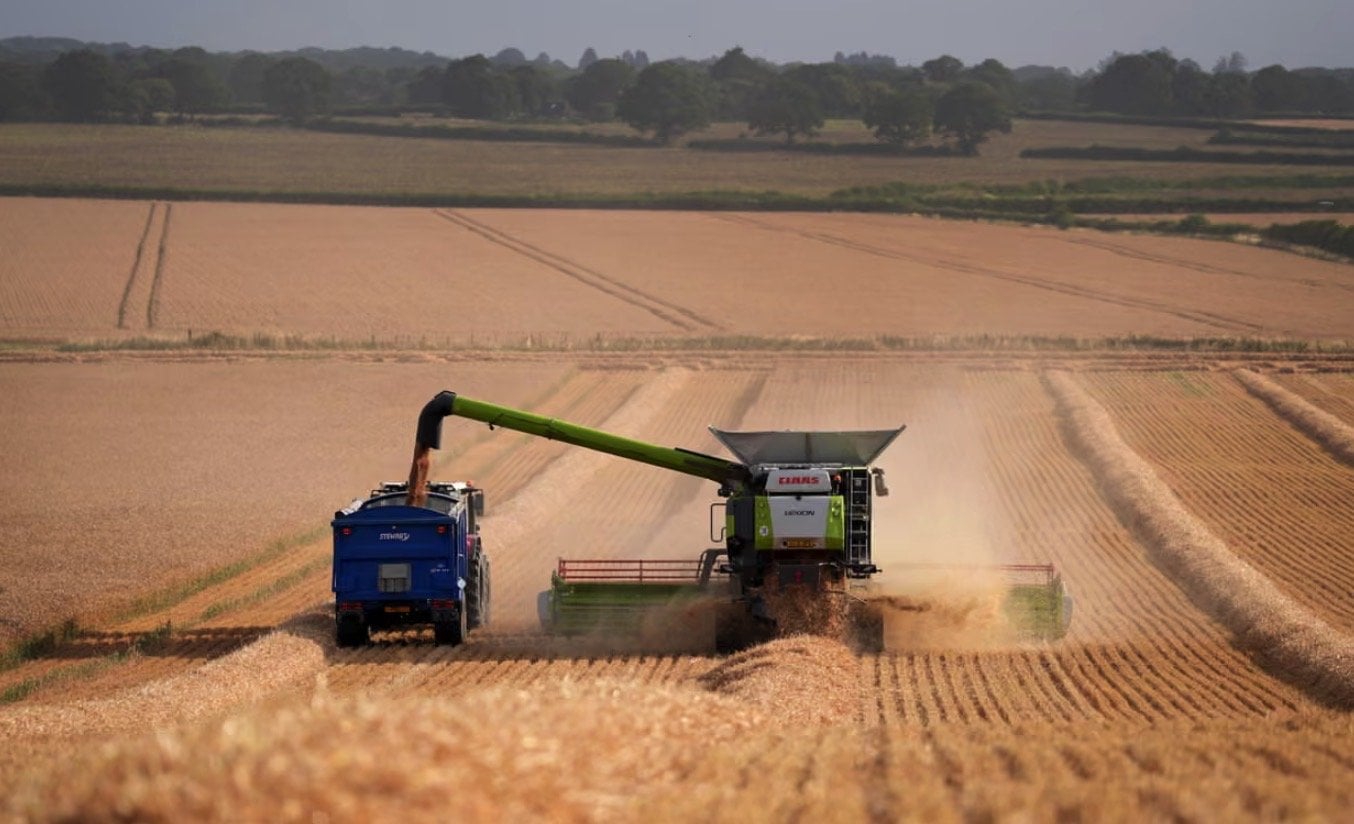
Cereals including wheat and barley have been particularly affected, according to the Agriculture and Horticulture Development Board (AHDB). Its first harvest report of 2026 said the hot weather has produced the earliest harvest since records began in 2006, with many farmers in the south and east of England completing harvest around two to three weeks earlier than the long-term average.
AHDB said yields across much of the UK are generally below the 10-year average so far, with some farms seeing significant reductions. It also said combines have been operating earlier than usual, with many farmers working through the night to avoid the most extreme daytime temperatures.
At the same time, farmers’ groups said the drought is affecting crop size, with wheat described as being about half its normal height in England.
Food Shortages Warning and Financial Pressures
The NFU president, Tom Bradshaw, warned that reduced harvests could contribute to food shortages. He told BBC Radio 4 that he had asked the prime minister to take action and argued that farmers should be given tax breaks to build water storage systems on their land. He also called for greater prioritisation of domestic food production.
Bradshaw said changes to overseas farming conditions could further affect supplies, as other countries relied on to produce food and vegetables also face shifting climates.
Farmers’ organisations said the drought is coming alongside financial strain. A recent report found that a third of British farmers were making a loss or only breaking even. Land and farming representatives said the sector has been squeezed as government removes EU-derived subsidies that previously supported the industry, while extreme weather can erase any profits from crops.
The Country, Land and Business Association president, Gavin Lane, warned that for some farmers the current harvest could be their last, citing a sodden winter followed by drought that left wheat at around half its usual height and meant some crops may not be worth harvesting. He said government should plan for more frequent drought and invest in resilient farming systems, including measures such as reservoirs and wildfire prevention.
Join the discussion? 

3 August 2026
-
 1
1
Recommended Comments
Create an account or sign in to comment