




Fuel shortages and blackouts push Havana toward dialogue with Washington
Cuba has begun talks with the United States as a U.S. oil blockade pushes the island nation deeper into an economic crisis marked by power outages and fuel shortages.
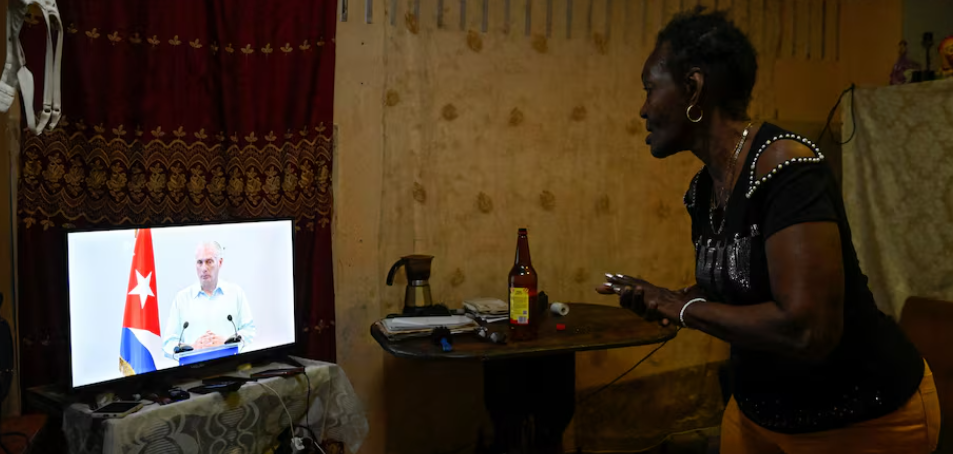
President Miguel Díaz-Canel confirmed Friday that discussions had started with the government of United States.
“These talks have been aimed at finding solutions through dialogue to the bilateral differences we have between the two nations,” Díaz-Canel said in remarks broadcast on Cuban state television.
Don’t miss the latest headlines from Thailand and around the world. Get the Asean Now Briefing newsletter, delivered daily. Sign up here.
The announcement marks the first public acknowledgment from Havana that official negotiations are underway with Washington.
Fuel supplies collapse
According to Díaz-Canel, no fuel shipments have reached Cuba in the past three months because of the blockade imposed by U.S. President Donald Trump.
The shortage has sharply reduced diesel and fuel oil reserves, leaving the country’s electricity system increasingly unstable.
A massive blackout last week left much of the island without power, while outages in the capital Havana have since stretched to more than 12 hours per day in many neighborhoods.
Officials say the energy crisis is now one of the most severe challenges facing the Communist-run nation.
Push for energy independence
Cuban authorities say they are also trying to reduce reliance on imported fuel.
Díaz-Canel said the government has increased domestic crude oil and natural gas production this year and plans to expand solar energy generation by about 10% by the end of March.
The measures are intended to stabilize the country’s electrical grid while negotiations with the United States continue.
Still, analysts say the island remains heavily dependent on imported fuel to run its aging power plants.
Talks at an early stage
Díaz-Canel said the negotiations are still in their initial phase and are meant to determine whether both countries are willing to pursue a broader agreement.
He said he is personally overseeing the talks alongside former Cuban leader Raúl Castro and other senior officials from the ruling Communist Party.
The Cuban president did not reveal where or when the meetings took place, nor did he identify the U.S. representatives involved.
However, Trump has previously said that U.S. Secretary of State Marco Rubio was participating in discussions with Cuban officials.
Political sensitivities in Havana
The announcement also drew attention to the presence of Raúl Guillermo Rodríguez Castro, the grandson of Raúl Castro.
Rodríguez Castro — known by the nickname “El Cangrejo,” or “The Crab” — appeared among senior Communist Party officials during Díaz-Canel’s televised address, despite not holding a formal high-ranking government position.
His appearance fueled speculation about the role he may be playing behind the scenes in negotiations with Washington.
Vatican-linked prisoner release
Just before the talks were confirmed, Cuba also announced that it would release 51 prisoners under an agreement involving the Vatican.
The decision followed a meeting two weeks earlier between Cuban Foreign Minister Bruno Rodríguez Parrilla and Pope Leo.
Díaz-Canel emphasized that the prisoner release was a sovereign decision made by Cuba rather than a concession imposed by foreign governments.
The Vatican has historically acted as a mediator between Havana and Washington.
In 2014, diplomatic efforts supported by the Holy See helped lead to a normalization process between the two countries during the presidency of Barack Obama.
Public reaction mixed
Some Cubans welcomed the possibility of renewed dialogue with the United States but stressed that the government should not compromise its political principles.
Felipa Rodríguez, a 67-year-old retiree in Havana, said negotiations would be acceptable if they respected Cuba’s sovereignty.
“If the talks are friendly and Cuba doesn’t have to give ground politically, there’s no problem at all,” she said.
Uncertain path ahead
Relations between the United States and Cuba have swung between confrontation and cautious engagement for decades.
The current energy crisis — triggered by the U.S. oil blockade — has intensified pressure on Havana’s leadership to seek relief through diplomacy.
Whether the new talks will produce concrete results remains unclear, but both governments now appear willing to explore dialogue after months of escalating economic strain.
Join the discussion? 
Already a member? 
 Adapted by ASEAN Now · Source · 13.03 2026