



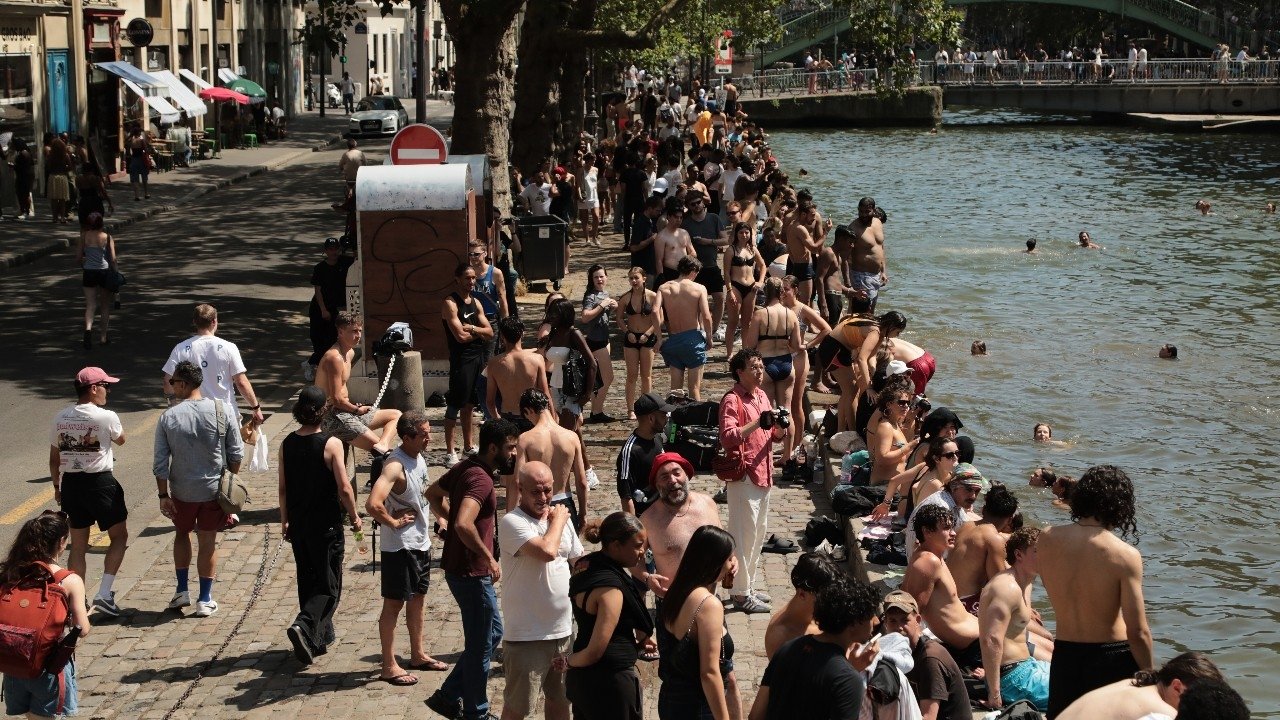

France has recorded 40 drowning deaths since last Thursday as an intense heatwave grips much of Europe, pushing temperatures to record levels and prompting warnings over the dangers of swimming in unsupervised waterways.
Get today's headlines by email 
French Prime Minister Sébastien Lecornu said the fatalities were linked to the extreme heat, as many people sought relief in rivers, canals and other open-water locations.
Sports and Youth Minister Marina Ferrari warned that swimming in unsupervised areas during a heatwave posed serious risks, urging the public to take greater care.
Record Heat Across France
France experienced its hottest June day on record on Tuesday, with a national average temperature of 29.8C. The country also registered its warmest June night, with temperatures averaging 21.6C.
More than half of France was placed under the highest-level red heat alert. Weather agency Météo-France said the warning would be expanded from 54 to 58 metropolitan departments.
Among the victims was a 13-year-old girl who drowned in the River Seine after entering the water with her family despite being unable to swim. A young professional footballer remained in critical condition after being rescued from the River Rhône near Lyon, where swimming is prohibited.
Authorities also linked two child deaths in the southern city of Carpentras to the heat after children aged two and four were found inside a family car.
Spain and Italy Face Extreme Conditions
Spain remained under severe heat warnings, with temperatures forecast to exceed 40C across several regions and potentially reach 44C near Córdoba. On Monday, 101 of the country's 828 weather stations recorded temperatures of at least 40C, while Andújar reached 45C.
According to Spain's weather agency Aemet, heatwaves in June have become increasingly common. Ten June heatwaves were recorded between 2000 and 2025, compared with only two during the previous 25 years.
Meteorologist Rubén del Campo said there was growing evidence that severe heat episodes were occurring earlier in the summer than in previous decades.
Italy issued red heat alerts for 15 cities, including Rome, Milan, Florence, Turin and Venice. The government reintroduced emergency labour protections, allowing outdoor workers to avoid the hottest parts of the day and enabling affected companies to access state-backed furlough support.
Drownings Reported in Germany
Germany also reported several drowning incidents as temperatures climbed. The German Lifesaving Association, the DLRG, said six fatal swimming accidents occurred between Friday and Sunday.
The organisation noted that men were particularly prone to overestimating their swimming abilities. Three bodies were recovered from the Rhine near Biblis after three men previously reported missing disappeared in separate incidents.
Forecasters expect temperatures in western and south-western Germany to approach 40C by the end of the week.
Transport, Tourism and Energy Affected
The heatwave has disrupted daily life across Europe. In the Paris region, regional president Valérie Pécresse urged residents to work from home where possible, warning that rail infrastructure could struggle under temperatures above 50C.
The Eiffel Tower closed early on Tuesday because of the heat, while the Louvre Museum shortened opening hours, citing concerns that its historic buildings were not adequately adapted to rising temperatures.
In southwest France, the Golfech Nuclear Power Plant was temporarily shut down after water temperatures in the River Garonne approached legal limits for reactor cooling.
Climate Concerns Grow
Weather services expect temperatures to ease in Spain from Wednesday, but the heat is forecast to intensify further north, with Germany, Belgium and the Netherlands expected to see peak conditions later in the week.
Belgium activated the alert phase of its national ozone and heat plan for only the second time, while the Dutch weather service issued a Code Orange warning for several regions.
Scientists say Europe is warming roughly twice as fast as the global average. The trend has been linked to more frequent and intense heatwaves, growing pressure on water resources and increasingly severe wildfire seasons across the continent.
Join the discussion? 
Already a member? 
 Adapted by ASEAN Now. Source 24 June 2026
Recommended Comments
Create an account or sign in to comment