



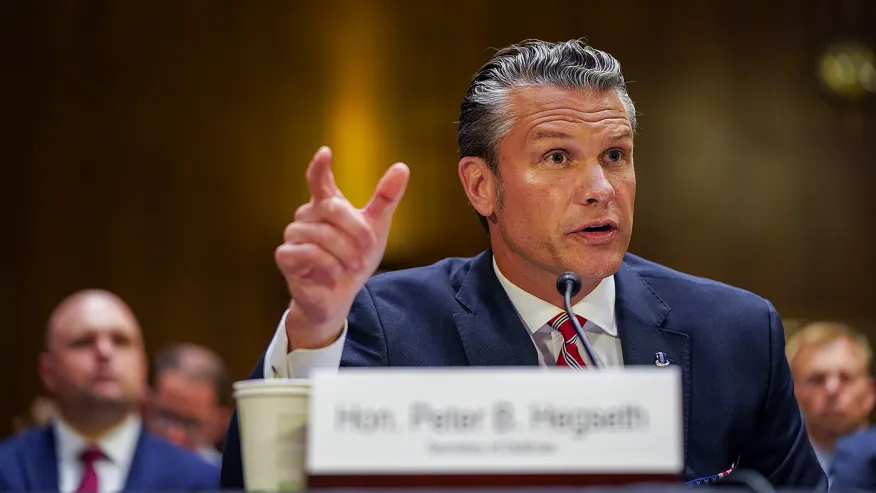

Defense Secretary Pete Hegseth has struggled to persuade Republican senators to back the Trump administration’s request for tens of billions of dollars to rapidly replenish stockpiles depleted by the ongoing war with Iran, which has now entered its sixth month with no clear end in sight.
The push has also highlighted concerns within the GOP about Hegseth’s leadership of the US military as the conflict continues. Some senators say they were not fully briefed on the scale of the costs they would be asked to approve, even as the administration argues for urgent funding.
Senators Unsure About The Size Of The Request
After a meeting lasting more than two hours between Hegseth and key senators on Wednesday evening, several lawmakers remained unconvinced or did not signal support for a $95 billion reconciliation package.
The package would include $73 billion for the Pentagon and US intelligence agencies. Lawmakers on the fence said they want more clarity on what the administration is seeking and why the money is needed.
Senator Lisa Murkowski said the discussion gave the secretary and his team an opportunity to set out their “vision” for defence spending, but she argued that such briefings work best with bipartisan participation. Asked whether she was satisfied that the US must provide the amount proposed in the reconciliation bill, she said the matter had not yet been settled.
Senator Joni Ernst said that after Hegseth’s appearance before the Senate Appropriations Committee on July 21, “people are concerned” about whether there is enough clarity on the figures being requested.
Senate Appropriations Committee chair Susan Collins declined to comment on Wednesday’s meeting, saying it involved classified information. Collins has been weighing her position against broader spending disputes with Trump, and she has previously questioned using the budget reconciliation process instead of the regular appropriations route, which depends on bipartisan agreement.
Cost Estimates Spark Scrutiny
Hegseth had previously said in July that the war had cost $37.5 billion. Independent analysis, including projections from Moody Analytics, puts the total at at least $132 billion.
The contrast in figures has added to uncertainty among lawmakers, as the reconciliation package is being pursued alongside another effort to fund additional military needs.
Administration officials have also said the required injections are aimed at replenishing resources that have been drained and filling gaps in Pentagon finances. Some senators have argued that the administration did not prepare them adequately for the likely cost.
Next Steps For Congress As Recess Looms
Trump is seeking a party-line spending bill, but the Senate faces internal divisions over both the amount and the process. Defence hawks have pressed for more funding, while other Republicans have raised deficit concerns and have favoured a smaller package.
Senate Majority Leader John Thune said on Thursday that he hopes a government funding deal can be agreed in time for the Senate to vote next week, before the chamber leaves Washington for a five-week August recess. The House has already passed a $95 billion budget blueprint for the legislation.
In parallel, the administration is requesting an $87.6 billion supplemental package. It would primarily replenish the Pentagon for the Iran war as it escalates again, including strikes this week on Egypt, Saudi Arabia and Jordan.
Trump has also called for a sweeping defence budget for fiscal 2027, totalling $1.5 trillion, with a top line of $1.15 trillion and a reconciliation bill worth $350 billion. At a cabinet meeting at Camp David on Friday, he said the proposal represents “unprecedented investment” in the military and that he is “looking forward” to the package.
With Congress having found the large sums difficult to approve, Hegseth has met several times with House and Senate Republican lawmakers to secure support. Ahead of Wednesday’s latest Senate discussion, White House budget director Russell Vought and James Braid, Trump’s top legislative aide, also met Senate Republicans for a closed-door lunch.
Senator Rick Scott said the meeting produced “a lot of work,” but that it may be hard to provide more than the House level. He added that if additional funds are needed, lawmakers would likely have to revisit the issue in another reconciliation package after the midterm elections.
Senator John Curtis said he would not back funding for the Iran war unless it is authorised by Congress. When asked last week whether he would support moving ahead with a budget resolution that would pave the way for the $73 billion defence funding, he said he had “zero information” about what it contains.
Join the discussion? 

3 August 2026
Recommended Comments
Create an account or sign in to comment