



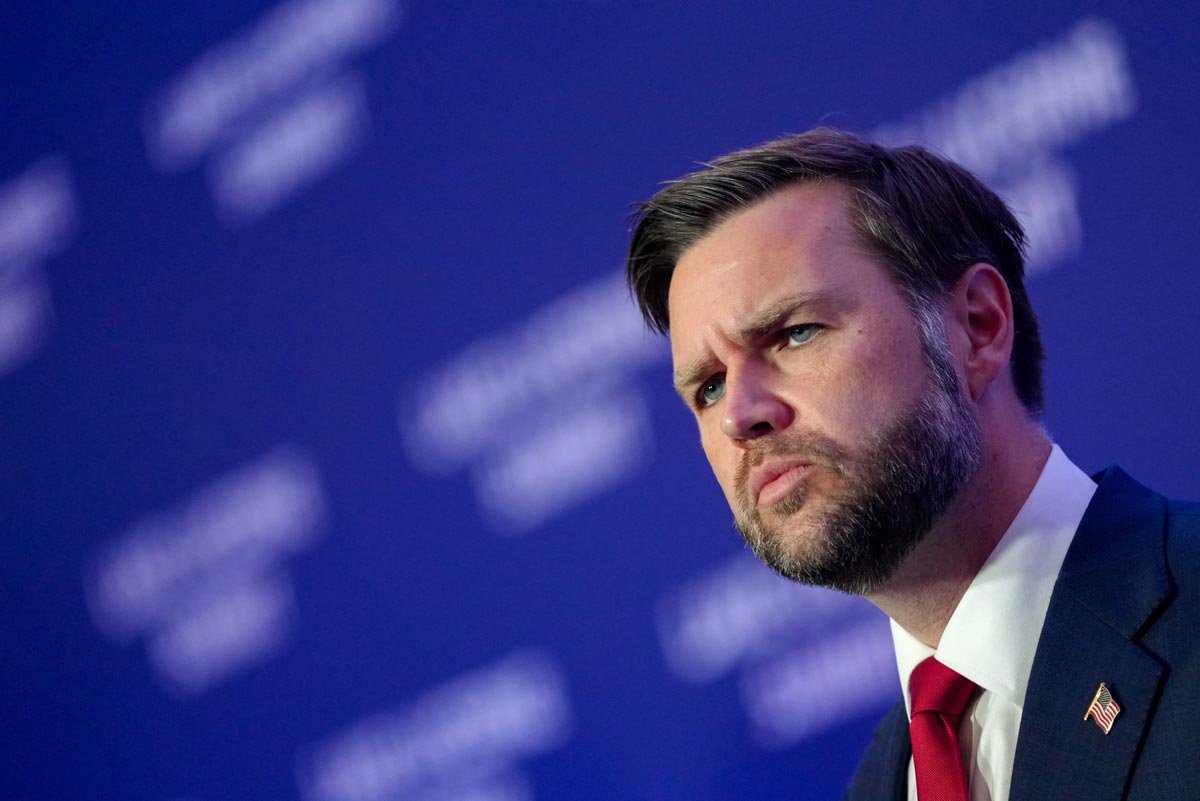

US Vice-President JD Vance said Iran has agreed to allow international nuclear inspectors back into the country, describing the move as a significant step in efforts to secure a broader agreement following the recent conflict between Washington and Tehran.
Get today's headlines by email 
Speaking in Switzerland on Monday, Vance said discussions with the International Atomic Energy Agency (IAEA) could begin “as soon as today”, with inspectors expected to start returning at least this week.
The announcement followed the first round of talks between the United States and Iran aimed at reaching a final settlement after the war. Vance said the discussions had made substantial progress and provided a strong basis for future negotiations.
Talks Target Final Agreement
Earlier on Monday, mediators Qatar and Pakistan said the two sides had agreed on a roadmap intended to produce a final deal within 60 days.
Vance echoed that assessment, saying negotiators had established a “very good foundation” for a lasting agreement.
He highlighted Iran’s nuclear programme as the central issue for Washington, describing the planned return of inspectors as an important milestone and a first step toward permanently ending any potential Iranian nuclear weapons programme.
Iran has consistently maintained that its nuclear activities are intended solely for civilian purposes.
Inspectors and Nuclear Stockpiles
The 14-point memorandum of understanding signed last week by US President Donald Trump and Iranian President Masoud Pezeshkian includes provisions concerning the IAEA and Iran’s stockpile of enriched nuclear material.
Although Tehran denies seeking nuclear weapons, a number of governments and the IAEA have expressed concerns about the nature of its nuclear activities.
The issue has been at the centre of international diplomacy for more than a decade. In 2015, Iran and six major powers — the United States, China, France, Russia, Germany and the United Kingdom — reached the Joint Comprehensive Plan of Action, commonly known as the JCPOA.
The agreement imposed limits on Iran’s nuclear programme and granted IAEA inspectors broad access to nuclear facilities and suspected sites.
However, Trump withdrew the United States from the accord in 2018, arguing that it failed to provide permanent restrictions and did not address Iran’s ballistic missile programme.
Following the 12-day war in June 2025, Iran suspended IAEA access to sites targeted by Israeli and US strikes. The following month, the agency withdrew its remaining inspectors from the country.
Strait of Hormuz and Lebanon
Vance said negotiators had also discussed reopening the Strait of Hormuz and arrangements to support a regional ceasefire.
According to a joint statement from the mediators, a communication channel has been established to prevent incidents and ensure the safe passage of commercial shipping through the waterway.
The parties also agreed to create a “de-confliction cell” involving the United States, Iran and Lebanon, with Qatar and Pakistan acting as facilitators. The mechanism is intended to help end military operations in Lebanon.
Iranian Foreign Minister Seyed Abbas Araghchi said the Lebanon initiative would be the first major test of the agreement.
Despite the memorandum’s call for an end to fighting on all fronts, violence has continued in Lebanon. Israeli air strikes have reportedly killed at least 67 people since the deal was signed, while attacks by the armed group Hezbollah have killed five Israeli soldiers.
Join the discussion? 
Already a member? 
 Adapted by ASEAN Now. Source 23 June 2026
Recommended Comments
Create an account or sign in to comment