



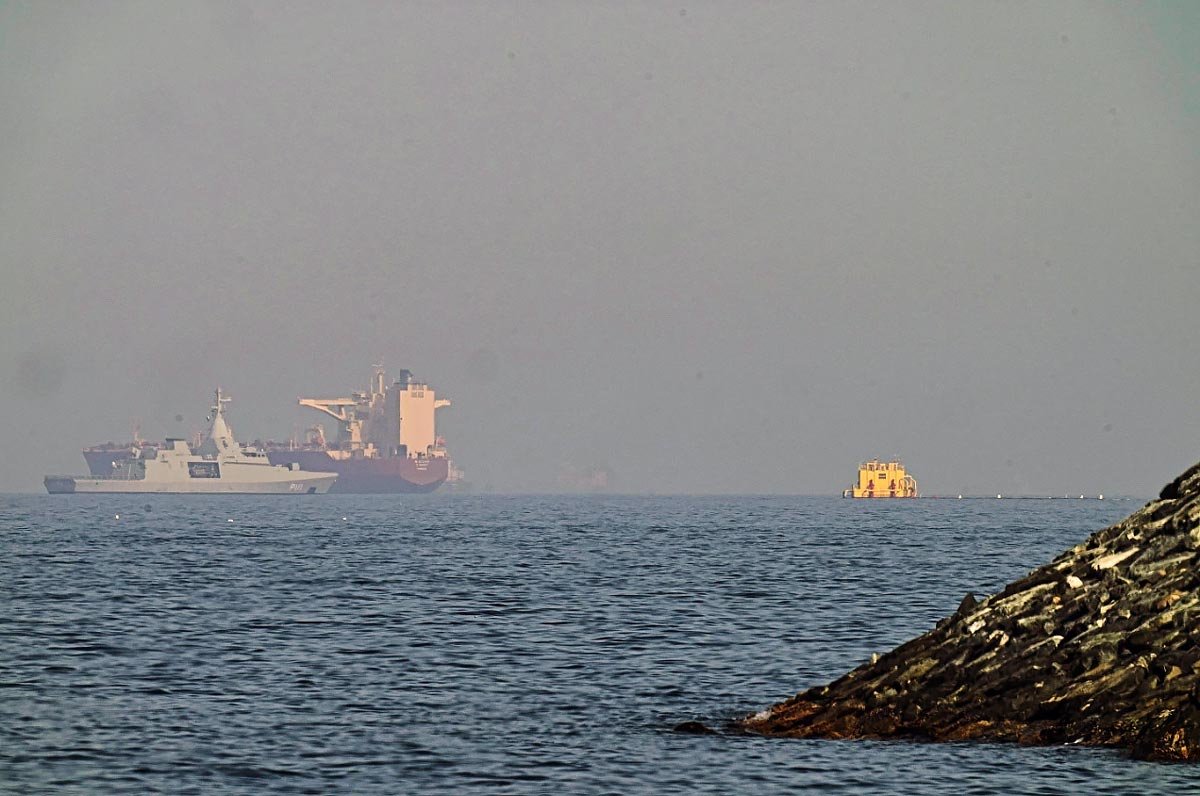

The United States has ended its naval blockade of Iran after Washington and Tehran signed an agreement aimed at ending the regional conflict, even as Iran’s Supreme Leader, Mojtaba Khamenei, said President Donald Trump had pursued the deal “out of desperation”.
Get today's headlines by email 
US Central Command confirmed that enforcement of the blockade had ceased in line with presidential instructions. The move follows the signing of a memorandum of understanding (MoU) designed to halt hostilities across the Middle East.
Blockade Lifted Following Agreement
Under the agreement, military operations are to stop immediately on all fronts and the strategically important Strait of Hormuz is to reopen.
In a written statement carried by Iranian media, Khamenei said he had initially opposed the agreement but ultimately allowed it to proceed after receiving assurances from Iranian President Masoud Pezeshkian.
Iran Signals Support but Expresses Reservations
He said officials involved in negotiations had acted with “sincere concern and goodwill” and argued that Trump had used every available form of leverage to secure the deal. While noting that future face-to-face talks between Tehran and Washington were expected, Khamenei stressed that such negotiations would not signify acceptance of the US position.
The statement marked the first public response from the supreme leader since the agreement was announced.
Khamenei has not appeared publicly since taking office in March after the death of his father and predecessor, Ali Khamenei, who was killed during US-Israeli strikes on Iran in February that helped trigger the wider conflict.
Further Negotiations Planned
US Vice-President JD Vance defended the agreement, saying Iran would not receive sanctions relief or financial benefits unless it fully complied with its commitments.
According to Vance, the MoU has already entered into force, beginning a 60-day period of additional negotiations. He said he was likely to travel to Switzerland for technical discussions but added that arrangements were still being worked out.
An official signing ceremony had been scheduled in Switzerland on Friday. However, mediator Pakistan said the event was cancelled because the agreement had already been signed remotely. Despite that change, US and Iranian officials are still expected to meet in Switzerland for further talks.
The MoU requires Iran to demonstrate compliance, including eliminating its stockpile of enriched uranium and showing that it will no longer support proxy groups in the region, before receiving any benefits.
Israeli Concerns and Ongoing Violence
Trump did not directly address Khamenei’s remarks but said he expected a ceasefire to take hold across the region, including between Israel and the Iran-backed organization Hezbollah in Lebanon.
Israeli Prime Minister Benjamin Netanyahu emphasised the importance of maintaining close ties with Washington, saying the US had stood “shoulder to shoulder” with Israel during the conflict.
His comments came amid criticism of the agreement from members of his cabinet. Responding to those concerns, Vance argued that opponents of the deal had failed to offer a workable alternative. In separate remarks, he identified Israeli ministers Itamar Ben Gvir and Bezalel Smotrich as critics of the accord.
The 14-point agreement includes commitments to end fighting across the region, lift the blockade, reopen the Strait of Hormuz, prevent Iran from obtaining a nuclear weapon and establish a $300 billion reconstruction and development fund for Iran, although the United States is not obligated to contribute.
Despite the agreement, violence has continued. Israel and Hezbollah have both carried out attacks since the deal was announced. Strikes reported in Lebanon on Thursday killed three people.
Israel maintains that its campaign against Hezbollah is separate from its conflict with Iran, while Hezbollah has rejected the terms of the US-Iran agreement.
Join the discussion? 
Already a member? 
 Adapted by ASEAN Now. Source 19 June 2026
Recommended Comments
Create an account or sign in to comment