



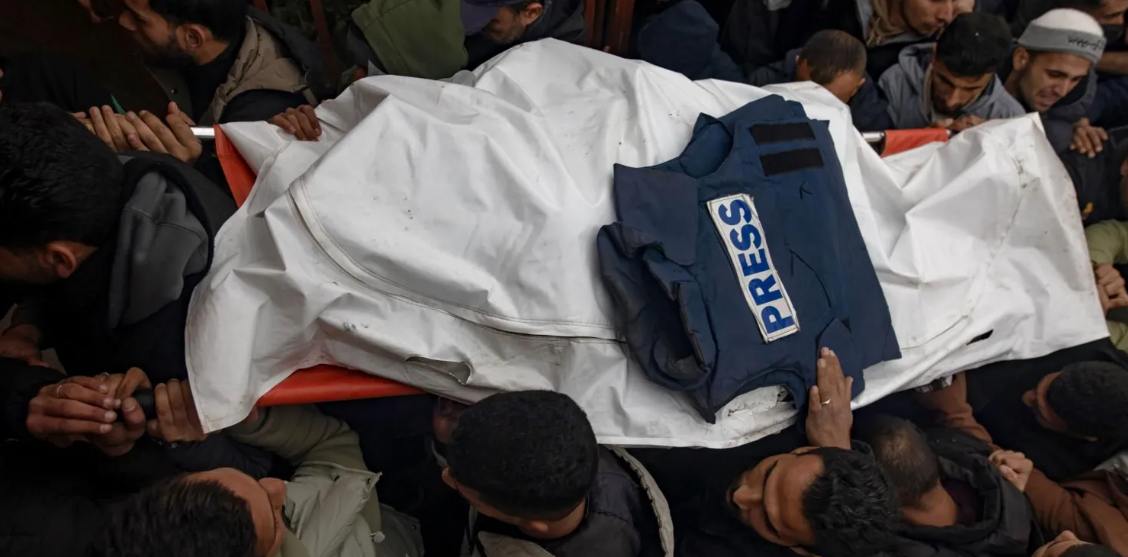

In a devastating escalation, an Israeli strike in central Gaza has resulted in the deaths of three Palestinian journalists. Identified as Mohammed Salah Qashta, Anas Ghneim, and Abdul Raouf Shaat, these journalists were reportedly working for an Egyptian relief organization and were killed when their vehicle was struck in the al-Zahra area. The car was clearly marked with the humanitarian group's logo, emphasizing the mission's non-combatant nature.
The Israeli military justified the attack by claiming they targeted several suspects operating a Hamas-affiliated drone, which allegedly posed an imminent threat to their troops. This incident underscores the fragile nature of the current ceasefire, with both sides accusing each other of violations.
Adding to the tragic toll, Gaza's health ministry reported that eight other individuals, including two children, were killed by Israeli artillery and gunfire on the same day. In a separate incident, three people, including a young boy, were killed by Israeli tank fire, and a teenager and a woman were reported killed in Khan Younis.
The Israeli military also noted that a "terrorist" was killed when they crossed the Yellow Line—a demarcation still under Israeli control per the ceasefire terms. This complex landscape of violence and ceasefire breaches highlights the ongoing instability in the region.
Hamas condemned the journalist killings as a "dangerous escalation," arguing that it constituted a blatant violation of the ceasefire. The Palestinian Journalists Syndicate expressed outrage, labeling the incident a war crime and accusing Israel of attempting to silence Palestinian media. French news agency AFP, for whom Shaat was a regular contributor, expressed deep sadness and demanded a thorough investigation.
The Committee to Protect Journalists joined in denouncing the attack, underscoring that Israel, with its advanced targeting capabilities, has an obligation to protect journalists under international law. The CPJ notes this conflict as the deadliest for journalists, with over 206 media workers killed since the outbreak of hostilities.
Local journalists remain the primary source of on-the-ground reporting in Gaza as Israel restricts foreign press access. This measure necessitates reliance on local voices, which face tremendous risk amid the conflict.
This escalation follows the October 7, 2023, Hamas attack on southern Israel, in which 1,200 people were killed and 251 taken hostage, prompting Israel's military campaign in Gaza. Since then, Gaza's health ministry reports that over 71,550 individuals have died due to ongoing military actions.
As global attention centers on the Israeli-Palestinian conflict, the killing of journalists foregrounds the issue of press freedom and safety in war zones, with international calls for accountability and protection measures growing louder.
Key Takeaways
Three journalists killed in Gaza, highlighting ongoing risks for media personnel.
Incident draws international attention to ceasefire stability and press safety.
Hamas and journalist organizations condemn attacks, demanding accountability.


Adapted by ASEAN Now from BBC 026-01-21


-
 1
1