



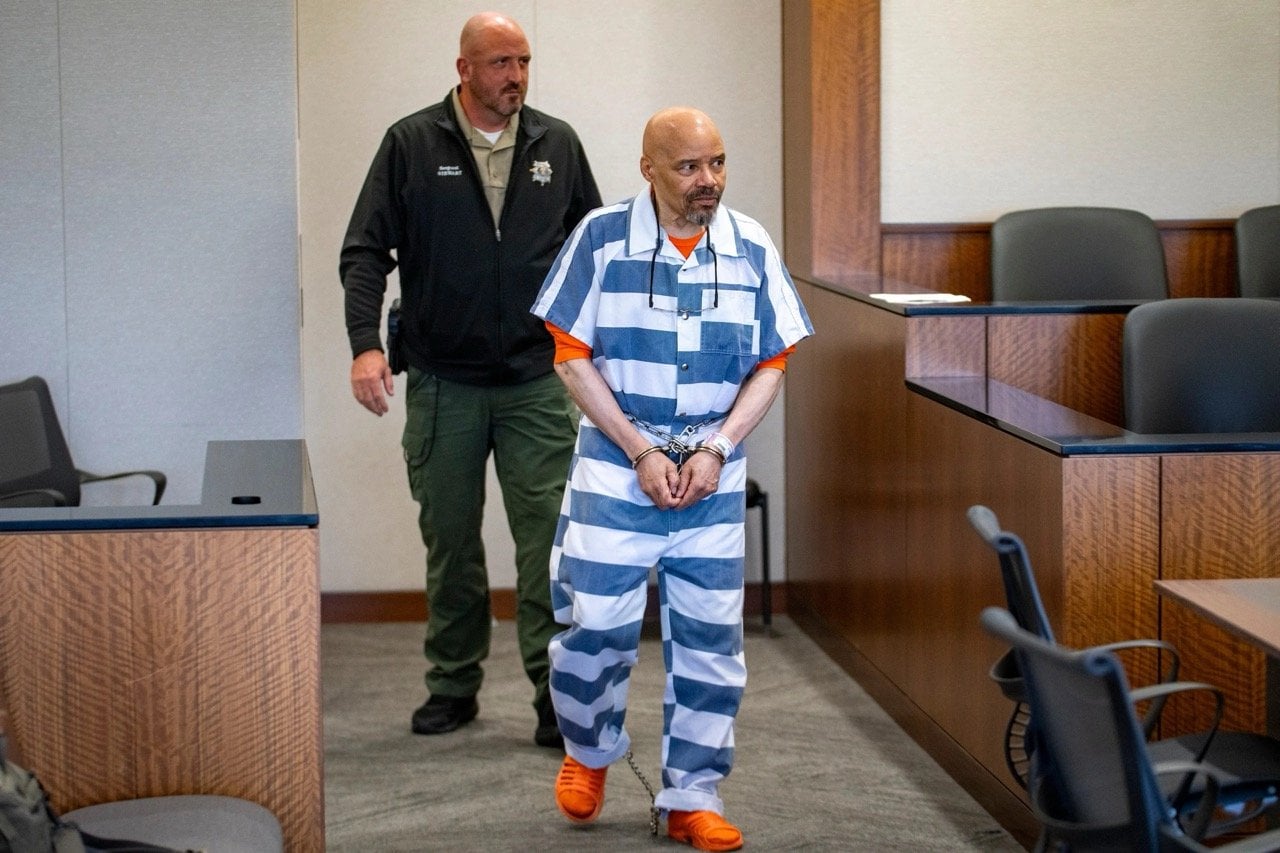

A Utah judge has ordered Douglas Stewart Carter, 71, to be released on bail after prosecutors said newly analysed DNA evidence does not match him to biological material from a 1985 murder for which he spent decades on death row.
Carter was sentenced to death in 1985 after a jury convicted him of murdering Eva Olesen, a White woman, in Provo, Utah. The case was later sent back for a new trial after the Utah Supreme Court found misconduct by investigators.
At a bond hearing on Monday, Judge Derek Pullan set the terms for Carter’s release, despite objections from members of Olesen’s family.
DNA Analysis excludes Carter from evidence
Prosecutors said the state received DNA results on September 22 showing Carter is excluded as a possible match to blood found on a doorknob and genetic material taken from the handle of a knife used to stab Olesen, who was also shot.
Last week, Utah County prosecutors withdrew a notice that they intended to seek the death penalty at a retrial scheduled for 2027. Erwin Petilos, a prosecutor in the case, told the court that reassessing Carter’s bail was “necessary and fair”, while the state continues reviewing the remaining evidence.
Carter, who was born in Chicago, had been living with his mother in Utah at the time of the killing on February 27, 1985. Court documents say the investigation initially focused on Carter after he was suspected of involvement in a robbery linked to Olesen’s death.
Court Overturns Death Sentence
The Utah Supreme Court ordered a new trial last year, citing multiple instances of intentional misconduct by police and a prosecutor. Carter maintained his innocence and said a signed confession used against him was coerced.
Defense attorneys said there was no physical evidence tying Carter to the crime scene. They argued the jury convicted him primarily because of his confession and testimony from two witnesses who said he bragged about killing Olesen.
Carter fled Utah in April 1985 after believing he was being sought in connection with an unrelated assault, according to court records. He was arrested in June in Nashville, Tennessee, where he signed a confession during interrogation by a Provo detective.
At his original trial, the defence called no witnesses. Carter was again sentenced to death after a retrial in 1992. Appeals were repeatedly rejected in subsequent years until the Supreme Court’s latest ruling.
Witnesses recant, family questions release
A key development came in 2011, when the two witnesses from Carter’s trial were located in Mexico. They told authorities they had been instructed to lie in court and said they were given cash and gifts by police, with instructions not to disclose the payments. They also claimed police and prosecutors threatened them and their son with deportation if they did not implicate Carter.
In court filings, Carter’s defence also alleged investigators suppressed evidence that pointed to other suspects, including Orla Olesen, the victim’s husband. Defence attorneys said prosecutors were close to filing charges against Orla Olesen, but a Provo police lieutenant asked them to delay in order to continue investigating. Carter was identified as a suspect shortly afterwards, according to the defence account in court documents.
Theresa Olesen, a daughter-in-law of Eva Olesen, said during Monday’s bond hearing that the family had serious concerns about Carter’s release and urged he remain in the Utah County jail while a new trial is pending.
She said the family had hoped for a “concrete match” from the DNA testing, adding that the result did not necessarily rule out involvement. She said they want justice for Eva Olesen and for any role Carter may have played to be addressed.
Bail conditions set for Carter
Carter’s attorney, Neal Hamilton, told the court that Carter would be housed in an extended-stay accommodation near his son. The son was adopted by another family as an infant and did not learn about Carter’s conviction until years later, according to Hamilton.
Hamilton also said Carter would need therapy to address the impact of his lengthy incarceration.
Join the discussion? 

29 September 2026
Recommended Comments
Create an account or sign in to comment