



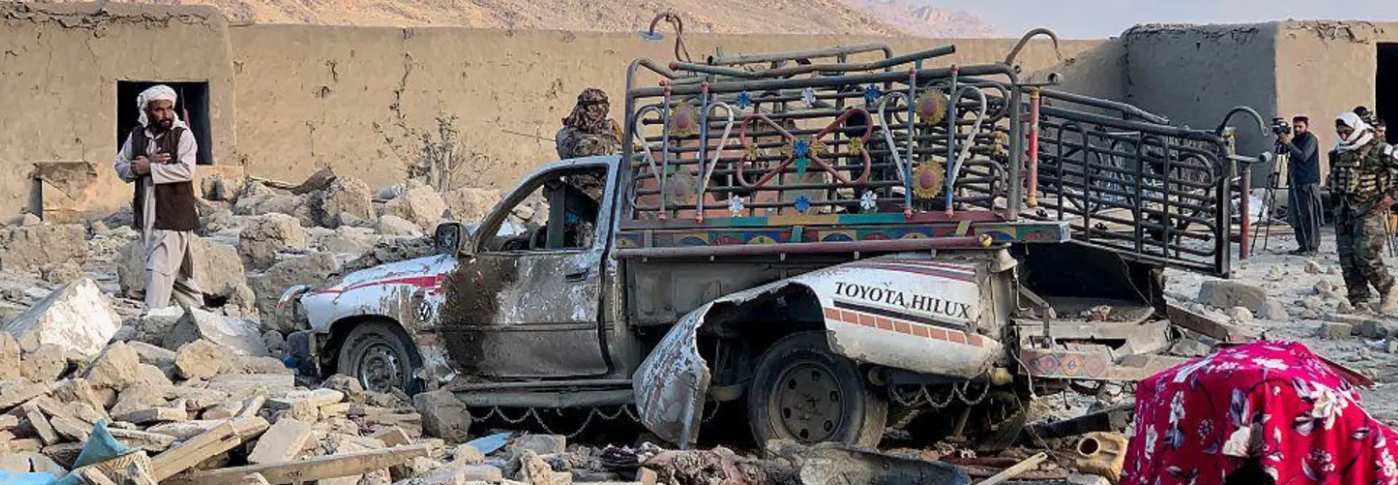

Pakistan has carried out multiple overnight air strikes on Afghanistan, reportedly killing at least 18 people, including women and children. The attacks targeted seven alleged militant camps and hideouts near the Pakistan-Afghanistan border following recent suicide bombings in Pakistan.
Get the latest headlines in your email 
Islamabad stated the strikes focused on camps of the banned Tehreek-i-Taliban Pakistan and its affiliates, actions justified as a "retributive response" to terror attacks, such as the one on a Shia mosque in Islamabad. Pakistan accuses the Afghan Taliban of sheltering these militants and failing to act against them, claiming conclusive evidence of their activities.
The Taliban condemned the strikes, calling them a blatant violation of Afghanistan's territorial integrity and international law. They warned of an appropriate response and criticized Pakistan's military intelligence operations. The Taliban claimed the strikes targeted civilian areas in Nangarhar and Paktika provinces, causing numerous casualties.
In Nangarhar's Girdi Kas village, a resident, Shahabuddin, reported that 18 members of his family were killed, out of 23 affected. Meanwhile, in Paktika's Bermal and Urgun districts, a guesthouse and religious school were targeted but were reportedly empty at the time, resulting in no casualties there.
These strikes come after a fragile ceasefire was agreed upon last October following deadly border clashes. Mediated by Saudi Arabia, the ceasefire had temporarily eased tensions after one of the worst bouts of fighting since the Taliban's return to power in 2021.
The renewed conflict underscores the volatility of the 1,600-mile (2,574 km) mountainous border shared by Pakistan and Afghanistan, as both nations face complex geopolitical and security challenges. The international community closely monitors the situation, with concerns about escalating violence and its broader implications.
The Taliban's defense ministry stated that these attacks signify a failure in Pakistan’s intelligence and security strategies. They emphasized the need for international intervention to prevent further breaches of Afghan sovereignty.
Meanwhile, Pakistan maintains its stance of defensive action, citing security threats posed by militants allegedly operating from Afghan territory. Relations between the two countries remain strained as they navigate accusations and counter-accusations of harboring terrorist elements.
The situation highlights the intricate web of regional politics and the difficulty in achieving lasting peace amidst longstanding rivalries and mistrust. Both countries are urged to engage in dialogue to address security concerns and avoid further escalation.
Join the discussion? 
Already a member? 
 Adapted by ASEAN Now source 22 Feb 2026