



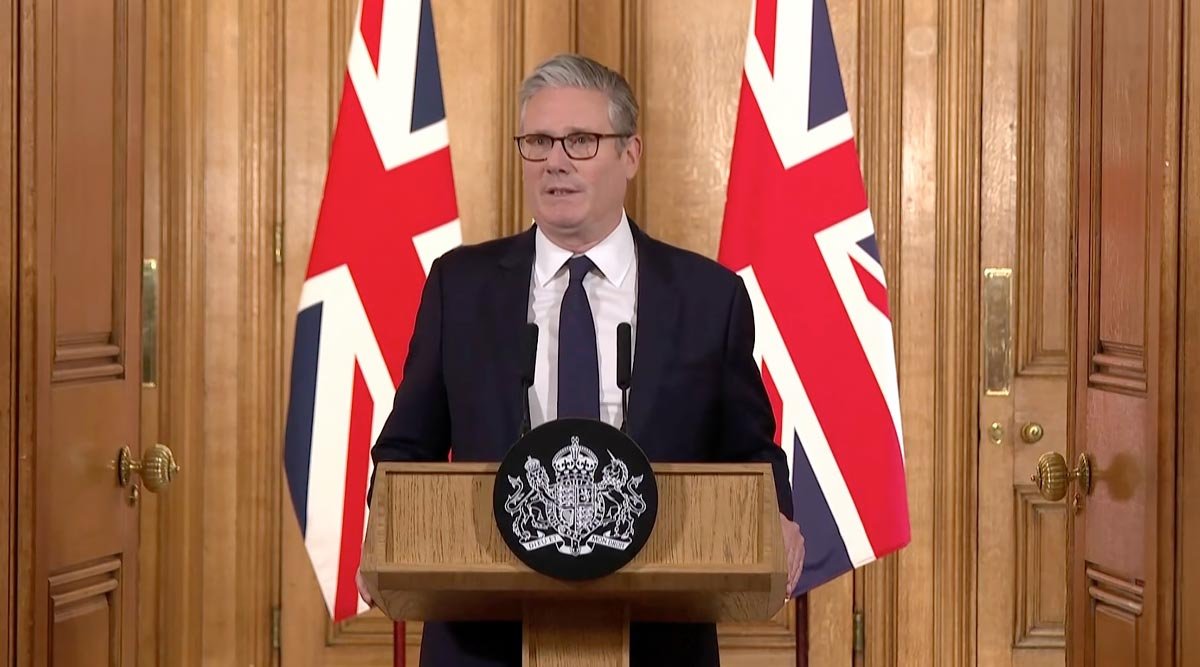

Prime Minister Keir Starmer has announced plans to ban social media access for children under 16 across the UK, saying the move is needed to protect young people from harmful online content, bullying and potential mental health risks.
Get today's headlines by email 
Speaking at Downing Street, Starmer said the measure would deliver “real change for our children and our future”, arguing that the benefits of social media no longer outweighed the risks faced by many young users.
Wider Restrictions Planned
Under the proposals, children under 16 would be barred from using major social media platforms. The government also intends to introduce restrictions on other online products, including gaming applications, with measures such as removing the ability for young users to communicate with strangers.
Starmer acknowledged that social media offers benefits for young people but said the government had concluded that a complete ban was the best option.
“This is not something I do lightly,” he said, adding that government decisions often involve difficult choices and that protecting children had become the priority.
Legislation Expected This Year
The prime minister said the government aims to pass legislation before the end of the year, with the restrictions expected to take effect next spring.
The announcement comes as concerns grow over the impact of online platforms on children’s wellbeing and safety. Starmer presented the policy as part of a broader effort to give children a fairer and safer environment in which to grow up.
Addressing concerns that teenagers may find ways around the restrictions, as some have reportedly done in Australia following similar measures, Starmer said the possibility of circumvention should not prevent action.
He compared the proposal to existing age restrictions on alcohol sales, arguing that laws serve not only as rules but also as statements of societal values. He said the ban would help shape expectations among parents and children and contribute to a safer online environment.
Support From Campaigners and Parents
The announcement was made before an audience that included campaigners advocating stronger protections for children online, including parents who had lost children. Starmer thanked those campaigners for their efforts and said he would not compromise on children's safety and happiness.
He acknowledged that implementing and enforcing the ban would be challenging but said the government had consulted widely, reviewed available evidence and examined approaches taken by countries such as Australia.
Tech Industry Concerns
Asked whether the policy could provoke opposition from major US technology companies, Starmer rejected suggestions that the move was anti-technology.
He said supporting technological innovation and artificial intelligence could coexist with stronger protections for children, arguing that the development of new technologies should not come at the expense of young people's safety.
The government also said that responses to its “growing up in the online world” consultation showed strong public backing for tougher measures, with nine in 10 parents supporting a minimum age of 16 for access to social media platforms.
Join the discussion? 
Already a member? 
 Adapted by ASEAN Now. Source 15 June 2026
Recommended Comments
Create an account or sign in to comment