



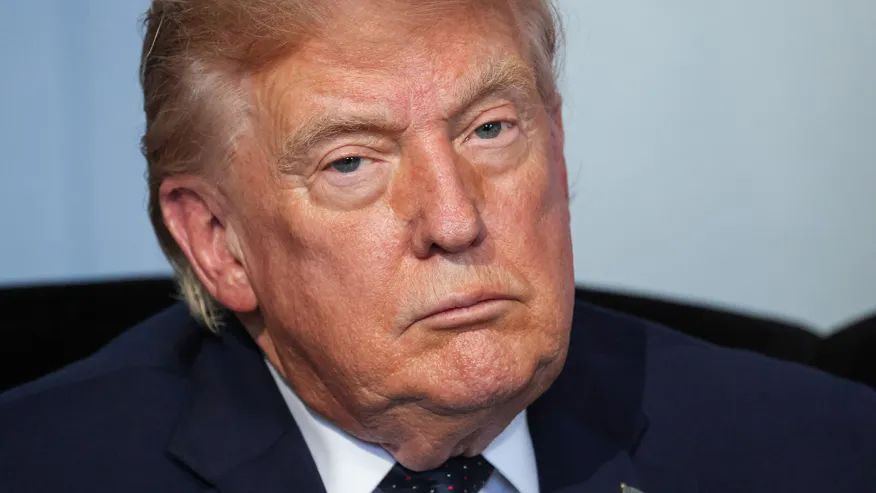

President Donald Trump defended a new memorandum of understanding (MOU) with Iran during a press conference at the G7 summit in Évian-les-Bains, France, while acknowledging the agreement may not be permanent and warning that military action could resume if Tehran fails to comply.
Get today's headlines by email 
The preliminary accord, signed electronically by Trump and Vice President JD Vance, ends the recent conflict with Iran and opens a 60-day period of negotiations focused on Tehran’s nuclear programme. Trump said a formal signing ceremony could take place later this week.
1. Trump Says Deal Depends on Iranian Compliance
Trump repeatedly stressed that the agreement is only a memorandum of understanding and not a final settlement.
He warned that if Iran fails to meet its commitments or violates unwritten understandings between the two sides, the United States could resume military operations. The president argued that recent strikes had helped bring Iran to the negotiating table and suggested force remained an option if diplomacy breaks down.
His remarks echoed earlier comments in which he threatened further bombing if Iran did not “behave.”
2. G7 Leaders Back End to Conflict
Trump highlighted support from fellow G7 leaders, saying member nations welcomed the agreement because it could help stabilize global energy markets.
A key element of the deal is the reopening of the Strait of Hormuz, a critical shipping route through which roughly one-fifth of global oil supplies pass.
The closure of the strait had pushed up energy costs, particularly affecting European economies and Japan. Trump argued that continued military operations could have kept the route closed for months, worsening economic disruption.
He also dismissed suggestions that other G7 leaders had raised concerns about whether U.S. strikes on Iran violated international law, saying their focus was instead on the threat posed by Iran.
3. Trump Defends Iran Keeping Missiles
The president also defended provisions allowing Iran to retain part of its ballistic missile arsenal.
Trump argued it would be unrealistic to deny Iran missiles while regional rivals such as Saudi Arabia and Israel maintain similar capabilities.
He said missiles were not the central issue in the negotiations, which are primarily focused on Iran’s nuclear activities. Trump added that most of Iran’s missile stockpile had already been destroyed or rendered inaccessible during the conflict.
Iranian officials have consistently identified their missile programme as a non-negotiable issue in talks with Washington.
4. Differences With Netanyahu Remain
Trump also revealed continuing disagreements with Israeli Prime Minister Benjamin Netanyahu over military operations in Lebanon.
While reaffirming Israel’s right to defend itself, Trump suggested Netanyahu should show greater restraint in responding to attacks by Hezbollah.
The president said the two leaders had a “dispute” over how aggressively Israel should respond to incidents that cause little or no damage. His comments were notably more measured than criticism he directed at Netanyahu earlier in the week after retaliatory exchanges involving Israel, Hezbollah and Iran threatened to derail the agreement.
A ceasefire in Lebanon is one of Iran’s priorities under the MOU and appears prominently in the document.
5. Warning Over Oil Supplies
Trump argued that reopening the Strait of Hormuz was essential to protecting global energy supplies.
He claimed oil reserves could have been depleted within weeks had the waterway remained closed, leading to severe economic disruption. The president said continued bombing would have prevented commercial shipping from safely passing through the strait.
While it was unclear whether Trump was referring to U.S. reserves or global inventories, international energy agencies have recently warned about tightening oil markets and declining stockpiles.
Join the discussion? 
Already a member? 
 Adapted by ASEAN Now. Source 18 June 2026
Recommended Comments
Create an account or sign in to comment