



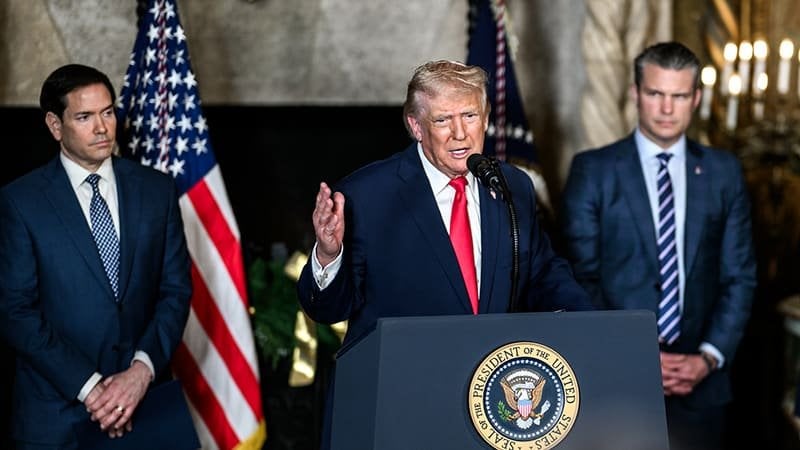

President Donald Trump has received back-to-back messages from Saudi Arabia and Israel as he weighs how to step back from a widening conflict with Iran, US and regional officials said, with diplomacy stalled and military options still on the table.
Saudi Arabia Warns Against Prolonging The Conflict
On Wednesday just after 10am, a delegation from Saudi Arabia arrived at the White House carrying a warning to Trump and Vice President JD Vance, according to people familiar with the discussions.
The visit, led by Defence Minister Khalid bin Salman—on an unannounced trip to Washington—conveyed a message from his brother, Saudi Crown Prince Mohammed bin Salman, urging de-escalation. The Saudi assessment was that continuing the war would carry major risks, the sources said.
Diplomatic pressure on Trump comes as internal and electoral concerns grow among Republicans. US officials said direct talks with Iran do not appear imminent, and while Trump has argued Iran is eager for an arrangement, others in the administration believe Tehran’s leadership is more focused on maintaining leverage over the Strait of Hormuz and sustaining strikes against American forces.
Israel Seeks Pressure, Not Diplomacy
The Saudi message followed an earlier meeting at the White House, when Israeli Prime Minister Benjamin Netanyahu discussed Iran with Trump in the Oval Office on Tuesday.
Israeli officials said Netanyahu voiced scepticism that diplomacy would succeed, and instead focused on ways to pressure Iran. That discussion included possible escalatory steps, including renewing a wider war effort.
The meetings were scheduled independently, officials said, but the close timing highlighted competing currents facing Trump as he looks for an exit from a conflict that has passed the point he had set.
The administration has also signalled frustration with Tehran’s position. US officials said Trump has grown angry at what he sees as reluctance from Iran to meet his demands, leading to tense internal conversations and sharp calls with allies.
Strait Of Hormuz Deal Seen As The Nearest Path
While regional intermediaries, including Qatar and Pakistan, have worked to revive talks, officials said there has been little sign of active negotiation. Instead, attention has shifted to a short-term arrangement aimed at reopening the Strait of Hormuz, a focus of contention after the US and Iran gave different interpretations of an agreement reached last month.
Republican lawmakers have increasingly pressed for progress that could translate into political and economic relief ahead of midterm elections. Some party figures have privately stressed the importance of restoring the shipping route, amid concerns that higher gas prices could hurt their prospects.
The White House said Iran will continue to “pay” until it returns to talks in a way Trump considers meaningful. In a statement, Trump’s press secretary said the US had entered a memorandum of understanding with Iran that Tehran broke, adding that Iran attacked commercial ships and killed American soldiers.
Escalation Plans Face Limits
US officials said military assets have continued to flow to the region while Trump weighs options. One planning concept discussed within Central Command would involve heavy bombardment over one or two weeks to target Iran’s missile capabilities.
At a hearing on Capitol Hill last week, the chairman of the Joint Chiefs of Staff, Gen. Dan Caine, said air strikes alone have limitations. US officials also said Trump has held back, after concerns from military leadership about shrinking stocks of air defence interceptors and risks of civilian casualties if infrastructure sites—such as bridges or water desalination facilities—were targeted.
Trump has previously argued that he does not want to harm non-combatants, and he has altered aspects of his own travel plans amid perceived threats, including changing aircraft on his return from Turkey earlier this month.
Fear Iran’s Decision-Making Is Controlled Internally
Officials said fears are growing that Iran’s decision-making may be driven less by political leaders and more by the powerful Revolutionary Guards, with regional negotiations therefore less effective than expected. Within the IRGC, senior commanders are competing for control, a dynamic US officials and partners say could prolong the conflict.
Trump has also suggested that strikes against US positions may not have come from the same group his team is trying to engage, pointing to earlier messages and alleged apologies. However, his aides Steve Witkoff and Jared Kushner have said they believe a deal remains possible.
During Netanyahu’s visit, Israeli officials said the prime minister attempted to reinforce that Trump remains the ultimate decision-maker, while discussing ways to increase pressure on Iran. Netanyahu told Trump the US president would have final authority, according to one official familiar with the meeting.
The Saudi minister’s message likewise reflected Riyadh’s view of the conflict. Saudi Arabia has continued joint operations with the US against Iran-backed militias in Iraq, the sources said, while still calling for de-escalation and warning that attacks on Saudi civilian infrastructure would not go unanswered. Saudi officials said they believe Iran is seeking leverage through escalation and by using proxies in Iraq and Yemen.
What Trump takes from the competing briefings was not clear. Hours after Wednesday’s meeting, he said the broader conflict would eventually be “straightened out”, while also signalling that the US would continue retaliatory strikes as talks develop.
Join the discussion? 

1 August 2026
-
 4
4
Recommended Comments
Create an account or sign in to comment