



Skip to content
View in the app

A better way to browse. Learn more.

Thailand News and Discussion Forum | ASEANNOW

A full-screen app on your home screen with push notifications, badges and more.

To install this app on iOS and iPadOS
  1. Tap the Share icon in Safari
  2. Scroll the menu and tap Add to Home Screen.
  3. Tap Add in the top-right corner.
To install this app on Android
  1. Tap the 3-dot menu (⋮) in the top-right corner of the browser.
  2. Tap Add to Home screen or Install app.
  3. Confirm by tapping Install.

Become a member

Become a member

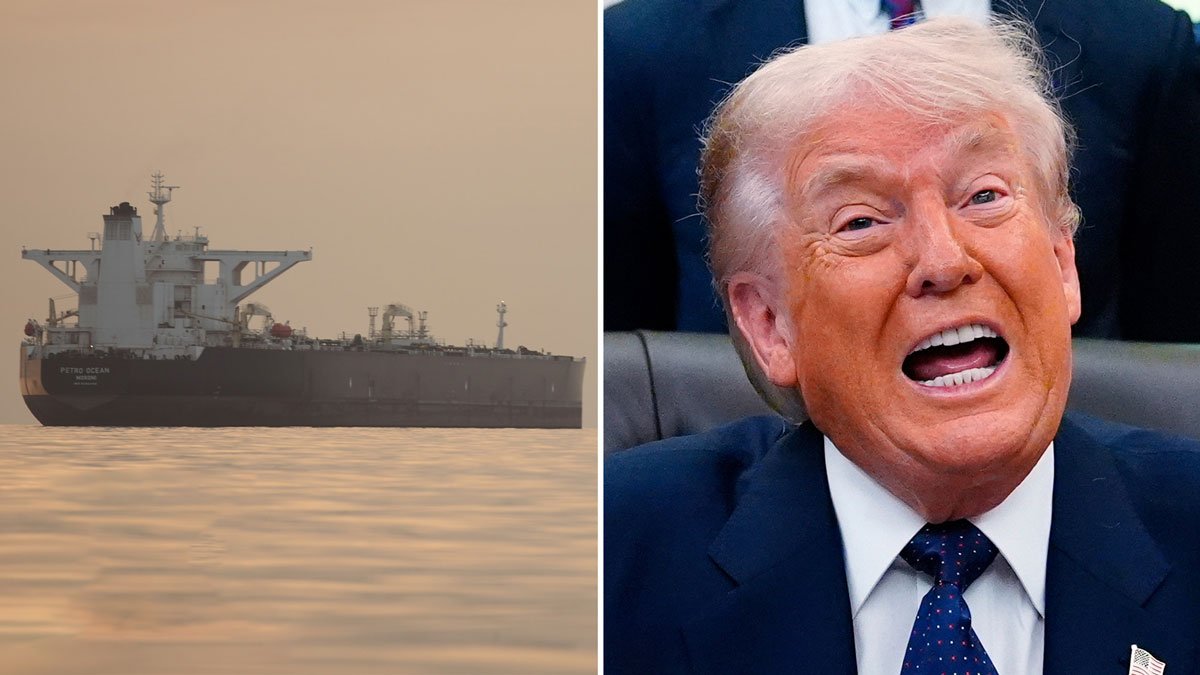
Trump Signals Shift Toward Iran War Exit

US President Donald Trump has indicated a possible end to military operations against Iran after announcing a halt to a campaign aimed at breaking Tehran’s control over the Strait of Hormuz. The decision came as reports suggested the two sides are nearing a preliminary framework for talks to end the conflict.

Get today's headlines by email image.png

The move points to a potential diplomatic opening following weeks of tension over the strategic waterway, a key route for global oil shipments. While signalling willingness to pursue negotiations, Trump warned that military strikes could resume if talks fail.

Framework for negotiations

According to officials familiar with discussions, the United States and Iran are considering a one-page memorandum of understanding that would establish a 30-day window to negotiate a broader agreement.

During that period, both sides would ease restrictions on shipping through the Strait of Hormuz while diplomats work toward reopening the route fully. The talks would also address limits on Iran’s nuclear activities and the possible lifting of US sanctions.

In a social media message, Trump said the campaign known as “Epic Fury” could end if Iran agrees to the proposed terms.

“Assuming Iran agrees to give what has been agreed to… the already legendary Epic Fury will be at an end,” he wrote, adding that the blockade would then allow the strait to reopen to all vessels, including those from Iran.

He also warned that if negotiations collapse, the United States would resume bombing operations at “a much higher level and intensity”.

Doubts over lasting agreement

Some analysts remain sceptical about whether the two sides can reach a durable settlement. Hein Goemans, a political scientist at the University of Rochester who studies how wars end, questioned whether either side is willing to make the concessions required for a long-term deal.

He argued that even if Tehran agrees to reopen the Strait of Hormuz, the confrontation has demonstrated its ability to disrupt shipping in the future, which could continue to threaten global energy markets.

Goemans also noted deep mistrust between the two governments. Iranian leaders, he said, may doubt the reliability of any deal with Washington, given the possibility that US policy could shift quickly.

Nuclear issues and political pressure

Officials say the proposed nuclear provisions resemble the framework negotiated during the administration of Barack Obama, which included a 10 to 15-year limit on uranium enrichment. Trump withdrew the United States from that agreement during his first term.

If Trump agrees to reduce sanctions or unfreeze Iranian assets as part of a new deal, he may face opposition from Israel as well as critics within his own party who favour a tougher stance on Tehran’s nuclear programme.

Talks between Washington and Tehran have repeatedly stalled in recent months. Negotiators met for more than 20 hours in Islamabad, Pakistan last month but failed to reach an agreement.

The US delegation was led by Vice President J. D. Vance, who said significant differences remained, particularly over Washington’s demand that Iran abandon its nuclear programme entirely. A follow-up meeting was later postponed after Tehran declined to participate.

Economic pressure and international role

Both countries face growing economic pressure to find a resolution. In the United States, rising fuel costs have pushed the national average gasoline price to $4.53 per gallon, according to the American Automobile Association.

Iran, meanwhile, is grappling with high inflation and worsening poverty, conditions worsened by restrictions on its energy exports.

China has also urged a diplomatic solution. During talks in Beijing, Chinese Foreign Minister Wang Yi told his Iranian counterpart Abbas Araghchi that a full cessation of hostilities should not be delayed.

Trump is expected to meet Chinese leader Xi Jinping later this month, adding further pressure to show progress toward ending the confrontation.

Join the discussion? Create account. orange.png

Already a member? haveyr-say.png


image.png
Adapted by ASEAN Now. Source 7 May 2026

User Feedback

Recommended Comments

Mavideol Star Member

Mavideol

Advanced Member
5 hours ago, dinsdale said:

Nope. The regime is holding the world hostage. The central lane has freedom of navigation and NO country should be allowed to close or demand fees for ingress or egress in such waters. Anyone who cannot see this have their brains fogged by an irrational hate for one person.

it was open before he started this stupid moves, free traffic for anybody and everybody until the moron decided to go into war based on a "feeling"

Summerinsiam Advanced Member

Summerinsiam

Member
4 hours ago, bannork said:

Project Freedom, not Operation of course as that would imply war, was abandoned after 2 days when it became obvious the US could not protect ships exiting The Strait.

All it needs is one missile to blow up a multi million dollar oil or gas tanker for the insurance companies to refuse cover and then there's no movement in or out the Strait.

So how is Trump going to destroy militarily all those possible Iranian attack weapons positioned along the Iranian long coastline?

Impossible. Negotiations are the only way and in this the Iranians hold the trump card literally.

Next week Trump goes to China, closely following the Iranian foreign minister, hopefully they'll knock some sense into the fool.

Correct. It is probable that the fifteen hundred trapped ships are unwilling to transit the strait, even with US protection. Trump has realized it is not a solution and has returned to his usual bluster, as he scrambles for a face-saving exit. A resumption of bombing will not reopen the strait, nor will it lead to the Iranians surrendering their enriched Uranium. It will only deepen his unpopularity both at home and abroad, and further entrench the hardliners running Iran. Serious negotiations, with concessions from both sides is the only viable option.

LosLobo Platinum Member

LosLobo

Advanced Member

Q&A ChatGPT:

Q: Is there any credible evidence that withdrawing from the JCPOA and bombing Iran has made the world safer? Is the current and future risk of Iran’s proliferation now worse?

A: No credible evidence shows it made the world safer. The dominant expert view is that the risk of Iran’s nuclear proliferation is higher and less controllable than during the JCPOA period.

NB Answer verified by Perplexity AI.

Eric Loh Star Member

Eric Loh

Advanced Member

No one talk about the nuclear threat from Israel. The only middle-east country that already has a nuclear arsenal and a “ wider Israel” doctrine. And they are threatened? The irony is loss by a deluge of right wing American propaganda.

MikeandDow Ruby Member

MikeandDow

Advanced Member

Would not like to be a yank traveling now !! Trump has painted a target on each Americans back Iran will get its revenge one way or another what bloody fools the yanks are !!

Cory1848 Silver Member

Cory1848

Advanced Member
4 hours ago, Thingamabob said:

Not an anti-Trumper but in this case he got it wrong, particularly in underestimating the strong control the IRGC exercises over the Iranian population.

Exactly -- A good friend of mine who’s Iranian talks about how deeply the Revolutionary Guards are embedded in the country’s economy, and how, since they were created in 1979, they have fashioned themselves into an actual “Deep State” that will be very hard for any future democratic Iran to uproot. Harassing women on the street for not properly wearing a headscarf is the least of their activities.


On not being an anti-Trumper, I would suggest that Trump’s refusal to listen to the advice of people with actual knowledge and his exclusive reliance on strict loyalists and “yes men” is the reason the US has gotten into this whole mess to begin with.

richard_smith237 Star Member

richard_smith237

Advanced Member
8 hours ago, dinsdale said:

Anyone who cannot see this have their brains fogged by an irrational hate for one person.

100%....

People whose understanding of this conflict is driven almost entirely by their hatred of one man need serious self-reflection. Their inability to step back and view it with balance exposes either a profound misunderstanding of the conflict or a complete absence of critical thought.

I often wonder how these same people would react if they were living under a rigid authoritarian theocracy ruled by an unelected Supreme Leader, an unaccountable Guardian Council, and the IRGC - where ordinary people have little political freedom or genuine democratic choice.

Those loudly condemning Donald Trump for “authoritarianism” would face prison, torture, or even execution for making equivalent criticisms of Iran’s rulers.

The irony exposes a striking lack of perspective and intellectual consistency.

richard_smith237 Star Member

richard_smith237

Advanced Member
1 hour ago, LosLobo said:

Q&A ChatGPT:

Q: Is there any credible evidence that withdrawing from the JCPOA and bombing Iran has made the world safer? Is the current and future risk of Iran’s proliferation now worse?

A: No credible evidence shows it made the world safer. The dominant expert view is that the risk of Iran’s nuclear proliferation is higher and less controllable than during the JCPOA period.

NB Answer verified by Perplexity AI.

I'll correct these for you - the answer requires more than a dumbed down meme like two line response:

1 hour ago, LosLobo said:

Q: Is there any credible evidence that withdrawing from the JCPOA and bombing Iran has made the world safer? Is the current and future risk of Iran’s proliferation now worse?

If you view this through the lens of warfare rather than diplomacy alone, there is a credible argument that Iran’s strategic position has been significantly weakened.

Iran’s nuclear capability has not been erased - the scientific knowledge, technical expertise, and access to some raw materials still exist - but its operational capacity, infrastructure, supply chains, and broader military network have been heavily degraded. Key commanders, facilities, proxies, and strategic assets have been lost or diminished, reducing Iran’s ability to project power across the region in the way it once did.

The risk of future proliferation or regional escalation still exists, but the calculation in Tehran has changed. Iran now knows that pressure may no longer come only through sanctions, which it has historically learned to endure or circumvent, but through direct and sustained military action. That alters deterrence dynamics considerably.

It is also increasingly clear that several Gulf Arab states within the GCC - acting primarily in defence of their own regional security interests, not simply as extensions of US policy - view Iranian expansionism as a direct threat. Their growing security alignment with Israel and tacit cooperation with Western powers reflects that reality.

Iran has also paid a substantial price for its long-standing support of regional proxy groups including Hamas, Hezbollah, the Houthis, various Iraqi Shia militias, and elements operating in Syria. These networks gave Iran strategic depth, but they also made it vulnerable to retaliation across multiple fronts.

Whether the world is ultimately “safer” is still debatable. What is harder to dispute is that Iran’s margin for aggressive regional manoeuvring has narrowed considerably, and those within the regime contemplating escalation now better understand the scale of the consequences they may face.

It may be difficult to argue that this is an outright “win” for the US, but it is equally difficult to deny that Iran has suffered the greater strategic loss - to its military infrastructure, its regional proxy network, and its broader ability to project power across the Middle East.

What matters now is whether Iran’s capacity to destabilise the region has been meaningfully constrained - how far its reach can extend through proxies, militias, and coercive influence to fuel further regional tensions or threaten critical trade routes.

People often focus solely on the Strait of Hormuz, but Iran’s influence over the Houthis also created major risks to international shipping through the Gulf of Aden and the Red Sea corridor. Iran’s strategic leverage has long relied on the implicit threat that it, directly or indirectly, could disrupt global energy flows and commercial shipping lanes whenever tensions escalated.

If that capability is reduced - if the cost of escalation now outweighs the benefit - then that is not simply a win for one country. It is a strategic gain for global trade stability, regional security, and every nation dependent on free navigation through those waterways.

JerryM Gold Member

JerryM

Advanced Member
7 minutes ago, richard_smith237 said:

It is also increasingly clear that several Gulf Arab states within the GCC - acting primarily in defence of their own regional security interests, not simply as extensions of US policy - view Iranian expansionism as a direct threat. Their growing security alignment with Israel and tacit cooperation with Western powers reflects that reality.

Trump’s abrupt U-turn on a plan to reopen the Strait of Hormuz came after backlash from allies

Saudi Arabia, a key Gulf ally, suspended the U.S. military’s ability to use its bases and airspace to carry out the operation, sources say.

May 7, 2026, 5:02 AM GMT+7

WASHINGTON — President Donald Trump’s abrupt reversal on his plan to help ships go through the Strait of Hormuz came after a key Gulf ally suspended the U.S. military’s ability to use its bases and airspace to carry out the operation, according to two U.S. officials.

Trump surprised Gulf allies by announcing “Project Freedom” on social media Sunday afternoon, the officials said, angering leadership in Saudi Arabia. In response, the Kingdom informed the U.S. it would not allow the U.S. military to fly aircraft from Prince Sultan Airbase southeast of Riyadh or fly through Saudi airspace to support the effort, the officials said.

A call between Trump and Saudi Crown Prince Mohammed bin Salman did not resolve the issue, the two U.S. officials said, forcing the president to pause Project Freedom in order to restore U.S. military access to the critical airspace.

https://www.nbcnews.com/politics/white-house/trumps-abrupt-u-turn-plan-re-open-strait-hormuz-came-backlash-allies-rcna343845

NB So maybe MBS is lacking in balance and understanding.

richard_smith237 Star Member

richard_smith237

Advanced Member
16 minutes ago, Cory1848 said:

Exactly -- A good friend of mine who’s Iranian talks about how deeply the Revolutionary Guards are embedded in the country’s economy, and how, since they were created in 1979, they have fashioned themselves into an actual “Deep State” that will be very hard for any future democratic Iran to uproot. Harassing women on the street for not properly wearing a headscarf is the least of their activities.


On not being an anti-Trumper, I would suggest that Trump’s refusal to listen to the advice of people with actual knowledge and his exclusive reliance on strict loyalists and “yes men” is the reason the US has gotten into this whole mess to begin with.

I think there is a serious argument to be made here. One of the biggest miscalculations was likely the extent of the IRGC’s grip over the Iranian population. From the outside, there was an assumption that years of repression, economic hardship, and the brutal suppression of protests had pushed the country close to internal rupture.

I suspect many in Washington believed the pressure, combined with recent unrest and the regime’s violent crackdowns, would trigger a broader uprising from within.

It never came.

Without that internal collapse, the initial US response appeared hesitant and strategically incomplete. But military force had to be measured - the world, including China, was watching, and not every capability could be exposed. Significant strategic assets and technology had to remain in reserve as deterrence.

The gamble failed to trigger the internal fracture many expected, and Iran responded by escalating tensions around key shipping routes, continuing its long-standing use of mines, seizures, proxy attacks, and threats against commercial vessels.

The US and its allies then escalated economically and militarily to further isolate and constrain Iran’s operational reach.

If the long-term outcome of all this is:

  • A significantly weakened Iranian military capability

  • A degraded nuclear infrastructure and reduced breakout potential

  • Iran losing the ability to use the Strait of Hormuz as a tool of coercion or economic blackmail

  • Reduced Iranian influence over proxy threats extending into the Gulf of Aden and Red Sea shipping corridors

  • The restoration of secure and uninterrupted global shipping routes without constant fear of Iranian interference

…then that would represent a major strategic shift for the region and for global trade.

And this threat is not theoretical or new. For decades, maritime operators, offshore installations, and commercial shipping interests have conducted contingency exercises and security planning around the possibility of direct or proxy-driven Iranian disruption. Much of it never reaches headlines, but within the industry the risk has always been taken very seriously.

What remains unknown is how different the world may look ten years from now because of these actions.

  • Would global trade and energy markets have faced far greater long-term costs had Iran gained even stronger leverage over critical shipping corridors?

  • Would nothing really have changed at all?

  • Or will this intervention ultimately lead to freer navigation, more secure trade routes, and reduced global shipping costs because a line was finally drawn against the use of maritime chokepoints as geopolitical leverage?

That is the real strategic question.

Iran’s ability - directly or through proxies - to threaten commercial shipping through the Strait of Hormuz, the Red Sea, and the Gulf of Aden was never theoretical. The threat has existed for decades and has repeatedly affected global shipping, insurance costs, naval deployments, and maritime security planning.

If the latter proves true, then I would view that as a strategic win - regardless of anyone’s opinion of a single political figure some shortsightedly blame for “escalating” a situation that was, in reality, already deep into a cycle of ongoing escalation long before direct action was taken.

richard_smith237 Star Member

richard_smith237

Advanced Member
13 minutes ago, JerryM said:

Trump’s abrupt U-turn on a plan to reopen the Strait of Hormuz came after backlash from allies

Saudi Arabia, a key Gulf ally, suspended the U.S. military’s ability to use its bases and airspace to carry out the operation, sources say.

May 7, 2026, 5:02 AM GMT+7

WASHINGTON — President Donald Trump’s abrupt reversal on his plan to help ships go through the Strait of Hormuz came after a key Gulf ally suspended the U.S. military’s ability to use its bases and airspace to carry out the operation, according to two U.S. officials.

Trump surprised Gulf allies by announcing “Project Freedom” on social media Sunday afternoon, the officials said, angering leadership in Saudi Arabia. In response, the Kingdom informed the U.S. it would not allow the U.S. military to fly aircraft from Prince Sultan Airbase southeast of Riyadh or fly through Saudi airspace to support the effort, the officials said.

A call between Trump and Saudi Crown Prince Mohammed bin Salman did not resolve the issue, the two U.S. officials said, forcing the president to pause Project Freedom in order to restore U.S. military access to the critical airspace.

https://www.nbcnews.com/politics/white-house/trumps-abrupt-u-turn-plan-re-open-strait-hormuz-came-backlash-allies-rcna343845

There are important distinctions here that should not be ignored.

The specific claim that the Trump–MBS call “did not resolve the issue” is not publicly verifiable from open sources. That detail rests entirely on two anonymous US officials cited by NBC, with other outlets repeating NBC’s reporting rather than independently confirming it.

It is also important to separate operational restrictions from a total withdrawal of US access. The US military is still operating from Prince Sultan Air Base today. What appears to have changed is Saudi permission for certain operational uses connected specifically to the recent Hormuz initiative - not the removal of the broader US military presence.

And while Saudi influence clearly matters, this does not mean the US suddenly lacks military options. The US maintains numerous bases, naval assets, and regional partnerships across the Middle East from which operations could still be launched if required.

This demonstrates is that the US is not acting entirely unilaterally. Regional allies - particularly Gulf states - still have influence over how, when, and from where military action is conducted because they will ultimately live with the regional consequences long after headlines fade.

As for NBC itself - it is fair to say the network is often perceived as broadly critical of Trump, particularly in its political coverage. That does not automatically make the reporting false, but it does mean anonymous-source stories should be treated cautiously until corroborated by official statements or multiple independently verified sources.

jts-khorat Gold Member

jts-khorat

Advanced Member
8 hours ago, dinsdale said:

Nope. The regime is holding the world hostage. The central lane has freedom of navigation and NO country should be allowed to close or demand fees for ingress or egress in such waters. Anyone who cannot see this have their brains fogged by an irrational hate for one person.

According to what law? UNCLOS? Iran is not signatory, so it is not binding for them.

A quick guess: is the USA a signatory, or do they only bring up international law when it suits them momentarily?

I give you already part of the answer, you can research the rest yourself: Americans are known as the hypocrites of the world.

newnative Diamond Member

newnative

Advanced Member

So, at least 25 billion dollars spent, and maybe as much as 50 billion, on this continuing boondoggle.

jts-khorat Gold Member

jts-khorat

Advanced Member
1 hour ago, Cory1848 said:

Exactly -- A good friend of mine who’s Iranian talks about how deeply the Revolutionary Guards are embedded in the country’s economy, and how, since they were created in 1979, they have fashioned themselves into an actual “Deep State” that will be very hard for any future democratic Iran to uproot.

Let's not fortget why we do have a Revolutionary Guard in Iran: the USA decided 1953, that it would be better to not work together with a democratic government, but to do some regime change and support a king instead. A pattern that was repeated several times over in the meantime by the USA.

The USA-backed Shah regime was then so repressive, that there was a revolution in 1979, the Revolutionary Guard being created as a direct result. In a sense, the Ayatollahs would not have been possible without American meddling.

If only one could learn from history, or at least see where the parallels to today's actions lie...

jts-khorat Gold Member

jts-khorat

Advanced Member
56 minutes ago, richard_smith237 said:

Iran’s nuclear capability has not been erased - the scientific knowledge, technical expertise, and access to some raw materials still exist - but its operational capacity, infrastructure, supply chains, and broader military network have been heavily degraded. Key commanders, facilities, proxies, and strategic assets have been lost or diminished, reducing Iran’s ability to project power across the region in the way it once did.

The risk of future proliferation or regional escalation still exists, but the calculation in Tehran has changed. Iran now knows that pressure may no longer come only through sanctions, which it has historically learned to endure or circumvent, but through direct and sustained military action. That alters deterrence dynamics considerably.

You just have presented the most cogent argument why Iran will do absolutely everything in their power to have a bomb as soon as possible.

Before, they were just using enrichment as a pressure tool to talk about sanctions relief. After having been attacked unprovoked several times now, the calculation surely has changed. Look who has not been attacked, even though they have famine and peasants dieing by the thousands each year: North Korea.

I would not call that any improvement of the situation...!

Cory1848 Silver Member

Cory1848

Advanced Member
10 minutes ago, jts-khorat said:

Let's not fortget why we do have a Revolutionary Guard in Iran: the USA decided 1953, that it would be better to not work together with a democratic government, but to do some regime change and support a king instead. A pattern that was repeated several times over in the meantime by the USA.

The USA-backed Shah regime was then so repressive, that there was a revolution in 1979, the Revolutionary Guard being created as a direct result. In a sense, the Ayatollahs would not have been possible without American meddling.

If only one could learn from history, or at least see where the parallels to today's actions lie...

Well, yes, certainly. But the Brits were equally responsible for the 1953 coup, and it was British oil interests (the predecessor of British Petroleum) that were threatened by Mosaddegh’s policy of nationalization. So it was British (and US) business interests that prompted the coup, and an autocrat under one’s thumb is usually easier for foreign powers to control than a messy democracy.

jts-khorat Gold Member

jts-khorat

Advanced Member
1 minute ago, Cory1848 said:

an autocrat under one’s thumb is usually easier for foreign powers to control than a messy democracy.

Not disagreeing there from a power politics point of view.

But if you call yourself the policeman of the world, the harbinger of freedom and democracy, it stinks. A smiling bully is still a bully -- and a war crime is still a war crime, even if it was perpetrated by the USA (a good percentage of the population seems even proud to cheer on rapists, felons and those guilty of the worst of war crimes).

Looking at the number of deaths in the Middle East, especially of civilians, the USA is outclassing amateurs like the Iranian regime literally manifold.

Eric Loh Star Member

Eric Loh

Advanced Member
42 minutes ago, richard_smith237 said:

I think there is a serious argument to be made here. One of the biggest miscalculations was likely the extent of the IRGC’s grip over the Iranian population. From the outside, there was an assumption that years of repression, economic hardship, and the brutal suppression of protests had pushed the country close to internal rupture.

I suspect many in Washington believed the pressure, combined with recent unrest and the regime’s violent crackdowns, would trigger a broader uprising from within.

It never came.

Without that internal collapse, the initial US response appeared hesitant and strategically incomplete. But military force had to be measured - the world, including China, was watching, and not every capability could be exposed. Significant strategic assets and technology had to remain in reserve as deterrence.

The gamble failed to trigger the internal fracture many expected, and Iran responded by escalating tensions around key shipping routes, continuing its long-standing use of mines, seizures, proxy attacks, and threats against commercial vessels.

The US and its allies then escalated economically and militarily to further isolate and constrain Iran’s operational reach.

If the long-term outcome of all this is:

  • A significantly weakened Iranian military capability

  • A degraded nuclear infrastructure and reduced breakout potential

  • Iran losing the ability to use the Strait of Hormuz as a tool of coercion or economic blackmail

  • Reduced Iranian influence over proxy threats extending into the Gulf of Aden and Red Sea shipping corridors

  • The restoration of secure and uninterrupted global shipping routes without constant fear of Iranian interference

…then that would represent a major strategic shift for the region and for global trade.

And this threat is not theoretical or new. For decades, maritime operators, offshore installations, and commercial shipping interests have conducted contingency exercises and security planning around the possibility of direct or proxy-driven Iranian disruption. Much of it never reaches headlines, but within the industry the risk has always been taken very seriously.

What remains unknown is how different the world may look ten years from now because of these actions.

  • Would global trade and energy markets have faced far greater long-term costs had Iran gained even stronger leverage over critical shipping corridors?

  • Would nothing really have changed at all?

  • Or will this intervention ultimately lead to freer navigation, more secure trade routes, and reduced global shipping costs because a line was finally drawn against the use of maritime chokepoints as geopolitical leverage?

That is the real strategic question.

Iran’s ability - directly or through proxies - to threaten commercial shipping through the Strait of Hormuz, the Red Sea, and the Gulf of Aden was never theoretical. The threat has existed for decades and has repeatedly affected global shipping, insurance costs, naval deployments, and maritime security planning.

If the latter proves true, then I would view that as a strategic win - regardless of anyone’s opinion of a single political figure some shortsightedly blame for “escalating” a situation that was, in reality, already deep into a cycle of ongoing escalation long before direct action was taken.

IRGC's grip is not an assumption. The US Intelligence have consistently indicated that the Iran regime is deeply entrenched and not at risk of any collapse even if they suffered significant military pressure. Trump acted against the intelligence assessment and perhaps mis-guided by Netanyahu's lies. Trump was even told that there were no nuclear threats.

The Hormuz Straits have never been closed before until the unprovoked attack by US and Israel. Closing the Straits also hurt Iran's economy. Global commerce wouldn't need to worry about the Straits closure until this needless war started and force Iran to leverage. It has been open for hundreds of years without any problems.

Cory1848 Silver Member

Cory1848

Advanced Member
6 minutes ago, jts-khorat said:

Not disagreeing there from a power politics point of view.

But if you call yourself the policeman of the world, the harbinger of freedom and democracy, it stinks. A smiling bully is still a bully -- and a war crime is still a war crime, even if it was perpetrated by the USA (a good percentage of the population seems even proud to sheer on rapists, felons and those guilty of the worst of war crimes).

Looking at the number of deaths in the Middle East, especially of civilians, the USA is outclassing amateurs like the Iranian regime literally manifold.

I was in no way condoning the 1953 coup, or other military actions initiated by the US since then, merely pointing out that the coup was a joint effort by two Western aggressors. And the current attack on Iran (another joint effort, not forgetting the Israelis) has amounted to nothing less than terrorism.

Cory1848 Silver Member

Cory1848

Advanced Member
1 hour ago, richard_smith237 said:

I think there is a serious argument to be made here. One of the biggest miscalculations was likely the extent of the IRGC’s grip over the Iranian population. From the outside, there was an assumption that years of repression, economic hardship, and the brutal suppression of protests had pushed the country close to internal rupture.

I suspect many in Washington believed the pressure, combined with recent unrest and the regime’s violent crackdowns, would trigger a broader uprising from within.

It never came.

Without that internal collapse, the initial US response appeared hesitant and strategically incomplete. But military force had to be measured - the world, including China, was watching, and not every capability could be exposed. Significant strategic assets and technology had to remain in reserve as deterrence.

The gamble failed to trigger the internal fracture many expected, and Iran responded by escalating tensions around key shipping routes, continuing its long-standing use of mines, seizures, proxy attacks, and threats against commercial vessels.

The US and its allies then escalated economically and militarily to further isolate and constrain Iran’s operational reach.

If the long-term outcome of all this is:

  • A significantly weakened Iranian military capability

  • A degraded nuclear infrastructure and reduced breakout potential

  • Iran losing the ability to use the Strait of Hormuz as a tool of coercion or economic blackmail

  • Reduced Iranian influence over proxy threats extending into the Gulf of Aden and Red Sea shipping corridors

  • The restoration of secure and uninterrupted global shipping routes without constant fear of Iranian interference

…then that would represent a major strategic shift for the region and for global trade.

And this threat is not theoretical or new. For decades, maritime operators, offshore installations, and commercial shipping interests have conducted contingency exercises and security planning around the possibility of direct or proxy-driven Iranian disruption. Much of it never reaches headlines, but within the industry the risk has always been taken very seriously.

What remains unknown is how different the world may look ten years from now because of these actions.

  • Would global trade and energy markets have faced far greater long-term costs had Iran gained even stronger leverage over critical shipping corridors?

  • Would nothing really have changed at all?

  • Or will this intervention ultimately lead to freer navigation, more secure trade routes, and reduced global shipping costs because a line was finally drawn against the use of maritime chokepoints as geopolitical leverage?

That is the real strategic question.

Iran’s ability - directly or through proxies - to threaten commercial shipping through the Strait of Hormuz, the Red Sea, and the Gulf of Aden was never theoretical. The threat has existed for decades and has repeatedly affected global shipping, insurance costs, naval deployments, and maritime security planning.

If the latter proves true, then I would view that as a strategic win - regardless of anyone’s opinion of a single political figure some shortsightedly blame for “escalating” a situation that was, in reality, already deep into a cycle of ongoing escalation long before direct action was taken.

I have little argument with your analysis, given the situation as it currently stands. However, I place full blame on the “single political figure” you refer to, (a) for reneging on Obama’s earlier agreement with Iran (which we’d be lucky to get back to), out of sheer fecklessness and spite; and (b) needlessly attacking Iran a few months ago, leading Americans into a war that no Americans want, killing thousands of civilians in Iran, and throwing the global economy into turmoil. This is what happens when a stupid person who demands blind loyalty over expertise is in control.

Mavideol Star Member

Mavideol

Advanced Member
1 hour ago, JerryM said:

Trump’s abrupt U-turn on a plan to reopen the Strait of Hormuz came after backlash from allies

Saudi Arabia, a key Gulf ally, suspended the U.S. military’s ability to use its bases and airspace to carry out the operation, sources say.

May 7, 2026, 5:02 AM GMT+7

WASHINGTON — President Donald Trump’s abrupt reversal on his plan to help ships go through the Strait of Hormuz came after a key Gulf ally suspended the U.S. military’s ability to use its bases and airspace to carry out the operation, according to two U.S. officials.

Trump surprised Gulf allies by announcing “Project Freedom” on social media Sunday afternoon, the officials said, angering leadership in Saudi Arabia. In response, the Kingdom informed the U.S. it would not allow the U.S. military to fly aircraft from Prince Sultan Airbase southeast of Riyadh or fly through Saudi airspace to support the effort, the officials said.

A call between Trump and Saudi Crown Prince Mohammed bin Salman did not resolve the issue, the two U.S. officials said, forcing the president to pause Project Freedom in order to restore U.S. military access to the critical airspace.

https://www.nbcnews.com/politics/white-house/trumps-abrupt-u-turn-plan-re-open-strait-hormuz-came-backlash-allies-rcna343845

NB So maybe MBS is lacking in balance and understanding.

Trump doesn't understand that it takes 2 to tango, he thinks he can do it alone without consulting with allies... he should tread carefully as sometimes previous allies could become foes

MikeandDow Ruby Member

MikeandDow

Advanced Member
1 hour ago, Mavideol said:

Trump doesn't understand that it takes 2 to tango, he thinks he can do it alone without consulting with allies... he should tread carefully as sometimes previous allies could become foes

Trump is turning America into the new NK !! America is becoming Isolated nobody wants to be associated with the US nor Trade with them, Allies are deserting the USA the Yanks are now Terrorist targets, to be honest it could not happen better for a bunch of fools !!!

Autocan Advanced Member

Autocan

Member

Nice to see the Axis of Evil US-Israel-Nato (and the occasional nasty little ME puppet, e.g., the UAE) getting its collective butts kicked.

If couple of years ago someone had said it would be Iran that would take the Axis down, they would have been laughed out of the room. But here we are. Thank you, IRGC, the Persian David, for sticking it to the western Goliath.

candide Star Member

candide

Advanced Member
31 minutes ago, Autocan said:

Nice to see the Axis of Evil US-Israel-Nato (and the occasional nasty little ME puppet, e.g., the UAE) getting its collective butts kicked.

If couple of years ago someone had said it would be Iran that would take the Axis down, they would have been laughed out of the room. But here we are. Thank you, IRGC, the Persian David, for sticking it to the western Goliath.

No NATO.

Of course, you already knew it as Trump whined about it several times! 😄

Autocan Advanced Member

Autocan

Member
24 minutes ago, candide said:

No NATO.

Of course, you already knew it as Trump whined about it several times! 😄

Trump's an idiot. No one takes him, whining or "winning", seriously.

Let's look the facts. A quick online search reveals:

Ramstein Air Base in Germany is being used as a central logistical and communications hub for the U.S. war against Iran as of early 2026, particularly, ...

And I assume one can likewise go down the slave list, except maybe for Spain's Sanchez. So, again the Axis of Evil: US-Israel-Nato. And, take a bow, IRGC. Some heroes don't wear capes, only scraggy beards.

Briggsy Diamond Member

Briggsy

Advanced Member

Well, that was an excellent and judicious use of $100 Billion of US taxpayers' money.

bannork Star Member

bannork

Newsman

It's interesting that Trump hasn't come out to fiercely criticise Saudi Arabia after they refused the US use of their bases and air space during 'Project' Freedom, due to their anger at not being consulted beforehand about the 'Project.'

Hmmm, haven't we heard that complaint about zero prior consultation from allies before?

Usually he's full of vitriol and petulance when denied, slagging off the country's leader and state of military and economy.

But this time not a squeak out of him.

Hey ! Surely that's not because of the huge investments his son- in- law has in Saudi, no, surely that wouldn't deter Donald from his usual tirade?

spidermike007 Star Member

spidermike007

Advanced Member

Trump has been looking for an off-ramp for quite some time after his ridiculous and failed war of choice has resulted in zero progress and caused untold harm to the US and the world's economy. It seems as if the war was planned by real nimwits (Little Pete) who did not ever take into account a multitude of potential actions Iran could have taken to cause great harm to their adversaries.

Trump will capitulate, Trump will surrender, and Trump will lie and call it a victory. And Trump will get his head handed to him in the midterms. His popularity just continues to slip by the day, even amongst his supporters.

pomchop Ruby Member

pomchop

Advanced Member
7 hours ago, Mavideol said:

it was open before he started this stupid moves, free traffic for anybody and everybody until the moron decided to go into war based on a "feeling"

https://scontent-atl3-2.xx.fbcdn.net/v/t39.30808-6/689295859_1542662607905733_6920050144943006055_n.jpg?stp=dst-jpg_s640x640_tt6&_nc_cat=1&ccb=1-7&_nc_sid=13d280&_nc_ohc=q6zAfxgynj4Q7kNvwFHWfjw&_nc_oc=AdrSLUIqRXo3Xo-wShz6GKhi8_xA0jFbd9Fok4RYOH3OyeBmqSDpJ2P-aNg0dz3wcbQ&_nc_zt=23&_nc_ht=scontent-atl3-2.xx&_nc_gid=MeWVg8IJjzFrsWUS7L6CvQ&_nc_ss=7b2a8&oh=00_Af6ERg6JxH9MdhOSL-aewBW8Jwey5ylhGg6tG3FvIpMu1Q&oe=6A02BD4A

Create an account or sign in to comment

Account

Navigation

Search

Search

Configure browser push notifications

Chrome (Android)
  1. Tap the lock icon next to the address bar.
  2. Tap Permissions → Notifications.
  3. Adjust your preference.
Chrome (Desktop)
  1. Click the padlock icon in the address bar.
  2. Select Site settings.
  3. Find Notifications and adjust your preference.

