





Despite criticisms about potential spying risks, the UK has approved China's plan for a massive new embassy in central London. Security Minister Dan Jarvis asserted that intelligence agencies played a significant role in the assessment, and he received assurances of effective risk management. The government has repeatedly delayed the approval, attempting to strike a balance between closer ties with Beijing and security concerns.
Housing Secretary Steve Reed granted approval, subject to certain conditions. The embassy will be located at the Royal Mint Court, near sensitive fibre optic cables, which raises fears of possible infiltration of the UK’s financial system. However, the housing department stated there’s no evidence to suggest the embassy's presence would disrupt the cables, and no objections were raised by national security bodies.
Dan Jarvis highlighted measures to boost cable resilience and cited national security benefits by consolidating China's diplomatic sites into one. Leaders from MI5 and GCHQ acknowledged that they cannot eliminate risks, but they have implemented a "proportionate" security package. Conditions include starting development within three years and establishing a local steering group to handle protests. The project has faced opposition from various parties.
Conservatives, including Priti Patel, have criticised Keir Starmer for compromising national security, while Liberal Democrats warned of increased surveillance and threats to data security. Reform UK has labelled the decision a desperate attempt to appease China.
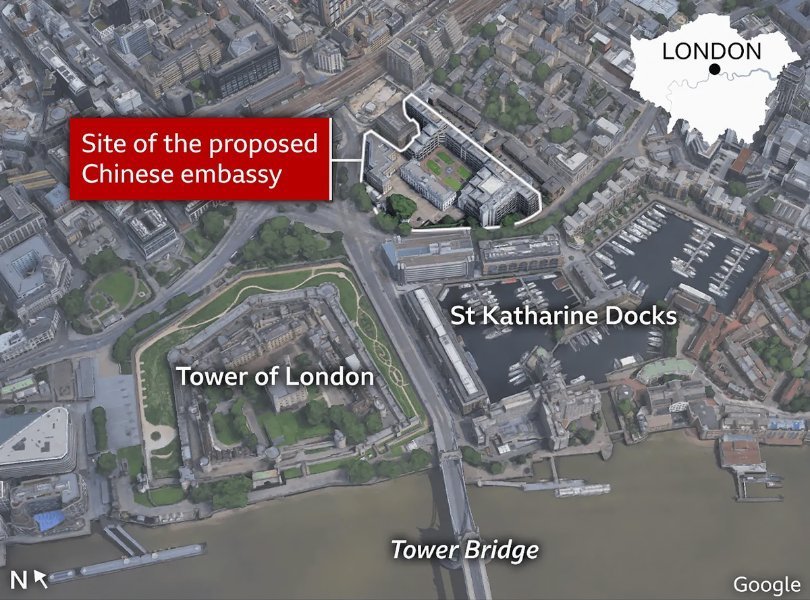
Embassies hold diplomatic significance, serving as the primary communication channel between nations. At 20,000 square metres, the new Chinese embassy will be Europe's largest of its kind and a priority for Beijing, having purchased the site for £255 million in 2018. The government intervened in 2022, overturning the initial rejection due to safety concerns.
Despite the potential advancement of UK-China diplomatic relations, the UK's own plans for redeveloping its Beijing embassy remain under consideration. Critics advocate for caution due to potential espionage and China's influence on dissidents abroad, despite Labor’s efforts for tighter trade alliances, as demonstrated by senior figures visiting China lately, reported the BBC.
Key Takeaways
The UK has approved China's embassy plans despite security worries.
National security chiefs agree on mitigation steps for potential risks.
Critics warn the move might enhance China's surveillance in the UK.
Related Story:
UK Poised to Green-Light Chinese Embassy Plans Amid Controversy


Adapted by ASEAN Now from BBC 2026-01-21


-
 1
1