



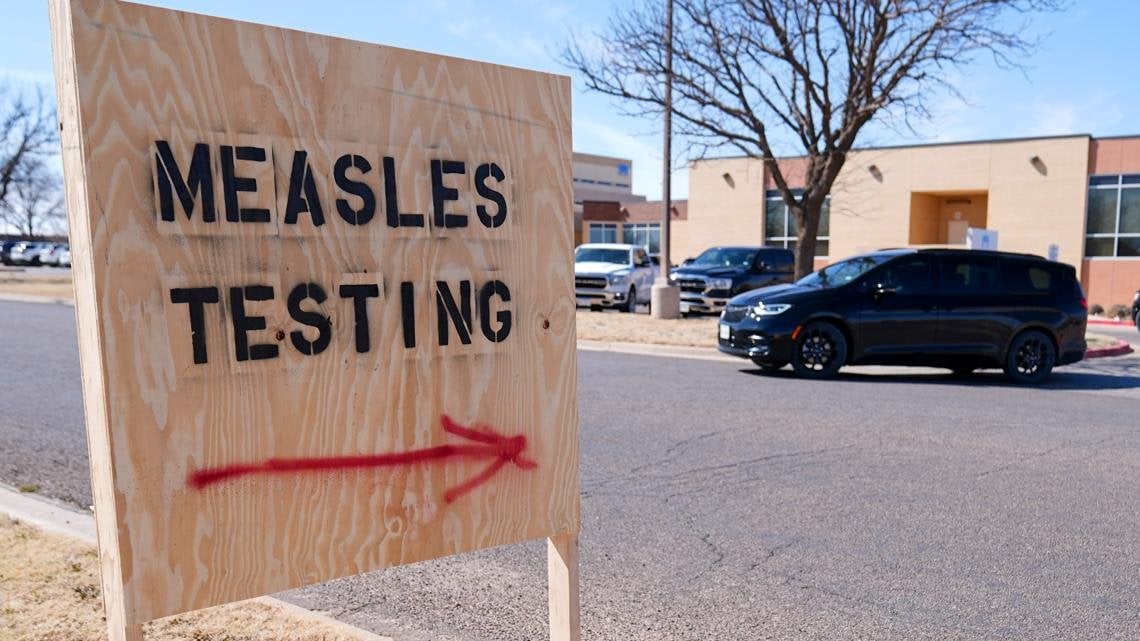

Measles cases in the United States have reached a 35-year high for a second year in a row, according to data compiled by the US Centers for Disease Control and Prevention (CDC). By just over halfway through 2026, the country has recorded more cases than in any year since 1991, surpassing the level reached last year.
Although the disease was declared eliminated in the US in 2000, more cases have been logged in the past 18 months than in the previous 25 years combined. Dozens of new cases are reported to the CDC each week, with several large outbreaks continuing from 2025 and others emerging in different parts of the country.
“This essentially is a public health failure, and it’s avoidable,” said Dr Andrew Racine, president of the American Academy of Pediatrics. Racine said most cases involve children and that nearly all of them are unvaccinated.
Record totals and linked outbreaks
Responding to measles outbreaks has become a persistent challenge for public health agencies. The CDC data show multiple outbreaks that began in 2025 continued into 2026, and new exposures have led to additional large outbreaks affecting much of the country.
South Carolina has recorded more measles cases in 2026 than any other state. In Spartanburg County, an outbreak began in October and grew to nearly 1,000 cases before ending in April, making it the largest in the US in decades.
Neely, the Rev. Scott Neely’s Unitarian Universalist Church of Spartanburg, was described as sitting in the centre of the outbreak. He said he initially felt insulated, but contact tracing later found a link: on the first Friday of 2026, the state health department reached out after a person with measles had attended the church’s annual Christmas brunch. Neely said the event potentially exposed dozens of attendees.
Tracing spread after no guest list
Neely said there was no list of who attended the potluck-style brunch, which was led by congregation volunteers and open to community members. To continue the investigation, the South Carolina Department of Public Health asked for names so staff could follow the chain of exposures and reduce further spread.
Messages were exchanged quickly among church leadership and workers. Within hours, someone shared a photo taken in the room. Neely said a team effort was then used to identify people in the image, collect contact information and pass it to the health department.
He said he did not hear further updates from the state and that transmission appeared not to extend beyond the initial exposure, which he attributed to high vaccination rates within the congregation. Neely said the experience showed how time-consuming contact tracing can be, while also reinforcing the role of vaccination.
“This story was a community trying to figure out what to do in real time,” he said, adding that cooperation and vaccinations helped.
At least 2,318 cases have been reported in 2026, with more than five months left in the year, and the total has already passed last year’s figure. Nearly 2,300 cases were reported in 2025, about 12 times the annual average since measles was declared eliminated and the worst year in more than three decades.
More than 90% of 2026 cases are linked to outbreaks and involve people who are unvaccinated or whose vaccination status is unknown, the CDC data show. Most cases this year are connected to outbreaks that started last year, including one that began along the Utah-Arizona state line and has been continuing for more than a year. International health officials are set to assess in November whether the US can still claim measles elimination status.
Strain on investigation teams
Health officials say measles is extremely contagious and investigations are labour-intensive. Dr Farrell Tobolowsky, medical director of the San Francisco Department of Public Health’s communicable disease programme, said investigators were activated after exposures from just two cases in April and that the department would struggle to handle more than one case without additional staff, amid pressures following public health funding cuts.
Virginia has seen outbreaks concentrated around lower coverage pockets despite high overall vaccination rates. In Buckingham County, an outbreak that began after a case was detected in May has been linked to more than 150 cases, with local staff meeting residents, interviewing families and working with healthcare providers. The state also used a mobile care team for testing and support at home.
In Pennsylvania’s Lancaster County, the state health department said the outbreak has continued to grow, with more than 100 cases reported this year. A spokesperson said none had received both recommended doses of the measles-mumps-rubella (MMR) vaccine, and added that two doses provide 97% lifetime protection.
In South Carolina, after the January scramble, Neely said the church began hosting mobile vaccination clinics as part of the response.
Join the discussion? 

25 July 2026
Recommended Comments
Create an account or sign in to comment