



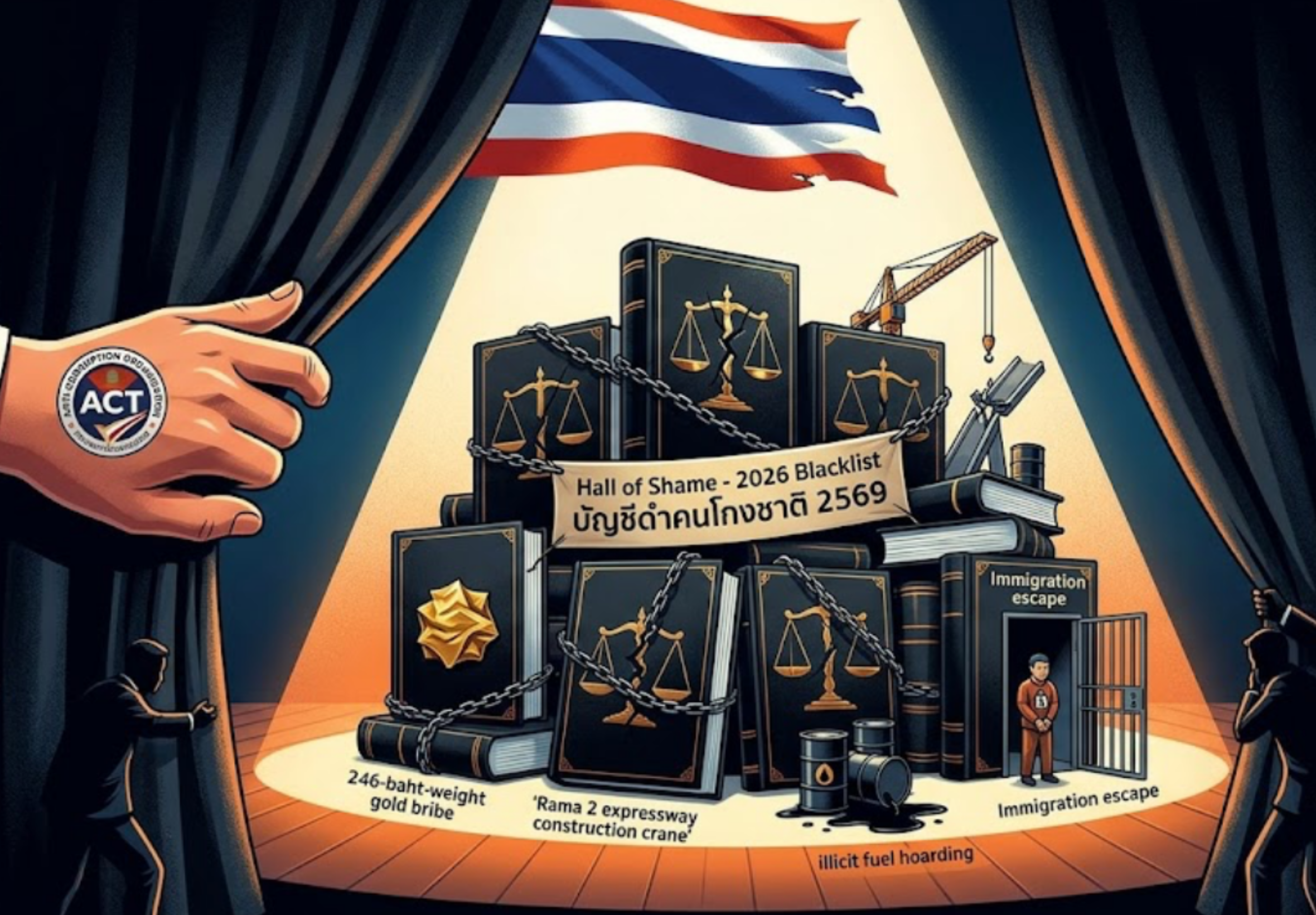

Thailand's Anti-Corruption Organisation (ACT) has placed 13 major alleged corruption cases from the first half of 2026 on a new "Hall of Shame" blacklist, saying they expose serious weaknesses in the country's rule of law.
The report, based on information available on 22 July, also identifies the alleged Senate election collusion case and the Khao Kradong land dispute as two closely watched matters that could end without a resolution.
ACT president Mana Nimitmongkol said the volume of high-profile cases emerging in just six months warranted a public record. The purpose, he said, is to show how corruption operates, raise awareness and encourage reforms to prevention systems.
Cases range from bribery to immigration allegations
The 13 cases listed by ACT include alleged bribery worth around 4.5 billion baht linked to recruitment examinations for local-administration officials, and a survey by the Joint Standing Committee on Commerce, Industry and Banking which found businesses reporting bribe demands by 10 state agencies.
Other entries are the alleged hoarding of more than 57 million litres of illicit fuel, valued at about 2.3 billion baht; the 1.6-billion-baht TH-AI Passport project; and the collapse of a Rama 2 expressway construction crane, which killed two people and injured two others.
ACT also cited the resignation of the director-general of the Royal Rainmaking and Agricultural Aviation Department after he refused a request from a minister's nephew.
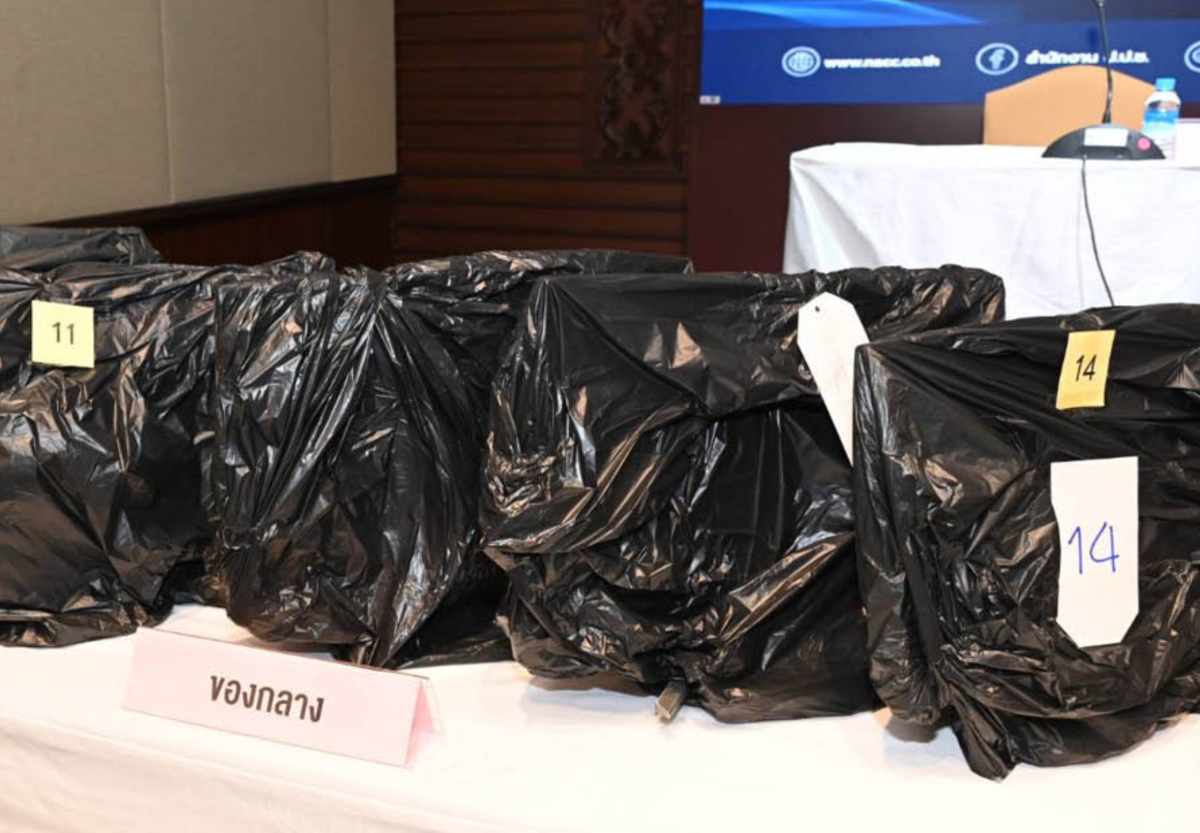
The list includes an alleged 246-baht-weight gold bribe, worth about 16 million baht, said to be linked to a National Anti-Corruption Commission commissioner and a former deputy national police chief. It also refers to the NACC's decision to close a complaint involving Saksayam Chidchob, which ACT said attracted criticism in comparison with a Constitutional Court ruling.
Further cases concern alleged influence in Phuket that led to the transfer of the provincial governor and deputy governor; the "MP 888" case involving online gambling and money laundering allegations; false birth registrations intended to secure Thai nationality for children; and the shooting of an MP in Narathiwat, in which several state officials were accused of involvement.
The final entry concerns five immigration police officers accused of staging the escape of a Chinese suspect.
Concerns over enforcement and accountability
Mana said corruption was no longer limited to direct bribery or clearly illegal acts. In some cases, he said, policy or law could be used to legitimise the pursuit of benefits, while cases involving politicians often had wide consequences.
ACT said the Senate election collusion and Khao Kradong land cases raised concerns over the use of state power and the justice system to protect the interests of politically powerful people.
Its analysis identified four rule-of-law weaknesses: absence of corruption, regulatory enforcement, criminal justice, and constraints on government power. ACT called for disclosure of procurement and beneficial-ownership information, stronger enforcement, a more transparent and independent justice process, and better scrutiny and accountability of state agencies.
The organisation said its Hall of Shame was intended as a digital footprint and a record of lessons for society, with the focus on prevention, oversight and trusted enforcement rather than punishment in individual cases alone.
Picture courtesy of The Standard
Join the discussion? 

24 July 2026
Recommended Comments
Create an account or sign in to comment