




Skip to content
View in the app

A better way to browse. Learn more.

Thailand News and Discussion Forum | ASEANNOW

A full-screen app on your home screen with push notifications, badges and more.

To install this app on iOS and iPadOS
  1. Tap the Share icon in Safari
  2. Scroll the menu and tap Add to Home Screen.
  3. Tap Add in the top-right corner.
To install this app on Android
  1. Tap the 3-dot menu (⋮) in the top-right corner of the browser.
  2. Tap Add to Home screen or Install app.
  3. Confirm by tapping Install.

Brit Backpacker Hurt in Crash Faces Large Bill

A British backpacker travelling in Thailand has appealed for help after she was seriously injured in a motorbike crash and left with mounting medical bills when her travel insurance was found to be invalid.

Get today's headlines by email image.png

Chloe Foster, 26, from Medway, Kent, was attending a full moon party on Koh Pha-Ngan last Friday, 1 May, when she met a 20-year-old British tourist who offered her a lift on his motorbike. Speaking from her hospital bed, Foster said the rider was travelling “pretty fast” before the bike suddenly “did a whole 360”, throwing her from the vehicle and knocking her unconscious.

Foster said she later learned the man had fled the scene after the crash, leaving her alone on the roadside until another person found her and arranged medical help. She described waking up in hospital in Thailand as one of the “scariest moments” of her life.

The backpacker suffered multiple injuries, including a broken foot, a fractured cheek and a bloodshot eye. She also said the facial injury had left half of her face “paralysed”. After the crash, Foster discovered that her travel insurance policy would not cover her treatment costs.
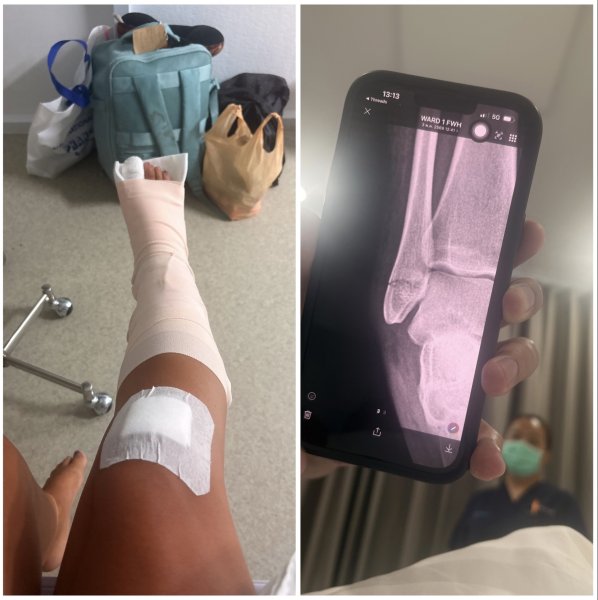
image.jpeg

Although she had taken out insurance before travelling, she said the policy became invalid because she had exceeded the 31-day maximum limit allowed for a single trip under the terms and conditions. In a statement shared through a GoFundMe page set up to cover her medical expenses, Foster said: “I was left alone and unconscious on the side of the road after a hit-and-run in Thailand.”

She added: “I was a passenger on a motorbike when it crashed. The driver got up and left me there, without calling for help. I don’t remember any of it, but I know I was lying there alone, unconscious, until someone found me and thankfully got me to the hospital.”

Foster said she now faces medical costs already exceeding GBP4,000, with bills continuing to rise as further treatment is required. She said she felt “scared, vulnerable and honestly a bit lost” while recovering alone far from home.

The incident has also prompted Foster to warn other travellers to carefully check the terms of their insurance policies before travelling abroad. She urged holidaymakers to read the “fine print” closely and to be cautious about accepting rides from people they do not know, especially if alcohol may be involved.

The Daily Mall reported the case highlights the financial risks travellers can face overseas when insurance policies contain restrictions linked to trip length or activities such as riding on motorbikes. Authorities have not released further details about the crash or whether any investigation is under way into the actions of the rider who allegedly left the scene.
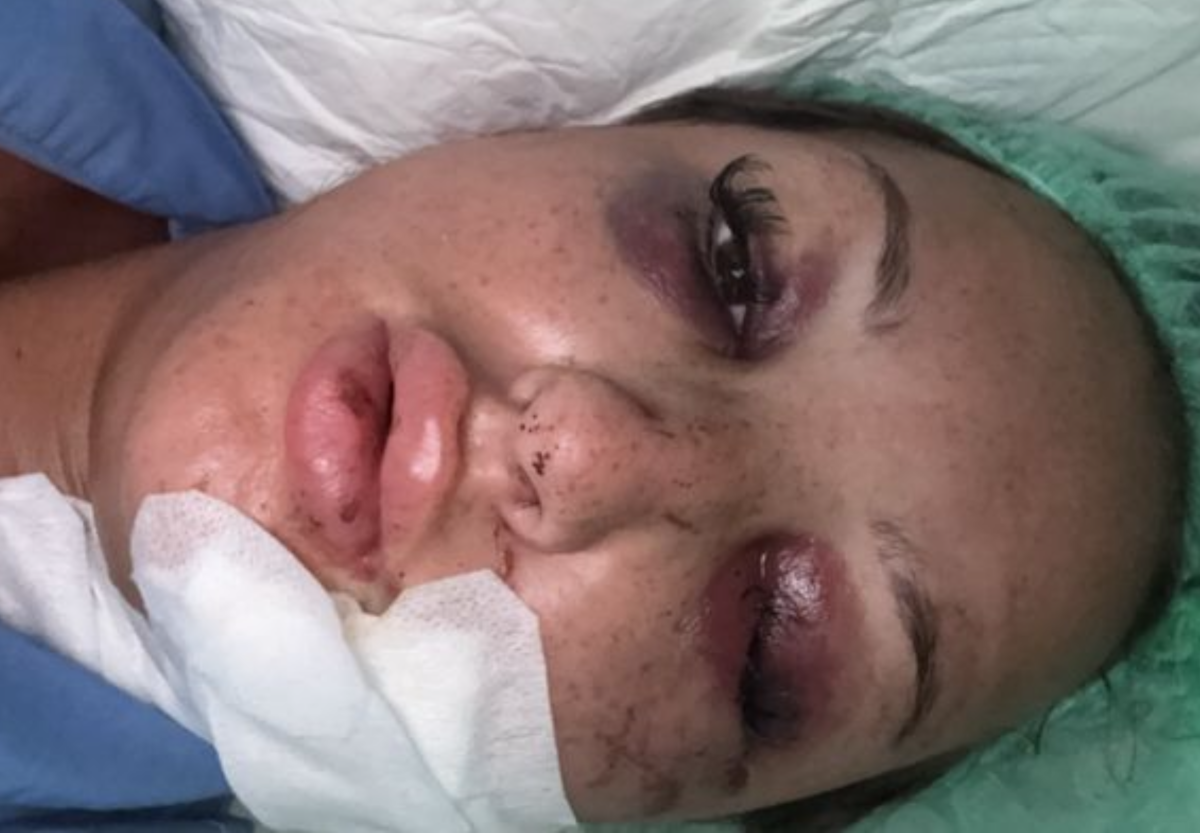
image.png

Pictures courtesy of Daily Mail

Join the discussion? image.png

Already a member? image.png

image.png Adapted by ASEAN Now Dailymail 9 May 2026

User Feedback

Recommended Comments

richard_smith237 Star Member

richard_smith237

Advanced Member
39 minutes ago, Liverpool Lou said:

The "fine print" that is referred to in discussions such as those on AN is worded that way in order to suggest that there's something nefarious or fraudulent about the policy conditions. What you are suggesting they do is just false because under FCA rules, insurers must treat customers fairly and communicate in a clear, fair, and not misleading way, aiming for plain language that the average policyholder understands.

What I am “suggesting” insurers do is precisely what they already do. We have been through this dance before (you and I).

Previously, it took me nearly two months to obtain a clear written response from an insurer regarding their interpretation of “dangerous activities”. I wanted straightforward clarification as to whether activities such as skiing, cycling on public roads or tracks, or riding pillion on a motorcycle taxi would be covered.

All of those activities could arguably be considered “dangerous” depending entirely upon interpretation, and the vague wording effectively created discretionary room for the insurer to later dispute or deny a claim.

That is precisely the problem with broadly drafted policy language. Instead of explicitly listing covered and excluded activities in clear terms, insurers often rely on ambiguous terminology that can be interpreted differently at the point of sale than at the point of claim.

The same issues exist now. I am still attempting to establish whether a dual national - holding both UK and Thai nationality - can validly obtain travel insurance when travelling from the UK to Thailand for a six-week summer stay. Even that seemingly simple scenario becomes mired in questions surrounding residency definitions, “country of habitual residence”, trip origination clauses, nationality exclusions, and whether the insurer considers Thailand to be the insured’s “home country” for the purposes of cover (even though they have a UK address and NHS number / registered locally in the UK etc)

The clarity you misleadingly suggest exists simply does not exist in practice. We can reasonably infer that you either work within, or closely alongside, the insurance industry given the vigour with which you defend it, but the customer experience is often very different from the theoretical position being presented.

As I said previously, I am currently deep within policy wording documentation, and it is far from clear, concise, or straightforward. The policies are lengthy, heavily cross-referenced, filled with legal and technical terminology, and obtaining definitive answers from insurers is often far more difficult than you imply.

In this case (Chloe’s case) - it seems the girls insurance was 'voided' because she'd exited and re-entered Thailand.

This can occur because some / many travel insurance policies contain highly specific territorial, routing, and residency clauses that are not obvious to the average traveller when purchasing the policy.

The insurer appears to have relied on a “trip origination” or “country of departure” clause. Although she was ultimately hospitalised in Thailand, the insurer treated the relevant journey as having commenced in Vietnam rather than the UK. As a result, they may have argued that:

  • the trip no longer qualified as a covered journey under the policy,

  • the travel fell outside the geographical scope of cover,

  • the policy only insured trips that both originated and ended in the UK,

  • or that onward travel between countries in Asia constituted a separate uninsured trip.

Many annual multi-trip policies are drafted around the assumption that each journey begins and ends in the policyholder’s country of residence. Once a traveller deviates from that structure - for example by backpacking, taking regional flights, extending stays abroad, or travelling continuously between countries - insurers may invoke exclusions buried within the policy wording.

The situation is made worse because these clauses are often:

  • dispersed throughout lengthy policy documentation,

  • written in dense legal or technical language,

  • cross-referenced across multiple sections,

  • and expressed using ambiguous terminology open to interpretation.

It is also not unusual for hospital staff, liaison officers, or even customer service representatives to initially indicate that cover exists based on a superficial review of the policy, only for the insurer’s claims department to later reject the claim after conducting a more detailed contractual assessment (which has also happened to me with health insurance).

In practical terms, what consumers believe to be “worldwide travel insurance” can ultimately prove to be conditional coverage subject to highly technical definitions relating to departure points, trip continuity, residency, transit, and policy interpretation.

klaikangwon Senior Member

klaikangwon

Member

Of course complex situation and may fail, also hard to do from hospital bed, but customer probably can dispute claim trip did not "originate" in UK, at least if "normal" tour of SEA and not "visa run residency", as this is "normal" holiday format by millions.

Of course language may be yet more specific.

Liverpool Lou Star Member

Liverpool Lou

Advanced Member
48 minutes ago, richard_smith237 said:

What I am “suggesting” insurers do is precisely what they already do

If that's the case posr an example here of specifics relating to language from an actual current policy that is so steeped in legalese that the layman cannot understand it.

Chivas Platinum Member

Chivas

Advanced Member
12 hours ago, MCos said:

Rather predictably not a lot of sympathy from those who like to put the boot into anyone who has made a youthful error of judgment

So she was unable to read then ?? if an individual trip length is a maximum of 31 days than thats what it is !

She obviously had an annual multi trip policy and as always (as many do) thought any insurer wouldnt know if she was away longer. Her passport would have exposed that fallacy in 10 seconds flat

No sympathy

richard_smith237 Star Member

richard_smith237

Advanced Member
8 minutes ago, Liverpool Lou said:

If that's the case posr an example here of specifics relating to language from an actual current policy that is so steeped in legalese that the layman cannot understand it.

1. AXA Travel Insurance Policy Wording

Actual wording: “Compliance with the terms and conditions of this Policy insofar as they relate to anything to be done or complied with by the Insured Person shall be conditions precedent to the liability of the Company”.

Why this confuses normal people ? - Almost nobody outside law understands:

• “insofar as”

• “conditions precedent”

• “liability of the Company”

Plain English: “If you fail to follow the policy rules exactly, we can refuse to pay".

2. MSIG Thailand Travel Insurance Policy

Actual wording: “In the event the Company has made claim payment in accordance with this Policy, the Company shall be subrogated to all the Insured’s rights of recovery from any person or parties for the proportion already indemnified by the Company.” 

Why this is difficult? - The average person has no idea what the following actually mean.

• “subrogated”

• “rights of recovery”

• “indemnified”

Plain English: “If we pay your claim, we may take over your legal rights to recover money from someone else”.

3. Allianz Travel Protect Single Trip Policy Wording

Actual wording: “This travel insurance policy covers only the sudden and unexpected specific situations, events and losses included in this policy, and only under the conditions described”. 

This looks harmless until you realise certain phrases give the insurer massive room to deny claims.

• “specific situations”

• “under the conditions described”

Why it’s legalese - ? A layman reads: “I’m covered”.

Legally the sentence means: “You are only covered for precisely defined events under tightly restricted conditions".

4. Allianz Existing Medical Condition Benefit

Actual wording: “A pre-existing medical condition… is defined as an illness or injury that you were seeking or receiving treatment for or had symptoms of on the day you purchased your plan, or at any time in the 120 days before you purchased it”.

Why this traps people ? - The dangerous phrase is: “had symptoms of” A normal person thinks: “I wasn’t diagnosed.”The insurer may argue: “You previously had symptoms.”That single phrase can void huge medical claims.

5. IFFCO Tokio Health Protector

Actual wording: “It means essentially our right to call upon other insurers, liable to the same insured person, to share the cost of an indemnity claim on a rateable proportion of Sum Insured".

Why this is hard to understand ? - A normal reader usually cannot decode:

• “indemnity claim”

• “rateable proportion”

• “liable to the same insured”

Plain English: “If multiple insurers cover the same loss, they may split payment between themselves.

And again - another winner from MSIG Thailand Travel Insurance Policy

Use of truly dense legalese: “The Insured shall cooperate and forward to the Company all documents and do all such acts and things as may be necessarily required for the purpose of preserving the Company’s rights and shall not act in any way to prejudice such rights of the Company”.

Most people stop understanding halfway through.

Actual meaning: “You must help us protect our legal position and must not do anything that could damage it”.

But instead of saying that simply, the policy uses:

• “preserving the Company’s rights”

• “prejudice such rights”

• “acts and things as may be necessarily required”

All of which are examples of classic insurance-law drafting - that are not readily understood by the laypeople taking out the policy in the first place - they'd need a lawyer to truly understand the policy they are taking out.

Now imagine a 20-year-old taking out an insurance policy for the first time and attempting to make sense of wording like this. Even the most deliberately obtuse observer such as yourself must surely recognise that language of this nature is not remotely easy for the ordinary person to navigate or properly understand.

Rockyroad Platinum Member

Rockyroad

Advanced Member
5 hours ago, Liverpool Lou said:

Clearly, you do not understand point (or the coverage) of health insurance.

Breaking local rules voids policies.

Screaming Gold Member

Screaming

Advanced Member
5 hours ago, Rockyroad said:

I never even use motorbike taxis and they are pros. Too much risk. Young Thais ride at 80kph no helmet too.

You are one of the smart ones and realize the many dangers of getting on a motorbike in Thailand. No need to set up a Go Fund Me account for you.

richard_smith237 Star Member

richard_smith237

Advanced Member
51 minutes ago, Liverpool Lou said:

If that's the case posr an example here of specifics relating to language from an actual current policy that is so steeped in legalese that the layman cannot understand it.

Now, I fully expect you will double down and insist this is all perfectly “standard” language - readily understandable to every ordinary person - and that if I struggle to decipher it, the failing somehow lies with me. Frankly, such a response would not surprise me in the slightest.

I indulged your little Brandolini’s Law exercise, where a straightforward observation is met with demands for exhaustive evidence and supporting links - the same performative routine so often used to bog down a simple point in unnecessary labour. It is a familiar tactic: stretch out the exchange, shift the burden endlessly, and make the response disproportionately difficult relative to the original comment.

But these patterns are entirely predictable from posters such as yourself. By the same logic, I could just as easily demand that you now provide examples of insurance policies written in language so crystal clear that they leave absolutely no room for ambiguity, interpretation, dispute, or legal challenge whatsoever. Of course, we both know that is not how insurance contracts are drafted in the real world.

As recently as two years ago - despite decades of experience dealing with insurers and their endless exclusions, and despite having been caught out before - I still very nearly found myself in exactly the same position following a serious sporting injury overseas.

Believing I was covered for treatment beyond the initial emergency care, I made the decision to travel back to Thailand rather than undergo surgery abroad. What I had not appreciated at the time was that the policy did not extend to ongoing treatment once back in Thailand. Had I not also held separate health insurance, which fortunately did cover the treatment, I could easily have been left facing a very substantial bill.

And this is precisely the point. If someone with experience navigating insurance policies can still misunderstand the scope of cover under real-world circumstances, the suggestion that such documents are always straightforward and readily understood by the average person becomes rather difficult to take seriously.

FritsSikkink Star Member

FritsSikkink

Advanced Member
11 hours ago, Kinnock said:

Normally I have little sympathy for the 'Go fund me tourists', but this lady was unlucky. If I've understood correctly, her insurance had not expired, but in the small print there was a limit on the maximum length of stay for any one trip - that's easy to miss.

And the rider running away was despicable.

And while a seasoned ex pat without health insurance could check themselves out of hospital and recover in a cheap hotel, a British tourist is going to follow the instructions of the doctor and let the bills mount up, as that's the NHS way.

And I bet most of us have done dumber things in our youth than accept a ride on a scooter.

No helmet and expired insurance, just plain stupid

FritsSikkink Star Member

FritsSikkink

Advanced Member
10 hours ago, jippytum said:

The point is tme hospital will not let you leave until. you pay the bill.

Long term expats now have to pay upfront before tests even at government hocpitals because of foreigner's not paying medical bills.

Just show your insurance card when entering, no money upfront needed.

FritsSikkink Star Member

FritsSikkink

Advanced Member
10 hours ago, Srikcir said:

Is some kind of drastic immigration necessary with these motorbike accidents rented by "tourists?" Such as rental requires at least a 1-year visa.

A drivers licenses would be a good start.

FritsSikkink Star Member

FritsSikkink

Advanced Member
9 hours ago, BusyB said:

Still absolutely no excuse at all. That is in fact leaving the scene of an accident and failing to assist an injured person. I believe they call them felonies in the States.

What they call them in the Staes has no value in Thailand or anywhere else in the world..

FritsSikkink Star Member

FritsSikkink

Advanced Member
6 hours ago, Geoff914 said:

but else where its says that I must have the correct license to ride a motorcycle?????????

The law in any country.

FritsSikkink Star Member

FritsSikkink

Advanced Member
2 hours ago, richard_smith237 said:

1. AXA Travel Insurance Policy Wording

Actual wording: “Compliance with the terms and conditions of this Policy insofar as they relate to anything to be done or complied with by the Insured Person shall be conditions precedent to the liability of the Company”.

Why this confuses normal people ? - Almost nobody outside law understands:

• “insofar as”

• “conditions precedent”

• “liability of the Company”

Plain English: “If you fail to follow the policy rules exactly, we can refuse to pay".

2. MSIG Thailand Travel Insurance Policy

Actual wording: “In the event the Company has made claim payment in accordance with this Policy, the Company shall be subrogated to all the Insured’s rights of recovery from any person or parties for the proportion already indemnified by the Company.” 

Why this is difficult? - The average person has no idea what the following actually mean.

• “subrogated”

• “rights of recovery”

• “indemnified”

Plain English: “If we pay your claim, we may take over your legal rights to recover money from someone else”.

3. Allianz Travel Protect Single Trip Policy Wording

Actual wording: “This travel insurance policy covers only the sudden and unexpected specific situations, events and losses included in this policy, and only under the conditions described”. 

This looks harmless until you realise certain phrases give the insurer massive room to deny claims.

• “specific situations”

• “under the conditions described”

Why it’s legalese - ? A layman reads: “I’m covered”.

Legally the sentence means: “You are only covered for precisely defined events under tightly restricted conditions".

4. Allianz Existing Medical Condition Benefit

Actual wording: “A pre-existing medical condition… is defined as an illness or injury that you were seeking or receiving treatment for or had symptoms of on the day you purchased your plan, or at any time in the 120 days before you purchased it”.

Why this traps people ? - The dangerous phrase is: “had symptoms of” A normal person thinks: “I wasn’t diagnosed.”The insurer may argue: “You previously had symptoms.”That single phrase can void huge medical claims.

5. IFFCO Tokio Health Protector

Actual wording: “It means essentially our right to call upon other insurers, liable to the same insured person, to share the cost of an indemnity claim on a rateable proportion of Sum Insured".

Why this is hard to understand ? - A normal reader usually cannot decode:

• “indemnity claim”

• “rateable proportion”

• “liable to the same insured”

Plain English: “If multiple insurers cover the same loss, they may split payment between themselves.

And again - another winner from MSIG Thailand Travel Insurance Policy

Use of truly dense legalese: “The Insured shall cooperate and forward to the Company all documents and do all such acts and things as may be necessarily required for the purpose of preserving the Company’s rights and shall not act in any way to prejudice such rights of the Company”.

Most people stop understanding halfway through.

Actual meaning: “You must help us protect our legal position and must not do anything that could damage it”.

But instead of saying that simply, the policy uses:

• “preserving the Company’s rights”

• “prejudice such rights”

• “acts and things as may be necessarily required”

All of which are examples of classic insurance-law drafting - that are not readily understood by the laypeople taking out the policy in the first place - they'd need a lawyer to truly understand the policy they are taking out.

Now imagine a 20-year-old taking out an insurance policy for the first time and attempting to make sense of wording like this. Even the most deliberately obtuse observer such as yourself must surely recognise that language of this nature is not remotely easy for the ordinary person to navigate or properly understand.

If you don't know words, google them.

richard_smith237 Star Member

richard_smith237

Advanced Member
7 minutes ago, FritsSikkink said:

If you don't know words, google them.

You appear, with respect, to have fundamentally misconceptualised, or perhaps insufficiently internalised, the substantive gravamen and interpretive nuance of the point I was endeavouring to communicate. In so doing, you may inadvertently exemplify precisely the category of individual who, despite possessing entirely functional linguistic capability, nevertheless remains vulnerable to overlooking the semantic intricacies, syntactical ambiguities, and jurisprudential subtleties deliberately embedded within health and travel insurance policy documentation.

To elucidate further, the issue under discussion was never confined to the literalised typographical manifestation of “fine print” in the narrow physical sense. Rather, the expression was employed in its broadly recognised colloquial and idiomatic capacity - namely, as a conventional shorthand descriptor for the labyrinthine, prolix, densely cross-referenced, and juridically insulated corpus of policy documentation upon which insurers habitually predicate both liability limitation and claim repudiation. Such usage, in my opinion - and indeed in the estimation of many others - is neither linguistically anomalous nor semantically inappropriate.

My contention was, and remains, that these policy instruments are frequently characterised by conspicuous opacity, terminological inconsistency, recursive cross-referencing, syntactic convolution, and an almost performative degree of legalistic circumlocution. By way of illustration, one of my own policies extended beyond one hundred pages in length. Under such circumstances, it is neither irrational nor unexpected that even an individual possessing considerable literacy, analytical competence, and lexical sophistication may nonetheless fail to apprehend every operative exclusion, conditional limitation, procedural caveat, or contingent qualification embedded within the documentation.

Accordingly, the somewhat glib suggestion that an individual encountering difficulty should merely “Google the words” materially misconstrues the essence of the argument being advanced. My point was never that the isolated vocabulary itself necessarily exceeded my personal level of comprehension. On the contrary, my linguistic competency is more than sufficient. The difficulty instead arises from the cumulative interaction of densely layered drafting conventions, contextual interdependencies, syntactical obfuscation, and highly specialised legal phraseology, all of which can substantially impede intelligibility even for readers possessing even above-average educational attainment and linguistic fluency.

Hopefully, the irony inherent in my deliberate adoption of an exaggeratedly sesquipedalian and ostentatiously loquacious mode of expression - employed specifically to illustrate the broader proposition that mere familiarity with individual lexical components does not, in and of itself, guarantee effortless comprehension when such components are embedded within unnecessarily elaborate, hyper-formal, and structurally convoluted prose - is not overlooked.

FritsSikkink Star Member

FritsSikkink

Advanced Member
7 minutes ago, richard_smith237 said:

You appear, with respect, to have fundamentally misconceptualised, or perhaps insufficiently internalised, the substantive gravamen and interpretive nuance of the point I was endeavouring to communicate. In so doing, you may inadvertently exemplify precisely the category of individual who, despite possessing entirely functional linguistic capability, nevertheless remains vulnerable to overlooking the semantic intricacies, syntactical ambiguities, and jurisprudential subtleties deliberately embedded within health and travel insurance policy documentation.

To elucidate further, the issue under discussion was never confined to the literalised typographical manifestation of “fine print” in the narrow physical sense. Rather, the expression was employed in its broadly recognised colloquial and idiomatic capacity - namely, as a conventional shorthand descriptor for the labyrinthine, prolix, densely cross-referenced, and juridically insulated corpus of policy documentation upon which insurers habitually predicate both liability limitation and claim repudiation. Such usage, in my opinion - and indeed in the estimation of many others - is neither linguistically anomalous nor semantically inappropriate.

My contention was, and remains, that these policy instruments are frequently characterised by conspicuous opacity, terminological inconsistency, recursive cross-referencing, syntactic convolution, and an almost performative degree of legalistic circumlocution. By way of illustration, one of my own policies extended beyond one hundred pages in length. Under such circumstances, it is neither irrational nor unexpected that even an individual possessing considerable literacy, analytical competence, and lexical sophistication may nonetheless fail to apprehend every operative exclusion, conditional limitation, procedural caveat, or contingent qualification embedded within the documentation.

Accordingly, the somewhat glib suggestion that an individual encountering difficulty should merely “Google the words” materially misconstrues the essence of the argument being advanced. My point was never that the isolated vocabulary itself necessarily exceeded my personal level of comprehension. On the contrary, my linguistic competency is more than sufficient. The difficulty instead arises from the cumulative interaction of densely layered drafting conventions, contextual interdependencies, syntactical obfuscation, and highly specialised legal phraseology, all of which can substantially impede intelligibility even for readers possessing even above-average educational attainment and linguistic fluency.

Hopefully, the irony inherent in my deliberate adoption of an exaggeratedly sesquipedalian and ostentatiously loquacious mode of expression - employed specifically to illustrate the broader proposition that mere familiarity with individual lexical components does not, in and of itself, guarantee effortless comprehension when such components are embedded within unnecessarily elaborate, hyper-formal, and structurally convoluted prose - is not overlooked.

So what is so difficult to understand about the 30 day limitation?

blaze master Diamond Member

blaze master

Advanced Member
3 hours ago, Screaming said:

You are one of the smart ones and realize the many dangers of getting on a motorbike in Thailand. No need to set up a Go Fund Me account for you.

We could always set up a go f me account though.

richard_smith237 Star Member

richard_smith237

Advanced Member
10 minutes ago, FritsSikkink said:

So what is so difficult to understand about the 30 day limitation?

The issue was never the rudimentary semantic comprehensibility of the isolated phraseology “30 day limitation” per se, but rather the jurisprudentially convoluted, contextually contingent, and structurally interdependent interpretive matrix within which such ostensibly straightforward temporal restrictions are habitually embedded throughout insurance policy documentation. In practical application, the operative construction of such provisions is frequently rendered dependent upon an unnecessarily labyrinthine amalgamation of exclusionary qualifications, jurisdictional caveats, procedural contingencies, disclosure obligations, endorsement supersessions, and recursively cross-referenced definitional sub-clauses dispersed throughout the broader contractual corpus, thereby materially obscuring what might otherwise appear facially unambiguous.

Accordingly, I have already expended an entirely disproportionate quantity of time engaged in the deconstruction and interpretive exegesis of policy instruments specifically to identify the very loopholes, restrictive contingencies, and latent ambiguities your somewhat reductive one-line response appears unwilling to acknowledge. The difficulty does not arise from lexical incomprehension, but from the intentionally prolix, syntactically obfuscatory, and structurally fragmented drafting conventions characteristic of insurance contracts, wherein seemingly unequivocal provisions are routinely diluted, qualified, contradicted, or contextually subordinated elsewhere within the documentary framework - rather like this comment itself.

wavodavo Gold Member

wavodavo

Advanced Member
18 hours ago, newbee2022 said:

I wonder if we'll see one day a #gofundme prior to the holidays just for financing

18 hours ago, newbee2022 said:

I wonder if we'll see one day a #gofundme prior to the holidays just for financing

18 hours ago, newbee2022 said:

I wonder if we'll see one day a #gofundme prior to the holidays just for financing

What a great idea , start up a go fund me page entitled... going to Thailand for end of season footy trip. Emergency money for police bail , unpaid bar bills and hospital bills and other expenses need urgently $10,000. plese help.

jacko45k Star Member

jacko45k

Advanced Member
19 hours ago, newbee2022 said:

I wonder if we'll see one day a #gofundme prior to the holidays just for financing

Possibly benefits from DWP?

jippytum Platinum Member

jippytum

Advanced Member
5 hours ago, FritsSikkink said:

Just show your insurance card when entering, no money upfront needed.

.. Do you really want us to belive Thai hospitals would accept anyones insurancr card I have had first clasc insurance cover in Thailand for over 35 years i can assure you they fo not avcept insurance cards on sight. Prior to amajor operatlon at a major hospital my incurancr confirmed in advance but the hospitsl still required a returnable holding deposit from me prior to admission.

StarOfLight Senior Member

StarOfLight

Member

Impossible to feel any sympathy let alone empathy.

I personally stay off them unless I must take a taxi point to point. I pay extra to live near public transportation.

There's always a bunch of idiot teachers and chancers on scooters in Bangkok just waiting for their day to come.

The Thai insurance the government was clamouring about is to only cover brokies....which is all 20-40 backpackers. It's not tourist insurance coverage. If that ever does occur you can bet accident hospital visit costs will go to the stratosphere

JJ-Thailand Silver Member

JJ-Thailand

Advanced Member

Too many idiots turning up in Thailand nowadays.

stevenl Star Member

stevenl

Advanced Member
12 hours ago, richard_smith237 said:

1. AXA Travel Insurance Policy Wording

Actual wording: “Compliance with the terms and conditions of this Policy insofar as they relate to anything to be done or complied with by the Insured Person shall be conditions precedent to the liability of the Company”.

Why this confuses normal people ? - Almost nobody outside law understands:

• “insofar as”

• “conditions precedent”

• “liability of the Company”

Plain English: “If you fail to follow the policy rules exactly, we can refuse to pay".

2. MSIG Thailand Travel Insurance Policy

Actual wording: “In the event the Company has made claim payment in accordance with this Policy, the Company shall be subrogated to all the Insured’s rights of recovery from any person or parties for the proportion already indemnified by the Company.” 

Why this is difficult? - The average person has no idea what the following actually mean.

• “subrogated”

• “rights of recovery”

• “indemnified”

Plain English: “If we pay your claim, we may take over your legal rights to recover money from someone else”.

3. Allianz Travel Protect Single Trip Policy Wording

Actual wording: “This travel insurance policy covers only the sudden and unexpected specific situations, events and losses included in this policy, and only under the conditions described”. 

This looks harmless until you realise certain phrases give the insurer massive room to deny claims.

• “specific situations”

• “under the conditions described”

Why it’s legalese - ? A layman reads: “I’m covered”.

Legally the sentence means: “You are only covered for precisely defined events under tightly restricted conditions".

4. Allianz Existing Medical Condition Benefit

Actual wording: “A pre-existing medical condition… is defined as an illness or injury that you were seeking or receiving treatment for or had symptoms of on the day you purchased your plan, or at any time in the 120 days before you purchased it”.

Why this traps people ? - The dangerous phrase is: “had symptoms of” A normal person thinks: “I wasn’t diagnosed.”The insurer may argue: “You previously had symptoms.”That single phrase can void huge medical claims.

5. IFFCO Tokio Health Protector

Actual wording: “It means essentially our right to call upon other insurers, liable to the same insured person, to share the cost of an indemnity claim on a rateable proportion of Sum Insured".

Why this is hard to understand ? - A normal reader usually cannot decode:

• “indemnity claim”

• “rateable proportion”

• “liable to the same insured”

Plain English: “If multiple insurers cover the same loss, they may split payment between themselves.

And again - another winner from MSIG Thailand Travel Insurance Policy

Use of truly dense legalese: “The Insured shall cooperate and forward to the Company all documents and do all such acts and things as may be necessarily required for the purpose of preserving the Company’s rights and shall not act in any way to prejudice such rights of the Company”.

Most people stop understanding halfway through.

Actual meaning: “You must help us protect our legal position and must not do anything that could damage it”.

But instead of saying that simply, the policy uses:

• “preserving the Company’s rights”

• “prejudice such rights”

• “acts and things as may be necessarily required”

All of which are examples of classic insurance-law drafting - that are not readily understood by the laypeople taking out the policy in the first place - they'd need a lawyer to truly understand the policy they are taking out.

Now imagine a 20-year-old taking out an insurance policy for the first time and attempting to make sense of wording like this. Even the most deliberately obtuse observer such as yourself must surely recognise that language of this nature is not remotely easy for the ordinary person to navigate or properly understand.

Legal language but clear. What wouldn't be clear is eg an exclusion for 'dangerous activities ', without describing those activities.

Yellowtail Star Member

Yellowtail

Advanced Member
1 minute ago, stevenl said:

Legal language but clear. What wouldn't be clear is eg an exclusion for 'dangerous activities ', without describing those activities.

Because there are hundreds of thousands of activities that are dangerous.

impulse Star Member

impulse

Advanced Member

Sure... It's all fun and games

A scooter is the workhorse and necessity in most households and OFC is a car safer but not very practical in most Thai cities.

She's a tourist.

In fairness, she probably doesn't realize how different it is to drive (and ride) in Thailand vs back home where the nanny state actually enforces helmet laws and requires adequate insurance to even register a scooter. And with the NHS, I think her hospital stay would be covered regardless (though I'm a Yank, and open to being corrected there...)

I worked for 6 or 7 years in Bangkok. Bought a scooter, but parked it after riding it for a week and realized how much I didn't know about Thai driving etiquette. It's different from back home, and takes some practice to navigate safely. IMO, tourists that don't know that are taking their lives in their hands when they throw a leg over a 2 wheeler.

stevenl Star Member

stevenl

Advanced Member
18 minutes ago, Yellowtail said:

Because there are hundreds of thousands of activities that are dangerous.

No. Following that reasoning, the company always has a way out. 'Claimant walked on the pavement in Bangkok, known dangerous due to motorbikes. Fall is not covered.'

Exclusions must be clear.

Yellowtail Star Member

Yellowtail

Advanced Member
Just now, stevenl said:

No. Following that reasoning, the company always has a way out. 'Claimant walked on the pavement in Bangkok, known dangerous due to motorbikes. Fall is not covered.'

Except that waking on a sidewalk is assumed to be a safe activity and excluding it would never hold up in court, so it would be covered.

Walking on a sidewalk, with a pitcher of gasoline balanced on one's head and a lit candle in each hand would not be assumed to be a safe activity and it would be excluded.

Just now, stevenl said:

Exclusions must be clear.

So, should walking on a sidewalk, with a pitcher of gasoline balanced on one's head and a lit candle in each hand be listed as one of the exclusions?

richard_smith237 Star Member

richard_smith237

Advanced Member
53 minutes ago, stevenl said:

Legal language but clear. What wouldn't be clear is eg an exclusion for 'dangerous activities ', without describing those activities.

49 minutes ago, Yellowtail said:

Because there are hundreds of thousands of activities that are dangerous.

And that was exactly one of the issues I wanted clarified when taking out insurance a few years back.

I wanted to know, specifically and unambiguously, whether I was covered for skiing (both on and off piste), cycling on roads and sky-lanes, riding pillion on motorcycle taxis, scuba diving (including depth limits), and riding motorcycles while fully licensed on non-paved roads such as those on islands like Ko Samet, playing football (in non-pro tournaments) etc

I didn’t simply ask the insurer what they considered “dangerous activities”. I provided them with a detailed list and asked for clarification on each point individually. What followed was nearly two months of back-and-forth correspondence, with every response still seeming to leave some degree of ambiguity or “wiggle room”. Ordinarily I would have walked away much sooner, but by that point I was irritated enough to keep pushing, partly just to see whether they were actually capable of giving a direct and specific answer.

To be fair, I eventually did get a satisfactory reply, and I ended up using that insurer for my health insurance for a couple of years afterwards. In my experience though, travel insurance wording tends to be considerably more ambiguous.

At the moment, I’m trying to clarify how travel insurance applies to dual nationals - in this case UK / Thai nationality.

Specifically, whether cover becomes void, restricted, or partially excluded upon entering the country of one’s other nationality under annual multi-trip policies with a 60-day trip limit. I’m also trying to establish what actually constitutes a “trip” under the policy. For example, if during that 60-day stay there is a short trip outside the primary country - say Thailand to Vietnam or Singapore - does that reset the trip, suspend cover, or terminate it entirely? Some policies appear to imply that leaving the declared destination country can invalidate or alter the original coverage period.

I’m also trying to determine exactly how the 60-day limit resets. Does it restart immediately upon returning to the UK, or is there a required minimum period back in the UK before a new trip qualifies for cover? And what do insurers genuinely mean by “UK resident” or “ordinarily resident” at claim stage? Is a UK address enough, or do they expect NHS registration, a GP, regular physical presence, tax residency (for parents), or other demonstrable ties to the UK?, Can the policy be a 'child only policy' with overseas parents ? does the parent have to be on the policy ? does the parent have to be a UK resident in such a case ? etc etc... So - its not as simple as some people are suggesting.

richard_smith237 Star Member

richard_smith237

Advanced Member
39 minutes ago, Yellowtail said:

Except that waking on a sidewalk is assumed to be a safe activity and excluding it would never hold up in court, so it would be covered.

Walking on a sidewalk, with a pitcher of gasoline balanced on one's head and a lit candle in each hand would not be assumed to be a safe activity and it would be excluded.

So, should walking on a sidewalk, with a pitcher of gasoline balanced on one's head and a lit candle in each hand be listed as one of the exclusions?

One example would be the alcohol exclusion clauses commonly found in travel insurance policies. In principle, they sound reasonable. In practice, however, the wording is often vague enough to leave considerable room for interpretation at claim stage.

For example, imagine walking along an uneven pavement in Thailand, twisting your ankle and tearing a ligament after having had a few beers earlier in the evening. You attend hospital, bloods are taken, and the insurer later argues that alcohol contributed to the incident. That is not a hypothetical concern - insurers do, in some cases, investigate whether alcohol was directly or indirectly connected to an accident or injury.

There have also been publicised disputes involving serious injuries abroad where insurers initially declined or questioned claims because alcohol was allegedly involved. I recall a case involving an Australian woman seriously injured after a fall at a hotel in Thailand, where the insurer argued intoxication exclusions applied after they 'estimated' her BAC to be high based on her height, weight and bar-bill and used an expert to estimate how drunk she was based on her walking (from CCTV footage).

The real issue is that many policies do not clearly define what level of alcohol consumption invalidates cover. Some insurers specify a BAC threshold, while others rely on broader wording such as “under the influence” or “excessive alcohol consumption”. That creates understandable uncertainty, particularly where higher-value claims are involved and investigations become far more detailed - Of course, some will argue "why should someone be covered when they get smashed and walk out into traffic without looking ?" etc - but thats the point of holiday cover, guards drop, people indulge and that line between recklessly intoxicated and happily merry is a very grey line given peoples different tolerance levels for alcohol in the first place.

And yes, someone will inevitably respond with statistics showing that 90% of claims are paid out. That may well be true overall. But the persistent distrust people have towards insurers generally stems less from routine claims, and more from concerns over how exclusions, ambiguities, and policy wording may be interpreted when substantial payouts are involved - that 'simple broken' ankle and treatment (cast) from the pavement slip may not draw a great deal of attention, if exactly the same incident involved a head or spine injury and significantly greater costs insurers the claim has to be water tight.

There is also the separate issue of claims being initially rejected, delayed, or disputed until the policyholder escalates the matter through formal complaints procedures, ombudsman schemes, or legal pressure, at which point insurers sometimes reverse their position and ultimately pay out in accordance with the policy wording.

That does not necessarily mean insurers are acting unlawfully as a matter of routine, but it does contribute to the widespread perception that parts of the industry are structurally incentivised to minimise payouts wherever reasonably possible. After all, insurance companies are commercial enterprises, and claims handling departments exist not only to validate legitimate claims, but also to identify exclusions, inconsistencies, non-disclosures, or technical grounds upon which liability may be reduced or declined.

There have been numerous ombudsman decisions in the UK and elsewhere where insurers were found to have interpreted policy wording too narrowly, relied upon ambiguous exclusions, or rejected claims in circumstances where the ombudsman later determined the claim should in fact have been honoured. That, understandably, reinforces public scepticism - particularly when policyholders feel they must become quasi-legal experts simply to obtain the cover they believed they had purchased in the first place.

(and no LL - I'm not going to quote examples - I've already run through your little dance on this issue in the past and earlier in this thread).

Create an account or sign in to comment

Account

Navigation

Search

Search

Configure browser push notifications

Chrome (Android)
  1. Tap the lock icon next to the address bar.
  2. Tap Permissions → Notifications.
  3. Adjust your preference.
Chrome (Desktop)
  1. Click the padlock icon in the address bar.
  2. Select Site settings.
  3. Find Notifications and adjust your preference.

