
Skip to content
View in the app

A better way to browse. Learn more.

ASEAN NOW

A full-screen app on your home screen with push notifications, badges and more.

To install this app on iOS and iPadOS
  1. Tap the Share icon in Safari
  2. Scroll the menu and tap Add to Home Screen.
  3. Tap Add in the top-right corner.
To install this app on Android
  1. Tap the 3-dot menu (⋮) in the top-right corner of the browser.
  2. Tap Add to Home screen or Install app.
  3. Confirm by tapping Install.

Brit's leg left 'hanging off' in Thailand crash

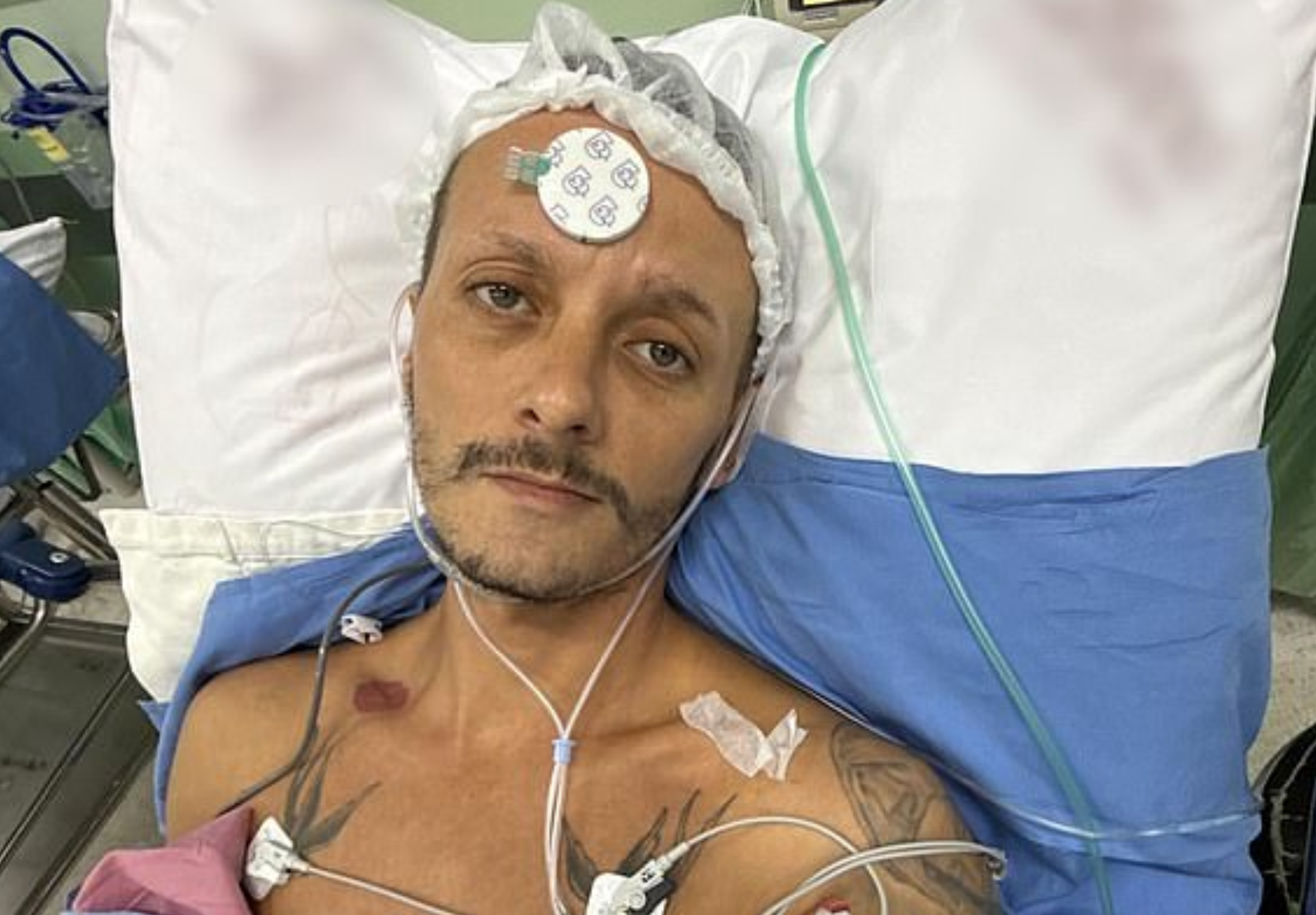
British expat Darren Cummins, 34, is facing GBP22,000 in hospital bills after a motorbike crash in Thailand left him with severe leg injuries, including the loss of five inches of tibia bone.

Cummins, originally from Falkirk, Scotland, moved to Thailand in 2015 after first visiting on holiday. The business development consultant said the crash on 13 June has turned his and his girlfriend's lives "upside down", with three operations still needed before rehabilitation.

Collision on a triple carriageway

Cummins said he was travelling at 100kph when a car allegedly made a U-turn across oncoming traffic on a triple carriageway.

"The driver was travelling in the opposite direction to me so he was on the other side of the triple carriageway and he wanted to do a U-turn," he said.

He said the driver crossed all three lanes and may have believed he could clear two vehicles ahead of Cummins. However, Cummins said he did not see the car until it had passed the second vehicle in the middle lane and was about a metre in front of him.

collage_export_E7171425-B9AF-4AA6-8004-B99E475731E4.jpeg

He said it was impossible to avoid the impact. "My leg took the brunt of the impact but had that been any other part of my body, whether it was my chest or my head, then I wouldn't be here right now."

Cummins said he was thrown about 30 yards from his motorbike, was in and out of consciousness and went into shock. He recalled seeing his "leg just dangling off" and screaming uncontrollably before waking in hospital with an oxygen mask on.

Long recovery and mounting costs

The crash caused a compound fracture at the top of his tibia, with five inches of bone lost. He also suffered comminuted fractures to his ankle and shin and lost the use of his Achilles tendon.

"I lost five inches of tibia, smashed out of my knee, [it] scattered across the road," he said. "I'm lucky to be here."

Cummins, who describes himself as a "motorbike guy" and regularly rode to see Thailand's "beauty", said it is less than likely he will ever walk properly again, though there remains a small chance. He said he has cried himself to sleep over the prospect and doubts he will be able to ride again.

For foreign residents and visitors, his account underlines the potentially substantial upfront costs of serious treatment after a road crash. Cummins said the hospital that accepted his case had already exceeded its initial estimate of about GBP15,000.

"Every single procedure now we get hounded for money before they work on me - even if it's an emergency you have to have the money," he said.

After exhausting his savings, Cummins set up a GoFundMe fundraiser, saying he had never wanted to become "that foreigner in Thailand" asking for help but had swallowed his pride.
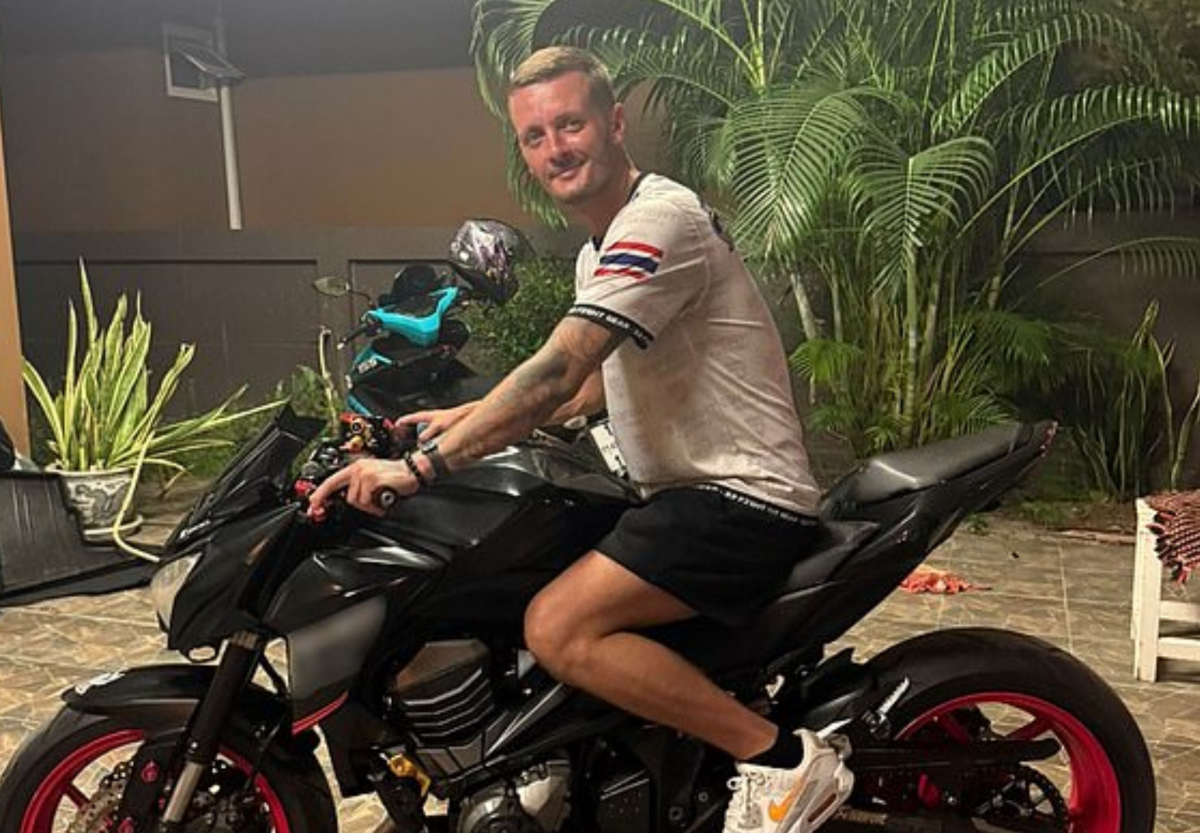
image.png

Pictures courtesy of Daily Mail

Join the discussion? Create account. orange.png


image.png

17 July 2026

User Feedback

Recommended Comments

kwilco Ruby Member

kwilco

Advanced Member
(edited)
36 minutes ago, KhunHeineken said:

Can you prove the member has not watch such videos? No, I didn't think so.

Thailand has one of the highest road death statistics in the world.

https://worldpopulationreview.com/country-rankings/road-deaths-by-country

Therefore, any road transport in Thailand is statistically dangerous than many other countries, and motorbikes are road transport.

Choosing not to ride would therefore significantly reduce the risk of serious injury or death.

Have you absolutely no understanding of what I just posted?

You've completely missed the point.

Nobody is disputing that riding a motorcycle carries more risk than not riding one. That's a truism, not an argument.

What I objected to was the method of reaching that conclusion. It's started with anecdotes ("I've seen videos..."), then jumped to a sweeping conclusion about riding in Thailand. That's not how evidence-based disciplines work.

Road safety isn't based on YouTube videos or personal stories. It's based on engineering, epidemiology, collision investigation and proper statistical analysis.

You're also confusing a higher national fatality rate with the individual risk of every road user. They aren't the same thing.

Thailand's road deaths are overwhelmingly dominated by motorcycles—around 80% of fatalities involve two-wheelers. That tells us something important about vehicle type, exposure and policy. It doesn't justify sweeping statements like "Thai roads are Russian roulette" or "anyone who rides here is reckless."

By your logic, because the USA has around 40,000 road deaths every year, nobody should drive there either.

Once again, you're confusing seeing examples of something with proving a general rule. That's not evidence; it's simply confirmation bias wrapped up as common sense.

If you're going to quote statistics, at least understand what they're measuring before drawing conclusions from them.

Edited by kwilco

Hummin Star Member

Hummin

Advanced Member

1 hour ago, kwilco said:

Your examples illustrate exactly why I referred to your reasoning as a collection of false syllogisms.

A valid syllogism is deductive: if the premises are true, the conclusion must follow.

For example:

  • All humans are mortal.

  • Socrates is a human.

  • Therefore, Socrates is mortal.

That's logically valid.

Your argument has a very different structure:

  • I've seen videos of people being killed riding motorcycles, base jumping, wingsuit flying and by grizzly bears.

  • Riding a motorcycle in Thailand is dangerous.

  • Therefore, choosing not to ride is simply common sense, and those who do are taking an unnecessary risk.

The conclusion doesn't follow from the premises.


You've substituted anecdotal evidence for statistical evidence and then generalised it into a universal conclusion. That's a classic logical error—an overgeneralisation based on the availability heuristic and reinforced by confirmation bias.


By the same logic, I could watch enough videos of fatal car crashes and conclude that nobody should ever drive a car. Or watch enough videos of shark attacks and conclude that nobody should ever swim in the sea.


The existence of risk doesn't tell us whether the activity is an unreasonable risk.


Road safety isn't about asking whether an activity is dangerous—almost every transport activity carries risk. It's about asking:

  • How large is the risk?

  • What factors increase or reduce it?

  • Can the risk be managed or mitigated?

That's the basis of risk assessment.


You also conflate very different categories of risk.

Wingsuit flying, BASE jumping and living amongst grizzly bears are voluntary extreme-risk recreational activities with very little societal necessity.


Motorcycling is a globally recognised means of transport used by hundreds of millions of people every day. The fact that some countries have poor road safety doesn't logically lead to the conclusion that riding a motorcycle there is irrational. It simply means the risk factors need to be assessed and managed.


That's why I object to anecdotal reasoning in road safety discussions. People tend to remember spectacular crashes because they're memorable, then unconsciously inflate the perceived risk. Psychologists call this the availability heuristic. It produces poor risk assessments because vivid stories replace objective evidence.

Good road safety isn't based on dramatic YouTube videos or personal anecdotes. It's based on engineering, epidemiology, collision investigation and statistics.

55 minutes ago, kwilco said:

Have you absolutely no understanding of what I just posted?

You've completely missed the point.

Nobody is disputing that riding a motorcycle carries more risk than not riding one. That's a truism, not an argument.

What I objected to was the method of reaching that conclusion. It's started with anecdotes ("I've seen videos..."), then jumped to a sweeping conclusion about riding in Thailand. That's not how evidence-based disciplines work.

Road safety isn't based on YouTube videos or personal stories. It's based on engineering, epidemiology, collision investigation and proper statistical analysis.

You're also confusing a higher national fatality rate with the individual risk of every road user. They aren't the same thing.

Thailand's road deaths are overwhelmingly dominated by motorcycles—around 80% of fatalities involve two-wheelers. That tells us something important about vehicle type, exposure and policy. It doesn't justify sweeping statements like "Thai roads are Russian roulette" or "anyone who rides here is reckless."

By your logic, because the USA has around 40,000 road deaths every year, nobody should drive there either.

Once again, you're confusing seeing examples of something with proving a general rule. That's not evidence; it's simply confirmation bias wrapped up as common sense.

If you're going to quote statistics, at least understand what they're measuring before drawing conclusions from them.

You do like repeating yourself, don't you?

You don't really disagree with us. You're just arguing over terminology and methods.

Watching videos is not the same as experiencing it in real time. Statistics describe general risk, but they do not show how individual people behave. Some recklessly expose themselves to more danger than necessary, while others believe they are safe and exempt from anything happening, yet unknowingly create dangerous situations themselves.

Old Croc Star Member

Old Croc

Advanced Member
5 hours ago, spidermike007 said:

I don't believe I mentioned the word coward but you certainly did, risk-averse yes, cowardly no. We all make our choices and I'm not criticizing anybody for not choosing to ride a motorbike, it's a personal choice. I'm simply stating that many things in life carry risk and we have to weigh whether or not we consider that risk worthwhile. In my situation it's very worthwhile.

You didn't use the word cowardly, I did.

I considered your suggestion people should either ride bikes or stay indoors to mean the same thing.

Anyway, enough from me. I do generally like your points of view on most things.

Old Croc Star Member

Old Croc

Advanced Member
2 hours ago, kwilco said:

Your examples illustrate exactly why I referred to your reasoning as a collection of false syllogisms.

A valid syllogism is deductive: if the premises are true, the conclusion must follow.

For example:

  • All humans are mortal.

  • Socrates is a human.

  • Therefore, Socrates is mortal.

That's logically valid.

Your argument has a very different structure:

  • I've seen videos of people being killed riding motorcycles, base jumping, wingsuit flying and by grizzly bears.

  • Riding a motorcycle in Thailand is dangerous.

  • Therefore, choosing not to ride is simply common sense, and those who do are taking an unnecessary risk.

The conclusion doesn't follow from the premises.


You've substituted anecdotal evidence for statistical evidence and then generalised it into a universal conclusion. That's a classic logical error—an overgeneralisation based on the availability heuristic and reinforced by confirmation bias.


By the same logic, I could watch enough videos of fatal car crashes and conclude that nobody should ever drive a car. Or watch enough videos of shark attacks and conclude that nobody should ever swim in the sea.


The existence of risk doesn't tell us whether the activity is an unreasonable risk.


Road safety isn't about asking whether an activity is dangerous—almost every transport activity carries risk. It's about asking:

  • How large is the risk?

  • What factors increase or reduce it?

  • Can the risk be managed or mitigated?

That's the basis of risk assessment.


You also conflate very different categories of risk.

Wingsuit flying, BASE jumping and living amongst grizzly bears are voluntary extreme-risk recreational activities with very little societal necessity.


Motorcycling is a globally recognised means of transport used by hundreds of millions of people every day. The fact that some countries have poor road safety doesn't logically lead to the conclusion that riding a motorcycle there is irrational. It simply means the risk factors need to be assessed and managed.


That's why I object to anecdotal reasoning in road safety discussions. People tend to remember spectacular crashes because they're memorable, then unconsciously inflate the perceived risk. Psychologists call this the availability heuristic. It produces poor risk assessments because vivid stories replace objective evidence.

Good road safety isn't based on dramatic YouTube videos or personal anecdotes. It's based on engineering, epidemiology, collision investigation and statistics.

,

I'm not interested in even reading most of that let alone indulge in further debate. I did note you started by quoting the same AI definition I found when I looked up your word of the week.

You reminded me of a scene from Good Will Hunting.

KhunLA Star Member

KhunLA

Advanced Member
(edited)

For those that advocate, don't ride scooters, transportation is dangerous in TH, some food for thought ... from AI ...

image.png

image.png

image.png

Edited by KhunLA

KhunHeineken Ruby Member

KhunHeineken

Advanced Member
2 hours ago, kwilco said:

Nobody is disputing that riding a motorcycle carries more risk than not riding one. That's a truism, not an argument.

I'm glad you understand this.

2 hours ago, kwilco said:

It's based on engineering, epidemiology, collision investigation and proper statistical analysis.

Of which there is plenty to suggest being on a road in Thailand is dangerous.

2 hours ago, kwilco said:

You're also confusing a higher national fatality rate with the individual risk of every road user. They aren't the same thing.

Yes, they are the same, because no one knows who's coming the other direction, or behind you, or cutting in front of you.

2 hours ago, kwilco said:

Thailand's road deaths are overwhelmingly dominated by motorcycles—around 80% of fatalities involve two-wheelers.

A point the member was trying to make to you, which you refuted, but now agree with. You have contradicted yourself.

2 hours ago, kwilco said:

By your logic, because the USA has around 40,000 road deaths every year, nobody should drive there either.

The statistics are compiled by per population. You know this.

2 hours ago, kwilco said:

If you're going to quote statistics, at least understand what they're measuring before drawing conclusions from them.

I'm well aware of what the statistics I posted indicate. It seems you do not know how to analyze statistical data in order to be able to form a hypothesis.

However, I'll play along. Can you post some links showing how safe the roads are in Thailand? 😂

Reddavy Gold Member

Reddavy

Advanced Member
17 hours ago, blaze master said:

100kmph is what I said. Try to keep up.

Try reading your post with glasses it just says 100 🤡 keep up

blaze master Diamond Member

blaze master

Advanced Member
6 minutes ago, Reddavy said:

Try reading your post with glasses it just says 100 🤡 keep up

And my original post ? After that one would conclude i was probably still talking about kmph.

Front Row Silver Member

Front Row

Advanced Member
9 hours ago, Liverpool Lou said:

No, we're not. I'm quoting from his own GoFundMe appeal

I see. Since I’m not planning to donate I didn’t bother to read that. Interesting that the news article and his recollection are quite different, but whatever.

praguecr Explorer Member

praguecr

Member

Never have I seen a young guy with a motorcycle like this who is not doing twice the speed limit. Sorry but everyone reading this knows it is true. Time to pay the piper.

Create an account or sign in to comment

Account

Navigation

Search

Search

Configure browser push notifications

Chrome (Android)
  1. Tap the lock icon next to the address bar.
  2. Tap Permissions → Notifications.
  3. Adjust your preference.
Chrome (Desktop)
  1. Click the padlock icon in the address bar.
  2. Select Site settings.
  3. Find Notifications and adjust your preference.