
Skip to content
View in the app

A better way to browse. Learn more.

ASEAN NOW

A full-screen app on your home screen with push notifications, badges and more.

To install this app on iOS and iPadOS
  1. Tap the Share icon in Safari
  2. Scroll the menu and tap Add to Home Screen.
  3. Tap Add in the top-right corner.
To install this app on Android
  1. Tap the 3-dot menu (⋮) in the top-right corner of the browser.
  2. Tap Add to Home screen or Install app.
  3. Confirm by tapping Install.

Foreigner speaking Isan uses wife's subsidy at Kalasin shop

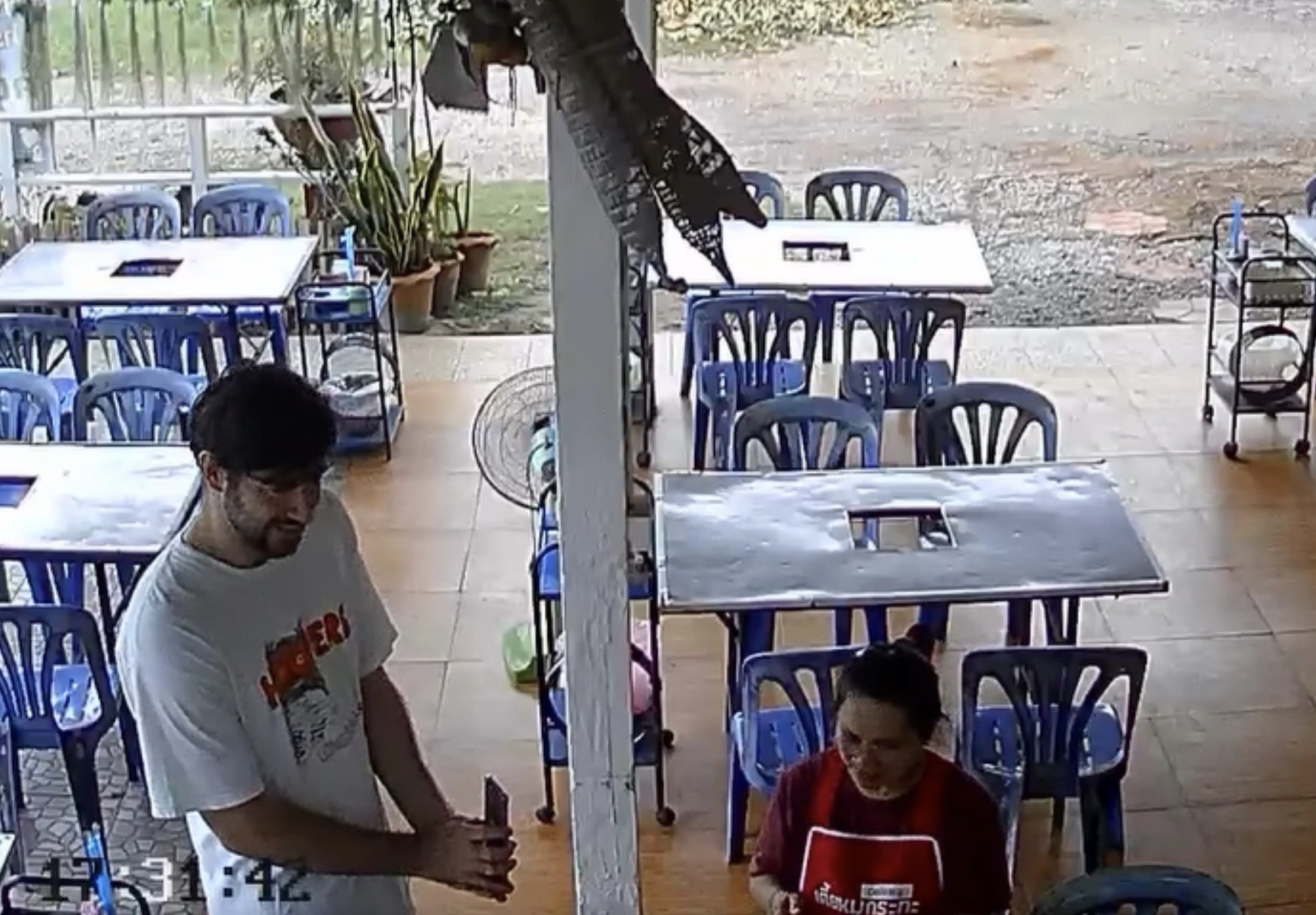
A foreign customer speaking fluent Isan surprised staff at a Korean grilled meat shop in Kalasin after ordering two jumbo sets and asking to pay through the Thai discount scheme using his wife's mobile phone.

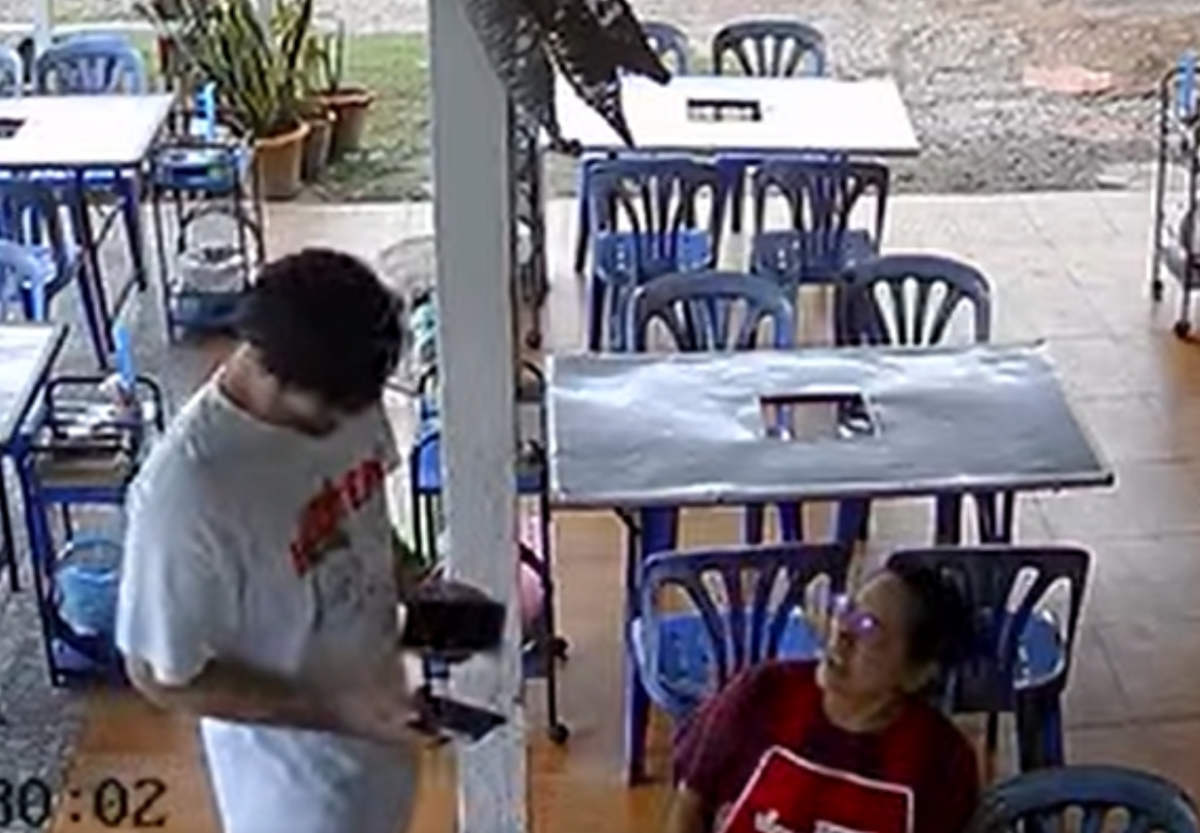
The moment, recorded on the shop's CCTV at 5.28pm on 14 July, was posted by the owner on Facebook and drew comments from viewers wondering how a foreigner could use the Khon La Khrueng or Thai Chuai Thai Plus benefit.

Shop owner Apinya Phunnoina later explained that the entitlement belonged to the man's wife. He used her phone to scan and pay for the order, according to the report.

Fluent Isan leaves staff laughing

The customer entered the long-established grilled meat shop on Thanon Thinnanon, on the Kalasin-Yang Talat route in Muang district, to buy food to take home.

He placed his order in Isan, the Lao-influenced dialect commonly heard across north-eastern Thailand. Apinya said she could not contain her laughter after hearing his accent.

In her Facebook caption, the owner said she was already amazed that the foreign customer could speak Isan, before he asked whether the shop accepted the half-price scheme. She described him as both handsome and able to speak Isan.
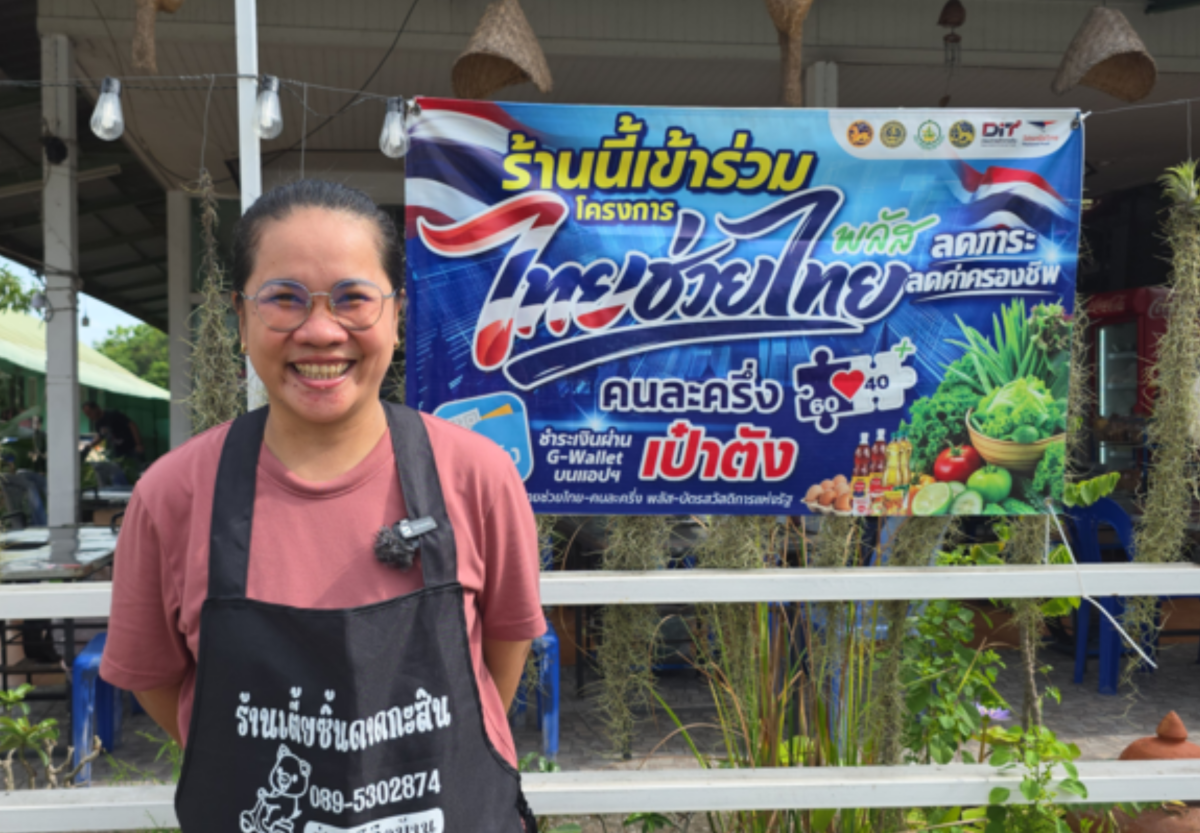
image.png

Apinya said the man asked about the available meal sets. She told him a large set cost 250 baht and a jumbo set 320 baht. He chose two jumbo sets.

He then asked whether the shop accepted Khon La Khrueng. Staff asked whose benefit he intended to use, and he replied that it belonged to his wife before producing the phone to scan the payment.

For foreign residents and visitors, eligibility for government cost-of-living schemes remains separate from simply being able to make a payment at a participating shop. Anyone hoping to use such a programme should check the official conditions and ensure the registered beneficiary is making the transaction in line with the scheme's rules.
IMG_7511.png

Pictures courtesy of Amarin

User Feedback

Recommended Comments

KhunHeineken Diamond Member

KhunHeineken

Advanced Member
25 minutes ago, sandyf said:

You mean as well as the government money.

No, just his. Actually, he even bought the phone. 🤣

Gecko123 Platinum Member

Gecko123

Advanced Member

Wait till Anutin hears about this. "ไทยช่วยไทย discount scheme only for Thai people."

sandyf Star Member

sandyf

Advanced Member
2 minutes ago, KhunHeineken said:

No, just his. Actually, he even bought the phone. 🤣

So you believe the OP was mistaken when it referred to a foreigner making use of the government scheme.

Under the scheme the government credit funds to a wallet and when you pay a bill 50% is taken from the government money up to 200 baht and you pay the difference.

If the bill is less than 400 baht it works out at 50% each, all done on the same phone.

Luuk Chaai Platinum Member

Luuk Chaai

Advanced Member
23 hours ago, SmokeandIce said:

The most commonly spoken non-Thai languages in Thailand are:

Lao (Isan/Lao dialects) – By far the most widely spoken. Around 15–20 million people in northeastern Thailand speak Isan, which is closely related to Lao. Many linguists consider it a Lao language variety.

Chinese languages – Especially Teochew, Hokkien, Hakka, Cantonese, and Mandarin. Although many Thai Chinese now primarily speak Thai, Mandarin use has grown due to education and business.

Malay (Pattani Malay) – Spoken by about 1.5–2 million people in the southern provinces of Pattani, Yala, Narathiwat, and parts of Songkhla.

Khmer – Spoken by several hundred thousand people, mainly in provinces bordering Cambodia such as Surin, Sisaket, and Buriram.

Burmese (Myanmar languages) – Spoken by many migrant workers from Myanmar, including Burmese, Karen, Shan, and Mon.

English – Widely taught as a second language and commonly used in tourism, business, and international education, though relatively few people speak it fluently.

Vietnamese – Spoken by a smaller ethnic Vietnamese community, particularly in northeastern Thailand.

Karen languages – Spoken by Karen communities along the Thailand–Myanmar border.

My wife lived in Samut Prakan before we got married, she went to check out a few diff language schools to learn before we got her to the U.S.A. teacher choices were Korean, Filipino, British .. she went with the Filipino. was the best choice. and then when we got her to the America she was able to learn to speak spell and write in real english. She even aquired the nack of sarcasm with humor. ( oh boy )

A couple of months ago, driving thru Hua Hin. there was a group of young slim ladies on scooters all wearing matching gray hoodies

she uttered ... " they look like sperm swimming " and at the back of the pack was an obvious very large lady in the same attire

.. I pointed and started to say "and..... " she cut me off and just said .. " whale sperm ! "

Create an account or sign in to comment

Account

Navigation

Search

Search

Configure browser push notifications

Chrome (Android)
  1. Tap the lock icon next to the address bar.
  2. Tap Permissions → Notifications.
  3. Adjust your preference.
Chrome (Desktop)
  1. Click the padlock icon in the address bar.
  2. Select Site settings.
  3. Find Notifications and adjust your preference.