



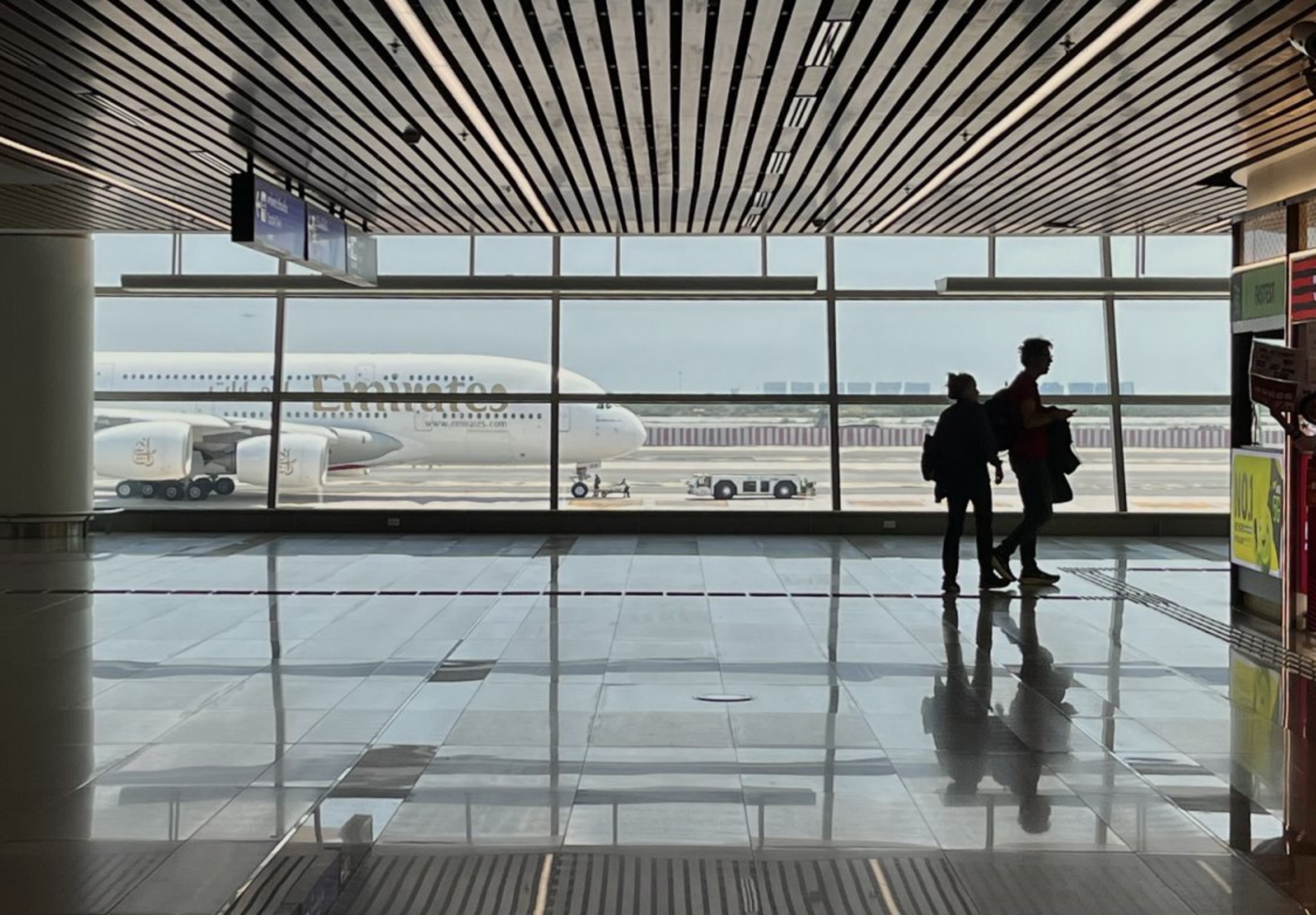

Global aviation is facing disruption from the ongoing Middle East conflict, which is affecting key air routes and pushing up costs, while Asia Pacific demand remains comparatively strong, according to TRIS Rating. Airports in the conflict zone handle about 10% of global air traffic and airspace closures are forcing airlines to reroute Europe-Asia flights. This has led to rising airfares and weaker demand for long-haul travel.
Get today's headlines by email 
The conflict is increasing oil prices and raising safety concerns, prompting some travellers to delay or cancel trips or switch to shorter regional routes. Bangkok to Europe routes have already seen sharp fare increases, reflecting constrained capacity and higher operating costs. Jet fuel prices in Singapore rose 70% month-on-month in March 2026, with fuel accounting for around 40% of airline operating costs during high-price periods.
Despite global headwinds, Asia Pacific continues to outperform other regions due to strong underlying demand driven by a growing middle class. The region recorded passenger demand growth of 8.0% in 2025, compared with a global average of 5.2%. Some Asian airlines are also benefiting from rerouted passengers as capacity tightens elsewhere.
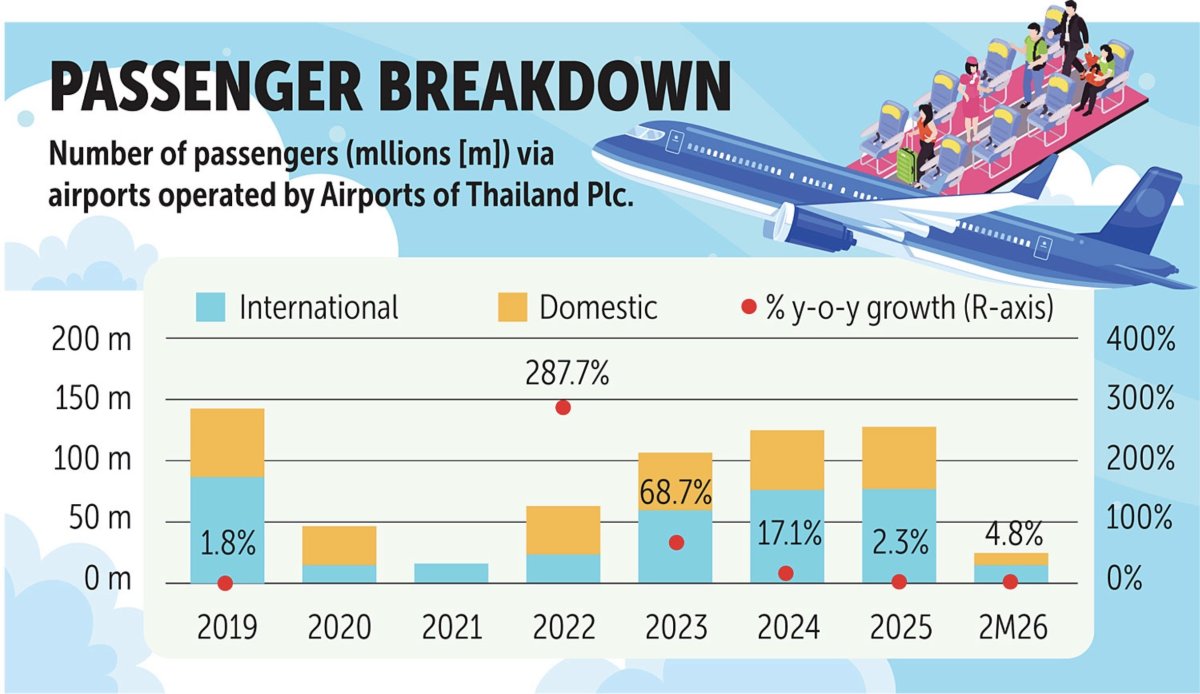
Thailand’s aviation sector is still recovering, with international passenger numbers at six major airports reaching 76.7 million in 2025, up 0.1% year-on-year but still 10% below the 2019 peak of 85.8 million. The slower return of Chinese tourists has weighed on the recovery, although growth from India and domestic travel has provided support.
TRIS Rating estimates that under a three-month conflict scenario, long-haul tourist arrivals to Thailand could fall by around 4% year-on-year, particularly from Europe, which accounts for 71% of long-haul arrivals and the Middle East at 6%. If the conflict lasts six months, the decline could deepen to about 8% as higher fares and uncertainty reduce travel demand.
Airlines are expanding fleets, with Thailand’s carriers expected to reach a combined 284 aircraft in 2026, a 12% increase year-on-year. However, rising capacity amid weakening demand could intensify competition and limit airlines’ ability to pass on higher fuel costs. Average airfares could rise by 10-15% annually under a three-month conflict scenario, although competitive pressures may restrict full cost recovery.
The Bangkokpost reported that airlines may delay aircraft deliveries to manage capacity if conditions worsen, while ancillary revenues such as baggage fees and seat selection are expected to help offset margin pressures. Short-haul travel and recovering Chinese arrivals are likely to provide some resilience, but prolonged geopolitical tensions could continue to weigh on global aviation.
Picture courtesy of Bangkokpost
Join the discussion? 
Already a member? 
 Adapted by ASEAN Now Bangkokpost 22 Apr 2026
Recommended Comments
Create an account or sign in to comment